
Equal vs Splenda: What's the Difference Between Them?
Compare Equal vs Splenda to understand their ingredients, health effects, and best uses. Learn which artificial sweetener works better for diabetes management.

On this page
Introduction to Equal and Splenda
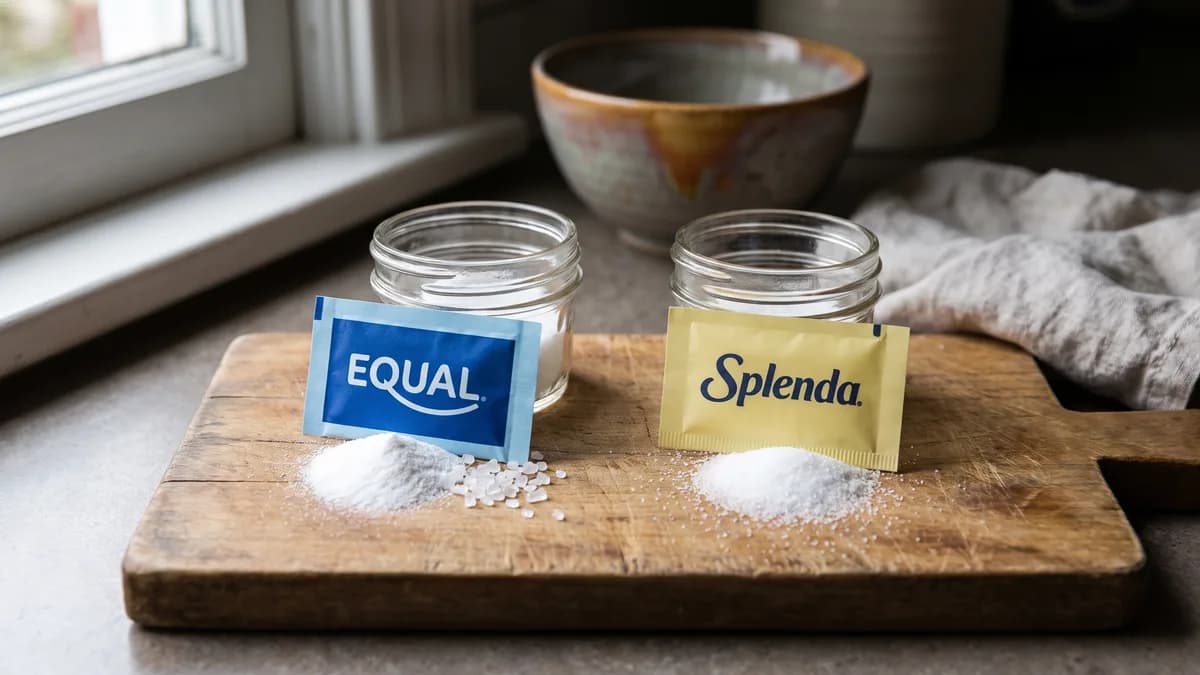
Equal vs Splenda are two popular artificial sweeteners that can help manage blood glucose levels. When you're navigating a new diabetes diagnosis or helping a family member manage blood glucose, the sweetener aisle can feel overwhelming. Equal and Splenda are two names that appear on restaurant tables, in grocery aisles, and in countless recipes labeled "sugar-free" or "diabetes-friendly." They look similar in their small packets, both promise zero calories, and both claim to sweeten without spiking blood sugar — but they are not interchangeable.
Equal is the brand name for aspartame, a sweetener made from two amino acids. Splenda is the brand name for sucralose, a modified sugar molecule. These chemical differences affect how each sweetener tastes, how it behaves when heated, and how your body processes it. Neither raises blood glucose in the way table sugar does, which is why both are common tools for people managing diabetes. But the choice between them often comes down to what you're sweetening, how you're using it, and what your own taste buds prefer.
This comparison walks through the ingredients, health considerations, and practical differences between Equal and Splenda. It is not prescriptive — your care team can help you decide what fits your meal plan and your glucose targets. This article simply lays out what each sweetener is, what the research indicates, and where one may work better than the other. For a broader look at how different sweeteners affect blood glucose, see our guide to sugar substitute options.
The sections that follow break down the ingredients, the available evidence on health effects, and the practical considerations — taste, heat stability, and best uses — so you can make an informed choice for your own kitchen and your own glucose management.
Ingredients and Composition
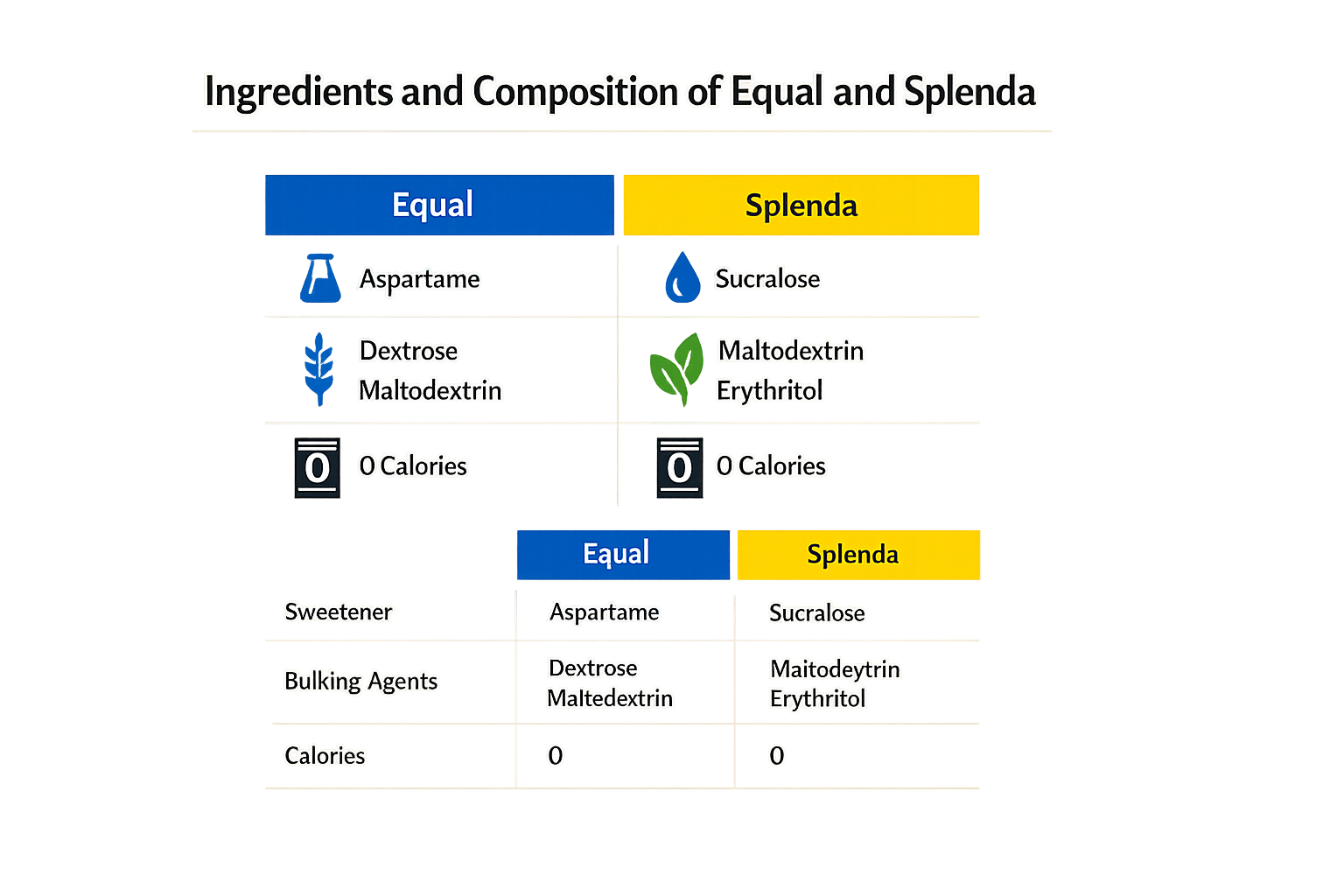
Equal and Splenda are built on different chemical foundations, which shapes how each performs in food and how the body processes them. Equal's active ingredient is aspartame, a synthetic sweetener made by combining two amino acids—aspartic acid and phenylalanine. Splenda's core is sucralose, a chlorinated derivative of sucrose (table sugar) created by replacing three hydroxyl groups on the sugar molecule with chlorine atoms. Both products also contain bulking agents—dextrose and maltodextrin—that give the powder volume and make it easier to measure in recipes.
Sweetness Potency and Caloric Content
Non-nutritive sweeteners deliver sweetness at intensities far above table sugar, though that potency can shift depending on concentration. Research comparing sweetener performance found that aspartame and sucralose both matched the sweetness intensity of sucrose across a measured range (equivalent to 3.8–25% sucrose solutions) with fewer calories. The study noted that non-nutritive sweeteners generally show higher potency relative to sucrose, but that advantage decreases when matching higher sweetness levels.
In practical terms, one packet of Equal or Splenda is formulated to match the sweetness of about two teaspoons of sugar. The bulking agents (dextrose and maltodextrin) add trace carbohydrates—around 1 gram per packet—but the total caloric contribution remains minimal. For anyone tracking carbohydrate intake closely, those trace amounts can add up if you're using multiple packets throughout the day, though the impact on blood glucose is generally small compared to sugar itself.
Chemical Structure and Stability
Aspartame breaks down when exposed to prolonged heat, which is why Equal is not recommended for baking or cooking at high temperatures. Sucralose, by contrast, remains stable under heat, making Splenda a more versatile option for recipes that require baking or simmering. This stability difference is a direct result of their chemical structures: aspartame's peptide bond is vulnerable to hydrolysis, while sucralose's chlorinated sugar backbone resists thermal breakdown.
For a broader look at how different sugar substitute options affect blood glucose, including comparisons beyond Equal and Splenda, that context can help when deciding which sweetener fits your routine.
Health Effects
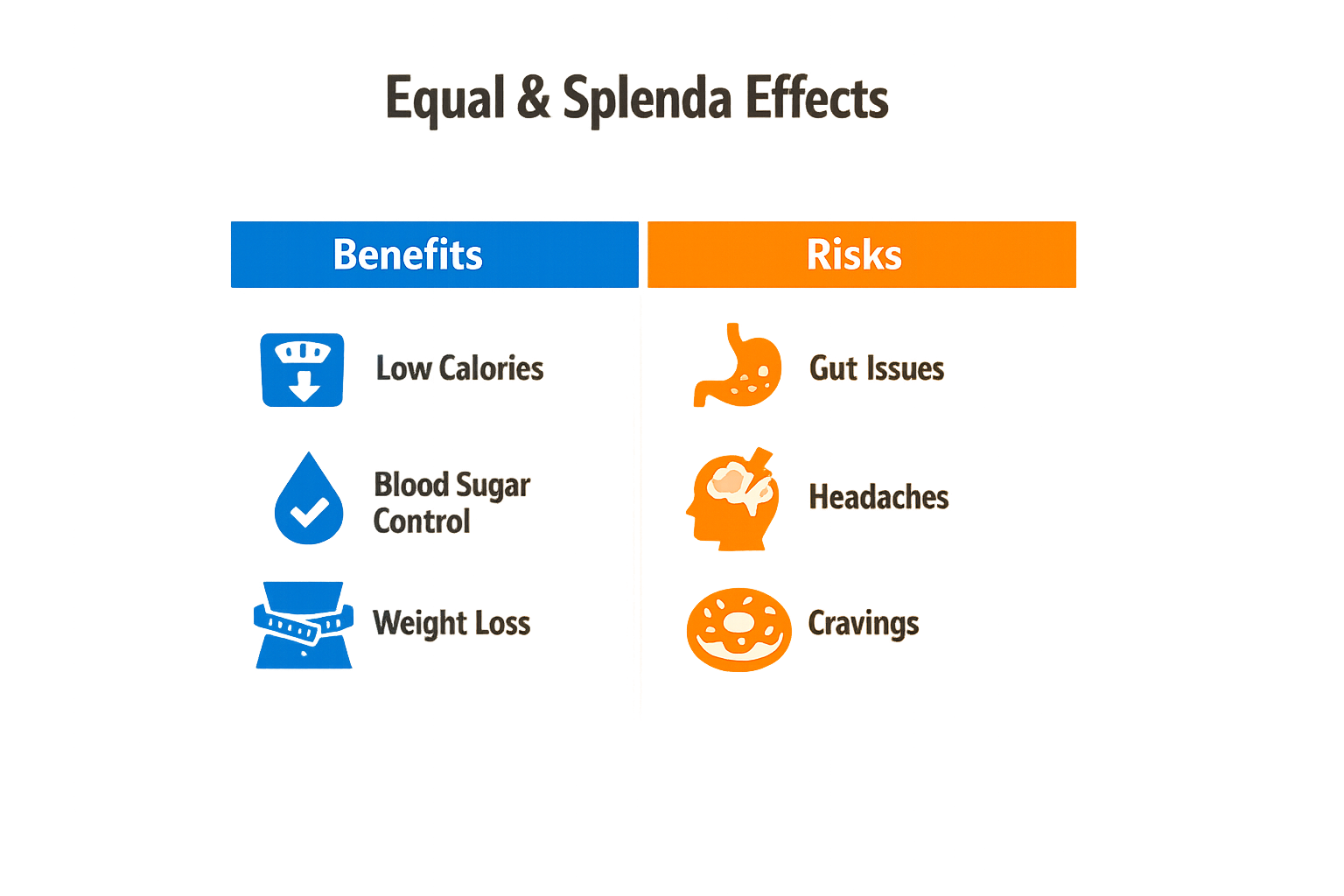
Both Equal and Splenda have been approved by regulatory agencies including the FDA and the European Food Safety Authority (EFSA) after extensive safety testing. These non-nutritive sweeteners have undergone multiple rounds of evaluation to address concerns about carcinogenicity, metabolic effects, and long-term health impacts. However, emerging research continues to examine their effects on the body beyond calorie reduction.
Safety Profiles and Regulatory Status
Aspartame (the active ingredient in Equal) and sucralose (the active ingredient in Splenda) are among the most thoroughly tested food additives available. Both have been assessed for potential safety concerns including cancer risk and effects on body weight. The FDA has established acceptable daily intake levels for both sweeteners — 50 mg per kilogram of body weight for aspartame and 5 mg per kilogram for sucralose — which represent amounts far higher than typical consumption patterns.
For context, a person weighing 150 pounds (68 kg) would need to consume approximately 19 packets of Equal or 23 packets of Splenda daily to approach these safety thresholds. Most people use far less in their daily routine.
Metabolic and Gut Health Considerations
Recent research has raised questions about the broader health effects of artificial sweeteners beyond their zero-calorie profile. Some research suggests that substituting sugar with currently available artificial sweeteners may not produce the favorable clinical outcomes originally expected. One area of active investigation is the impact on the gut microbiome.
For people managing diabetes, understanding how sweeteners interact with metabolism matters. While neither Equal nor Splenda raises blood glucose directly, some research indicates sucralose may influence the gut microbiome in ways that could affect inflammation and adipose tissue over time. These effects are still being characterized, and individual responses vary.
Blood Sugar Response
Both sweeteners are marketed as having minimal impact on blood glucose levels, which makes them appealing options for diabetes management. Neither contains digestible carbohydrates, so they do not trigger the same insulin response as sugar. However, some individuals report variability in their glucose readings when using artificial sweeteners, possibly due to factors like the bulking agents used in the packets or individual metabolic differences.
If you're tracking your glucose with a CGM or regular finger-stick testing, you may want to monitor your own response when first incorporating either sweetener. Most people see no measurable change, but personal patterns can differ. For more guidance on interpreting your glucose data, see our article on sugar substitute options and which sweeteners spike blood glucose.
Weight Management and Appetite
One of the primary reasons people choose non-nutritive sweeteners is to reduce calorie intake and support weight management. The evidence on whether artificial sweeteners effectively support weight loss is mixed. Some research shows modest benefits when they replace caloric sugar, while others suggest they may not lead to significant weight reduction over time.
There is also ongoing research into whether artificial sweeteners affect appetite regulation and food preferences. Some evidence suggests that consuming sweet tastes without accompanying calories may influence hunger signals or cravings, though findings are inconsistent across studies.
Individual Tolerance and Sensitivities
Some people experience digestive discomfort or headaches when consuming aspartame, particularly at higher doses. Individuals with phenylketonuria (PKU) must avoid aspartame entirely, as it breaks down into phenylalanine, an amino acid they cannot metabolize safely.
Sucralose is generally well-tolerated, though some users report mild digestive changes when consuming it regularly. Because individual responses vary, it's worth paying attention to how your body reacts when you first use either sweetener consistently.
If you have specific health concerns or notice unexpected symptoms, discuss your sweetener choices with your care team. They can help you weigh the trade-offs based on your own health profile and diabetes management goals.
Taste and Usage
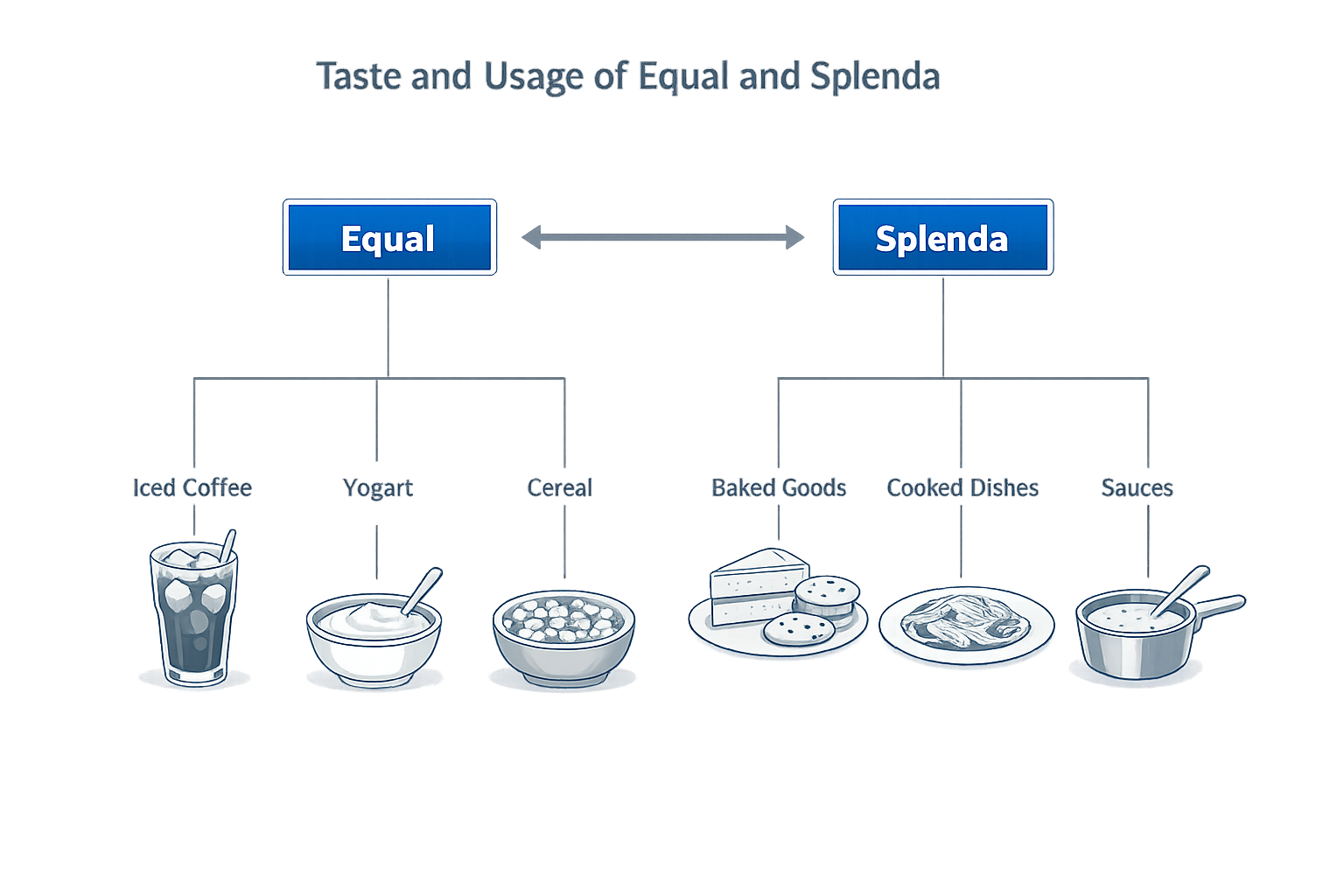
Both Equal and Splenda aim to replicate the sweetness of sugar, but their flavor profiles and culinary applications differ in ways that matter for everyday use. Understanding how each sweetener performs in different contexts helps you choose the right one for coffee, baking, or cooking.
Sweetness Intensity and Flavor Profile
Equal (aspartame) and Splenda (sucralose) both deliver sweetness at a fraction of the volume required for table sugar. Non-nutritive sweeteners like these have higher potencies relative to sucrose, though that potency decreases when matching higher sweetness intensities — meaning a packet goes further in lightly sweetened tea than in a heavily sweetened dessert.
Equal is known for a clean, quick sweetness that dissolves easily in cold beverages. Some people detect a slight aftertaste, particularly in hot drinks where aspartame can degrade. Splenda tends to have a more sugar-like profile with less aftertaste, making it a popular choice for those transitioning away from sugar. Both sweeteners match the sweetness intensity of sucrose across a measured range with fewer calories, which is why they're widely used in diabetes management.
Best Uses in Cooking and Baking
Equal breaks down under high heat, which limits its use in baking. It works well in no-bake desserts, cold beverages, yogurt, and oatmeal, but recipes that require oven temperatures above 350°F will lose sweetness as the aspartame degrades. For hot coffee or tea, add Equal after the liquid has cooled slightly to preserve flavor.
Splenda is heat-stable, making it suitable for most baking and cooking applications. It can replace sugar in muffins, cookies, and sauces without losing sweetness. However, because sucralose doesn't caramelize or add bulk the way sugar does, baked goods may turn out denser or less browned. Many recipes designed for Splenda call for a blend of sucralose and a small amount of sugar or another bulking agent to restore texture.
Practical Considerations for Diabetes Management
Both sweeteners are zero-calorie and do not raise blood glucose, which makes them useful tools for managing carbohydrate intake. The choice often comes down to how you plan to use them: Equal for cold drinks and no-heat applications, Splenda for versatility across cooking and baking. If you're preparing a dish that will be reheated or cooked at high temperatures, Splenda's stability gives it an edge.
For more context on how different sweeteners affect blood glucose, see our guide on sugar substitute options and which sweeteners spike blood glucose.
Conclusion: Which is Better?
Neither Equal nor Splenda is inherently "better" — the right choice depends on your taste preference, how you plan to use the sweetener, and your individual health considerations. Both aspartame (Equal) and sucralose (Splenda) are extensively tested non-nutritive sweeteners that regulatory bodies including the FDA and EFSA have evaluated for safety across multiple rounds of risk assessment. For diabetes management, both offer zero-calorie options that do not directly raise blood glucose.
Choosing Based on Use Case
If you primarily sweeten cold beverages — coffee, iced tea, or smoothies — Equal's aspartame dissolves quickly and delivers a clean sweetness without aftertaste. If you bake or cook frequently, Splenda's sucralose maintains stability at high temperatures, making it the more versatile option in the kitchen. Many people keep both on hand and use them in different contexts rather than committing to one exclusively.
Short-term research indicates that sucrose and non-caloric sweeteners produce broadly similar metabolic responses, with no significant differences in glucose regulation observed in controlled trials. Substituting sugar with non-nutritive sweeteners may support glycemic control and weight management, though individual responses can vary. If you notice unusual reactions — headaches with aspartame or digestive changes with sucralose — try the alternative or consult your care team.
What Matters Most
The "best" sweetener is the one you'll actually use consistently in place of sugar. If Equal tastes better to you in your morning coffee, that's the one to choose. If Splenda's baking performance means you can enjoy a wider range of recipes without added sugar, that's the winner for your household. Both have earned regulatory approval and a long track record of safe use when consumed within acceptable daily intake levels.
For a broader look at how different sweeteners affect blood glucose — including natural options and sugar alcohols — see our guide on sugar substitute options and which sweeteners spike blood glucose. Your care team can help you integrate non-nutritive sweeteners into your overall diabetes management plan and address any specific concerns about ingredients or individual tolerance.
Related reading

Maren Alcott is the lead presenter at DiabetesCompass. She is an AI-presented digital character. Every article Maren presents is researched and fact-checked by the DiabetesCompass editorial team against the ADA Standards of Care, peer-reviewed journals, and named clinical sources. Maren does not give medical advice — for questions about your specific situation, talk to your care team.