
Fructose vs Glucose: Understanding How Your Body Handles Each
Learn how your body processes fructose vs glucose differently, including their metabolic pathways, blood sugar impact, and health implications for diabetes management.

On this page
Introduction to Sugars
When comparing fructose vs glucose, the most important difference is how your body processes each sugar. Fructose and glucose are the two most common simple sugars in your diet, yet they follow completely separate metabolic pathways once you consume them. Table sugar (sucrose) is made of one glucose molecule bonded to one fructose molecule. High-fructose corn syrup contains both in varying ratios. Fruits contain fructose alongside fiber and nutrients. Starches break down into glucose. Your body recognizes these molecules as distinct fuels and handles them through separate metabolic systems.
Dietary habits that include an excess of added sugars have been strongly associated with increased risks of obesity, heart disease, diabetes, and tooth decay. The World Health Organization recommends restricting consumption of sugars to no more than 10% of daily caloric intake, with a proposal to lower this level to 5% or less for optimal health. These recommendations apply to added sugars—not the naturally occurring sugars in whole fruits or plain dairy—because the metabolic impact depends on both the type of sugar and the context in which you consume it.
For anyone managing diabetes, prediabetes, or simply trying to understand what happens after a meal, knowing the difference between fructose and glucose is foundational. One raises blood sugar quickly and predictably; the other bypasses your bloodstream and goes straight to your liver. Both matter, but they matter in different ways. If you're exploring options to manage blood sugar, our guide to sugar substitute options can help you compare how different sweeteners affect glucose levels.
The sections that follow break down what fructose and glucose are, where they come from, and how your body processes each one—so you can make sense of the nutrition labels, the research headlines, and the advice you hear at your next appointment.
What is Fructose?
Fructose is a simple sugar — a monosaccharide — that occurs naturally in fruit, honey, and some vegetables. It's also a component of table sugar (sucrose), which is half fructose and half glucose. When you eat an apple or drink orange juice, you're consuming fructose alongside fiber, vitamins, and other nutrients. When you drink a sugar-sweetened beverage, you're often getting fructose in a more concentrated, rapidly absorbed form.
Where Fructose Comes From
The most common dietary sources of fructose include:
- Whole fruit — apples, pears, grapes, watermelon
- Fruit juice — orange juice, apple juice (even 100% juice)
- Honey — roughly equal parts fructose and glucose
- Sugar-sweetened beverages — sodas, sweetened teas, energy drinks
- High-fructose corn syrup (HFCS) — used in processed foods and beverages
- Table sugar (sucrose) — a disaccharide that breaks down into fructose and glucose
Whole fruit delivers fructose with fiber, which slows absorption. Beverages and processed foods deliver it quickly, without the buffering effect of fiber or the volume that whole food provides.
How Fructose Is Processed
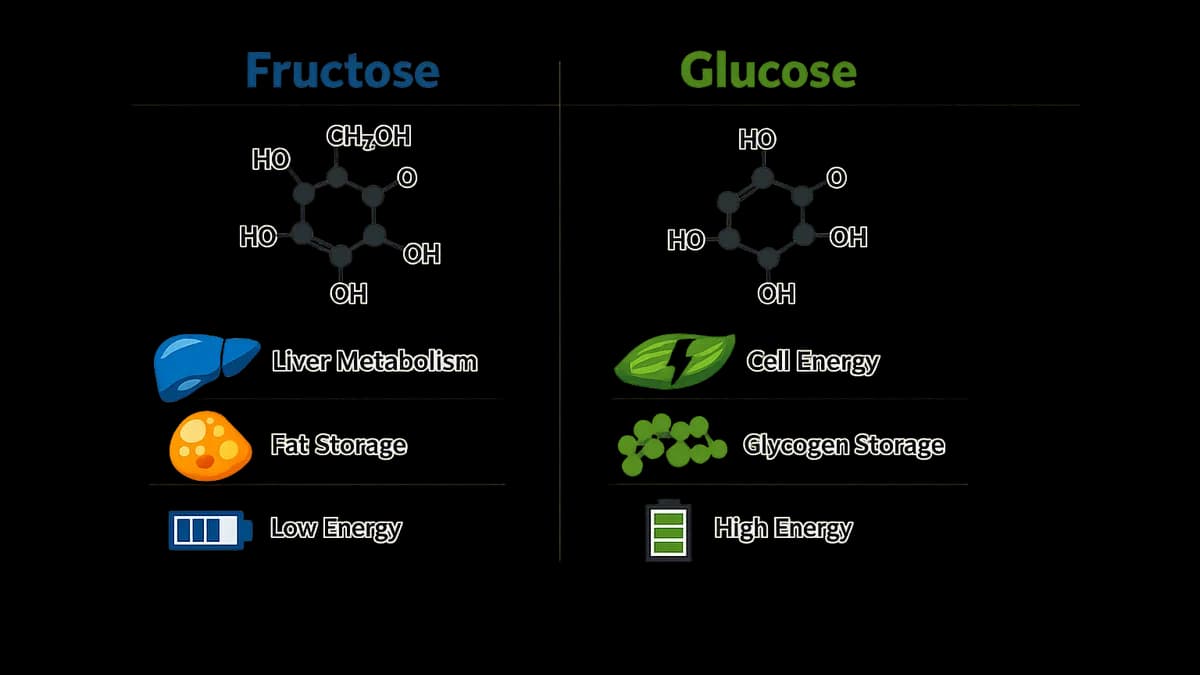
Unlike glucose, which every cell in your body can use directly, fructose is processed almost entirely in the liver. When fructose arrives at the liver, it's converted into glucose, glycogen (stored glucose), lactate, or fat, depending on your body's immediate energy needs and how much fructose you've consumed.
This liver-first pathway means fructose doesn't trigger the same immediate blood-sugar spike that glucose does. It also means the liver bears the metabolic load — and in high amounts, that load can contribute to fat accumulation in liver cells.
Health Implications of Fructose
Research on fructose and metabolic health shows that the source and amount matter significantly. In controlled trials, fructose-containing sugars from sugar-sweetened beverages providing excess calories increased intrahepatic fat content (a marker of non-alcoholic fatty liver disease) with a standardized mean difference of 1.72 (95% CI, 1.08 to 2.36). The effect was less pronounced — or absent — when fructose came from whole fruit or mixed food sources at moderate energy levels.
Other observed effects in high-dose or high-concentration settings include:
- Increased liver fat accumulation when fructose is consumed in caloric excess, particularly from beverages
- Altered lipid metabolism — fructose can be converted to triglycerides in the liver
- Reduced angiogenic capacity in endothelial cells at high glucose and fructose concentrations, suggesting potential vascular effects
- No direct insulin response — fructose does not stimulate insulin secretion the way glucose does, which affects satiety signaling
For someone managing diabetes or prediabetes, the key distinction is this: fructose won't spike your blood sugar in the next 15 minutes the way glucose will, but chronic high intake — especially from liquid sources — can contribute to insulin resistance, weight gain, and liver stress over time. If you're choosing a sugar substitute, understanding how different sugars behave in your body helps you make informed decisions with your care team.
What is Glucose?
Glucose is a simple sugar and the body's primary energy source. Every cell in your body can use glucose directly, which makes it fundamentally different from fructose in how it's processed and utilized. When you eat a meal containing carbohydrates — whether bread, rice, fruit, or table sugar — your digestive system breaks those carbohydrates down into glucose molecules that enter your bloodstream.
Unlike fructose, glucose triggers an immediate insulin response from your pancreas. This insulin acts like a key, unlocking cells so glucose can move from your bloodstream into tissues where it's needed for energy. This direct pathway is why glucose has an immediate and measurable effect on blood sugar levels, and why people with diabetes monitor glucose specifically rather than other sugars.
Where Glucose Comes From
Glucose appears naturally in many foods, though rarely in isolation. Fruits, vegetables, and honey all contain glucose alongside other sugars. Table sugar (sucrose) is 50% glucose and 50% fructose bonded together. Starches — found in grains, potatoes, and legumes — are long chains of glucose molecules that your body breaks apart during digestion.
Your body also manufactures glucose internally through a process called gluconeogenesis, primarily in the liver. This backup system ensures your brain and red blood cells always have glucose available, even during fasting or between meals. It's why your blood sugar doesn't drop to zero overnight.
How Glucose Affects Your Health
Glucose metabolism is central to diabetes management and metabolic health. When blood glucose remains elevated over time — a condition called hyperglycemia — it damages blood vessels and promotes harmful processes like platelet aggregation, which can affect cardiovascular health. Managing glucose levels is a cornerstone of diabetes care for this reason.
Because glucose directly raises blood sugar and requires insulin for cellular uptake, people with diabetes learn to count carbohydrates and time insulin doses around glucose-containing meals. Continuous glucose monitors (CGMs) track glucose in real time, providing immediate feedback on how foods, activity, and medications affect levels throughout the day. If you're curious about whether a smartwatch can measure blood sugar, our guide explains what technology is currently available.
Research comparing glucose to non-nutritive sweeteners has found that while alternatives like stevia, monk fruit, and aspartame don't raise blood glucose the way sucrose does, the body's 24-hour glucose profiles show complex responses that go beyond simple substitution. Understanding how glucose works in your body helps you interpret those responses and make informed decisions with your care team.
For more context on how different sweeteners affect blood glucose, see our guide on sugar substitute options.
Fructose vs Glucose: Metabolic Pathways Compared
The body processes fructose and glucose through distinct metabolic pathways, and those differences carry meaningful implications for blood sugar control and metabolic health. Understanding how each sugar moves through your system helps explain why certain foods affect your glucose readings differently — and why the source of sugar matters as much as the amount.
How Glucose Metabolism Works
When glucose enters your bloodstream, it triggers an insulin response that allows cells throughout your body to take up and use that glucose for energy. This pathway is direct and regulated: your pancreas senses rising blood glucose, releases insulin, and cells respond by opening glucose transporters. The liver, muscles, and other tissues all participate in glucose uptake, and excess glucose can be stored as glycogen or converted to fat when storage capacity is full.
This system is why glucose — whether from bread, rice, or fruit — shows up quickly on a continuous glucose monitor. The blood sugar impact is immediate and visible.
How Fructose Metabolism Differs
Fructose takes a different route. It bypasses the insulin-regulated pathway and goes almost exclusively to the liver, where it's metabolized without triggering the same insulin response. This means fructose doesn't cause the same immediate blood glucose spike that glucose does — but it doesn't mean fructose is metabolically neutral.
In the liver, fructose is rapidly converted into intermediates that can be used for energy, stored as glycogen, or transformed into fat. When consumed in large amounts — particularly from sugar-sweetened beverages — this liver-centered metabolism can contribute to increased fat accumulation in the liver itself.
Metabolic Outcomes: What the Research Shows
Controlled trials examining fructose-containing sugars reveal that both the amount and the source matter. Research analyzing sugar-sweetened beverages found that when fructose-containing sugars were added as excess calories, intrahepatic fat content increased significantly — with a standardized mean difference of 1.72 (95% CI, 1.08 to 2.36). The same review found moderate-certainty evidence that sugar-sweetened beverages also raised alanine aminotransferase (ALT), a marker of liver stress.
Food source plays a role too. When fructose came from mixed whole-food sources rather than concentrated beverages, metabolic markers behaved differently. Trials that removed energy from mixed sources (including some beverages) showed reductions in aspartate aminotransferase (AST), another liver enzyme, suggesting that context — how fructose is delivered and whether it displaces other nutrients — shapes its metabolic impact.
Laboratory studies have also shown that high concentrations of both glucose and fructose can impair cellular functions tied to vascular health, including angiogenic capability. While these findings come from controlled conditions rather than typical dietary intake, they underscore that metabolic effects extend beyond blood sugar readings alone.
What This Means for Diabetes Management
For someone managing diabetes or prediabetes, the fructose-versus-glucose distinction matters in practical ways. Glucose from starches and table sugar will show up on your meter or CGM trace within minutes to an hour. Fructose from fruit, agave, or high-fructose corn syrup may cause a smaller immediate spike, but it still contributes calories and — when consumed in large amounts from concentrated sources like soda or sweetened drinks — can affect liver fat and insulin sensitivity over time.
The takeaway isn't that fructose is inherently dangerous or that glucose is always preferable. It's that the body handles them differently, and those differences shape how you might approach food choices, portion sizes, and the balance between whole foods and processed sources. A piece of fruit delivers fructose alongside fiber, water, and micronutrients; a can of soda delivers fructose and glucose as concentrated, rapidly absorbed calories with little else.
Your care team can help you interpret how different carbohydrate sources affect your individual glucose patterns and metabolic markers. What shows up on your meter is one piece of the picture — but it's not the whole story.
Conclusion
Understanding how your body handles fructose vs glucose is essential for making informed dietary choices, especially when managing diabetes or prediabetes. Glucose enters your bloodstream directly and triggers an insulin response, making it the sugar your body uses for immediate energy and the one your glucose meter tracks. Fructose, on the other hand, is processed primarily in the liver and doesn't raise blood sugar as quickly — but that doesn't make it harmless, particularly in the high doses found in sweetened beverages and processed foods.
The key difference comes down to metabolic pathways: glucose is regulated by insulin and used throughout the body, while fructose bypasses that regulation and can contribute to fat accumulation in the liver when consumed in excess. Neither sugar is inherently "bad," but context matters. The fructose in a piece of fruit comes with fiber, vitamins, and a modest total dose; the fructose in a soda or sweetened juice arrives in a concentrated form that your liver has to manage all at once.
For anyone navigating a new diabetes diagnosis or supporting a family member, the practical takeaway is this: focus on whole foods, watch portion sizes of sweetened products, and remember that your blood glucose readings reflect glucose, not fructose. If you're curious about how different foods affect your glucose levels, a continuous glucose monitor can show you the real-time impact of your meals — and help you make adjustments that fit your own metabolism.
The World Health Organization recommends keeping added sugars to less than 10% of your daily calories, with an ideal target closer to 5%. That guidance applies to all sugars, whether they're glucose, fructose, or a mix of both. As research continues into alternative sweeteners and rare sugars, the goal remains the same: finding options that satisfy taste preferences without contributing to metabolic strain.
If you're looking for more guidance on managing blood sugar through diet and lifestyle, our article on how to lower A1C naturally offers practical, evidence-based strategies that complement what you've learned here about sugar metabolism. For a deeper look at sweetener options, explore our comparison of stevia vs aspartame to understand how artificial and natural sweeteners differ in safety and metabolic impact.
FAQ
What is the main difference between fructose vs glucose?Glucose enters your bloodstream directly and triggers insulin release, raising blood sugar quickly. Fructose is metabolized primarily in the liver without requiring insulin, so it has a smaller immediate impact on blood glucose but can contribute to liver fat accumulation when consumed in excess.
Which sugar is worse for diabetes: fructose or glucose?Neither is inherently "worse" — they affect your body differently. Glucose raises blood sugar immediately and requires insulin management. Fructose doesn't spike blood sugar as quickly but can affect liver health and insulin sensitivity over time when consumed in large amounts from processed sources. Work with your care team to understand how each affects your individual glucose patterns.
Does fructose raise blood sugar?Fructose does not raise blood sugar as quickly or directly as glucose because it's metabolized in the liver rather than entering the bloodstream immediately. However, some fructose is converted to glucose in the liver, so it can still contribute to blood sugar elevation indirectly, especially in large amounts.
Is the fructose in fruit bad for you?No. The fructose in whole fruit comes with fiber, vitamins, minerals, and water, which slow absorption and provide nutritional benefits. Research shows that fructose from whole fruit does not have the same negative metabolic effects as fructose from sugar-sweetened beverages or processed foods. The World Health Organization's sugar limits apply to added sugars, not naturally occurring sugars in whole fruit.
Should I avoid high-fructose corn syrup?High-fructose corn syrup (HFCS) contains both fructose and glucose in ratios similar to table sugar. Your body processes HFCS the same way it processes sucrose. The concern isn't the syrup itself but the large amounts of added sugars in sweetened beverages and processed foods where HFCS is commonly used. Focus on limiting total added sugar intake rather than singling out one sweetener.

Maren Alcott is the lead presenter at DiabetesCompass. She is an AI-presented digital character. Every article Maren presents is researched and fact-checked by the DiabetesCompass editorial team against the ADA Standards of Care, peer-reviewed journals, and named clinical sources. Maren does not give medical advice — for questions about your specific situation, talk to your care team.