
Can a Smartwatch Measure Blood Sugar? What Actually Works
Can a smartwatch measure blood sugar? Learn the truth about glucose monitor watches, their limitations, and reliable alternatives like CGMs.

On this page
Introduction
Can a smartwatch measure blood sugar? No — not yet, and not in the way most people hope. While the wearables market is growing rapidly — with 21% of Australians owning a smartwatch in 2020 and the sector expected to grow 14.5% annually through 2026 — the technology to measure glucose non-invasively through the skin has not reached consumer reliability or regulatory approval.
The idea of checking your blood sugar with a glance at your wrist is appealing — especially when managing diabetes means multiple daily decisions about food, activity, and medication. As wearable technology has expanded into health tracking, the question "can a smartwatch measure blood sugar?" has become one of the most common inquiries from people newly diagnosed with diabetes and caregivers coordinating care.
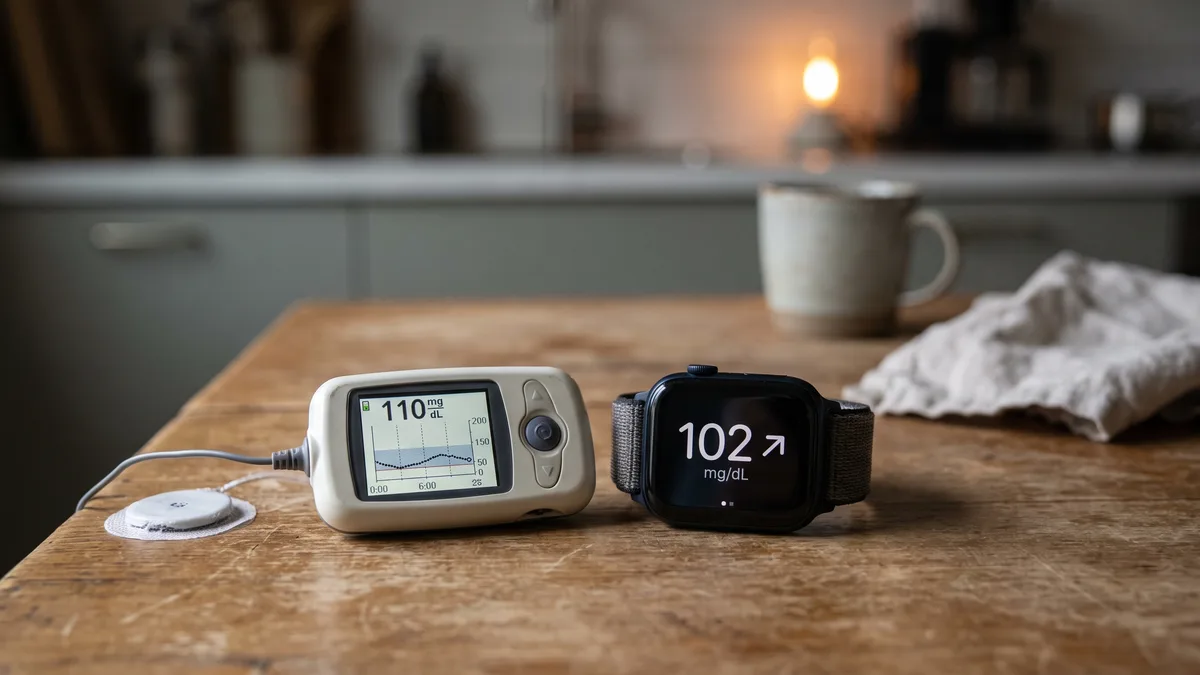
What does exist is the ability for smartwatches to display glucose readings from separate, FDA-cleared continuous glucose monitors, creating a convenient second screen rather than a measurement device itself.
This article clarifies what smartwatches can and cannot do for glucose monitoring, examines the current limitations of wearable glucose technology, and outlines the reliable alternatives available today. If you're navigating a new diagnosis or helping a family member understand their options, knowing the difference between marketing promises and clinical reality matters — both for safety and for making informed decisions at your next appointment. For context on what glucose numbers mean once you have reliable data, see our guide on A1C conversion and what your number means.
The Promise of Smartwatches
The wearables market has expanded rapidly, with smartwatch adoption reaching one in five adults in developed markets by 2020. Consumer expectations have grown alongside the technology: watches now track heart rate, sleep patterns, activity levels, and increasingly, more complex health metrics. The natural next question for anyone managing diabetes or prediabetes is whether these devices can eliminate fingersticks and provide continuous insight into glucose levels.
Smartwatches promise convenience. A single device on your wrist that tracks steps, monitors heart rhythm, and — theoretically — displays real-time blood sugar readings would simplify daily routines and reduce the need to carry separate devices or perform multiple checks throughout the day. For people newly diagnosed or those who dislike the invasiveness of traditional monitoring, the appeal is clear.
Can a Smartwatch Measure Blood Sugar?
Current consumer smartwatches do not measure blood glucose directly. Instead, some models integrate with separate continuous glucose monitoring (CGM) systems, displaying glucose data from a sensor worn elsewhere on the body. This integration allows you to glance at your wrist rather than pulling out a phone or dedicated receiver, but the watch itself is not performing the measurement — it is simply a display and notification hub for data generated by an FDA-cleared CGM sensor.
Research exploring combined mobile health approaches — pairing wearable devices with CGM and smartphone apps — has shown some promise in improving diabetes management. One patient-centered smartphone-based system integrated with a wearable resulted in a reduction in A1C from 7.7% to 7.1% over twelve weeks, though the evidence base remains limited and methodologically inconsistent.
Consumer Expectations vs. Current Reality
The gap between marketing language and clinical capability creates confusion. Phrases like "glucose monitor watch" suggest a standalone device that can read blood sugar through the skin, but no such consumer product has received FDA clearance for accuracy comparable to traditional glucose meters or CGMs. The technology to measure glucose noninvasively — without a sensor inserted under the skin — remains in development, with significant technical and regulatory hurdles still unresolved.
For now, if you see glucose data on a smartwatch, it originated from a separate CGM sensor. The watch is a convenient interface, not a replacement for the sensor itself. Understanding this distinction helps set realistic expectations and prevents reliance on unverified devices that may provide inaccurate or misleading readings.
If you're exploring how glucose monitoring fits into your overall diabetes management, including understanding what your glucose numbers mean in context, see our guide on A1C Conversion: What Your Number Means and How to Lower It.
Current Limitations of Smartwatches
No consumer smartwatch on the market today can accurately measure blood sugar levels on its own. Despite marketing claims and sleek designs, the technology inside these devices — typically optical sensors that track heart rate and movement — cannot penetrate the skin to measure glucose in blood or interstitial fluid. The physics simply doesn't support it yet.
Why Optical Sensors Fall Short
Most smartwatches rely on photoplethysmography (PPG) sensors, which shine light through the skin to detect changes in blood volume. These sensors work well for heart rate and oxygen saturation, but glucose molecules don't create a signal that PPG can reliably detect. Unlike heart rate, which produces a rhythmic pulse, glucose concentration changes gradually and requires direct biochemical measurement — not inference from light patterns.
Some manufacturers have explored alternative methods, including radiofrequency or bioimpedance sensors, but none have achieved the accuracy required for medical-grade glucose monitoring. The gap between laboratory prototypes and wearable consumer devices remains wide.
The Interstitial Fluid Problem
Even technologies that measure glucose in interstitial fluid — the fluid between cells — face inherent limitations. There is a physiological time lag between blood glucose and interstitial glucose levels, which becomes especially pronounced when glucose is changing rapidly, such as after meals or during exercise. This lag can lead to clinically significant measurement differences at the moments when accuracy matters most.
Research comparing interstitial glucose devices to capillary blood glucose measurements has found that accuracy decreases during physical activity. One study noted that interstitial glucose readings were less accurate during exercise compared to daily life, with clinically relevant differences that could affect treatment decisions.
Usability and Access Barriers
Beyond accuracy, emerging glucose-monitoring technologies face practical challenges: usability, affordability, and access to real-time data. A device that requires frequent calibration, produces inconsistent readings, or costs more than established alternatives offers little value to someone managing diabetes day to day. For context on when a prescription is required for validated glucose monitors, see Prescription for CGM 2026: Do You Need One?.
The regulatory pathway for any new glucose-monitoring device is rigorous. The FDA requires clinical validation showing that a device meets specific accuracy standards before it can be marketed for diabetes management. No smartwatch has cleared that bar as of 2025.
The gap between a device that tracks fitness trends and one that safely guides insulin dosing is measured in lives, not just data points.
What "Glucose Tracking" Actually Means
Some smartwatch apps claim to "track" glucose by syncing data from a separate continuous glucose monitor (CGM) or by logging fingerstick results manually. This is data display, not measurement. The smartwatch becomes a screen for information gathered by another device — one that does use a sensor inserted under the skin. That distinction matters when evaluating whether a smartwatch can replace medical-grade monitoring.
Reliable Alternatives: Continuous Glucose Monitors
While consumer smartwatches cannot measure blood sugar, continuous glucose monitors (CGMs) provide the real-time glucose data that many people are seeking. These medical devices measure glucose levels in the interstitial fluid—the fluid between your cells—and deliver readings every few minutes throughout the day and night.
How CGMs Work
A CGM consists of a small sensor inserted just under the skin, typically on the upper arm or abdomen. The sensor measures glucose continuously and transmits data wirelessly to a receiver or smartphone app. Unlike traditional fingerstick testing, CGMs capture glucose trends and patterns, showing not just where your glucose is now but also where it's heading.
The FreeStyle Libre system, for example, uses a factory-calibrated sensor that records interstitial glucose every minute and stores values in 15-minute intervals. The sensor stays in place for up to 14 days, eliminating the need for routine fingerstick calibration.
Clinical Evidence for CGMs
Research demonstrates measurable benefits from CGM use. Randomized controlled trials have shown improvements in HbA1c and reduced time spent in hypoglycemia with flash glucose monitoring compared to standard blood glucose monitoring. In patients with type 2 diabetes receiving insulin therapy, flash glucose monitoring significantly reduced both the time spent in hypoglycemia and the frequency of hypoglycemic events.
These outcomes matter because hypoglycemia—low blood sugar—can be dangerous, causing confusion, loss of consciousness, or seizures. CGMs alert users to falling glucose levels before they become critical, providing a safety net that fingerstick testing cannot match.
Who Benefits Most from CGMs
CGMs are particularly valuable for people taking insulin, whether for type 1 or type 2 diabetes. The continuous data helps with insulin dosing decisions and reveals how meals, activity, stress, and sleep affect glucose levels. Caregivers also benefit—parents can monitor a child's glucose remotely, and adult children can check in on an aging parent's patterns.
People with hypoglycemia unawareness—a condition where the usual warning signs of low blood sugar are absent—gain critical protection from CGM alarms. Athletes and active individuals use CGM data to adjust their approach to exercise, since physical activity can cause glucose to rise or fall depending on intensity and duration.
Continuous glucose monitoring provides real-time glucose information that can aid in diabetes management during exercise and daily life, offering insights that fingerstick testing cannot capture.
Getting Started with a CGM
Most CGMs require a prescription, though some systems are now available over-the-counter for adults. Insurance coverage varies—Medicare and many private insurers cover CGMs for people using insulin, but policies differ on coverage for non-insulin users. If you're considering a CGM, check whether you need a prescription for a CGM in 2026 and discuss the options with your care team.
Your provider can help determine which system fits your treatment plan, lifestyle, and budget. They'll also explain how to interpret the data—CGMs generate a wealth of information, and learning to act on trends rather than individual readings takes guidance.
Frequently asked questions
Can a smartwatch measure blood sugar without a sensor?
No consumer smartwatch can measure blood sugar without a separate sensor inserted under the skin. Devices claiming to estimate glucose through the skin alone have not received FDA clearance and lack the accuracy required for diabetes management.
How do smartwatches display glucose readings?
Smartwatches display glucose readings by pairing with an FDA-cleared continuous glucose monitor (CGM). The CGM sensor measures glucose in the interstitial fluid, and the watch acts as a secondary display for that data — the watch itself does not measure glucose.
Are there any smartwatches approved for glucose monitoring?
No smartwatch is approved to measure glucose on its own. Some smartwatches, such as certain Apple Watch and Samsung Galaxy Watch models, can display data from compatible CGMs like the Dexcom G7 or FreeStyle Libre, but the measurement comes from the CGM sensor, not the watch.
What is the most accurate way to monitor blood sugar?
The most accurate methods for monitoring blood sugar are FDA-cleared continuous glucose monitors (CGMs) and traditional fingerstick blood glucose meters. CGMs provide continuous readings and trend data, while fingerstick meters offer point-in-time accuracy and are often used to confirm CGM readings.
Conclusion: Making Informed Choices
The promise of a smartwatch that can measure blood sugar remains just that — a promise. No consumer smartwatch currently delivers the continuous, medically reliable glucose data that people managing diabetes need. The technology isn't there yet, and marketing claims often outpace what the device can actually do.
For now, continuous glucose monitors remain the proven standard. CGMs provide real-time glucose readings, trend arrows, and alerts that help you see patterns and respond before a reading becomes a problem. They're FDA-cleared medical devices with established accuracy standards, not experimental features bundled into a fitness tracker.
If you're newly diagnosed or supporting someone who is, it's natural to hope for a simpler, less invasive tool. But choosing a device based on what you wish it could do — rather than what it's cleared to do — can leave you with incomplete data at moments when you need clarity most. When evaluating any glucose-monitoring technology, ask your care team what the device is actually approved to measure, how it compares to your current monitoring method, and whether it fits into your overall management plan.
The wearables market is growing rapidly, and emerging technologies may eventually close the gap. Until then, the most informed choice is the one grounded in what works reliably today. For glucose monitoring, that means a continuous glucose monitor or traditional blood glucose meter — devices with a track record you can trust. If you're curious about how CGM data translates into long-term control, see our guide on average blood sugar by A1C conversion to understand what those numbers mean for your management goals.
Explore the truth about glucose monitor watches, their limitations, and reliable alternatives like continuous glucose monitors.
Related reading

Maren Alcott is the lead presenter at DiabetesCompass. She is an AI-presented digital character. Every article Maren presents is researched and fact-checked by the DiabetesCompass editorial team against the ADA Standards of Care, peer-reviewed journals, and named clinical sources. Maren does not give medical advice — for questions about your specific situation, talk to your care team.