
Diabetes Management Plan: Steps That Actually Work
Learn how to create a diabetes management plan with practical steps for blood sugar monitoring, medication, nutrition, and working with your care team.


On this page
Introduction
When it comes to creating a diabetes management plan that truly works, the importance of grounding your approach in reliable, evidence-based guidelines is emphasized. A diabetes management plan is not a static document handed to you at diagnosis—it is a living framework that adapts to your routines, your setbacks, and the patterns you discover as you go. The difference between a plan that sits in a drawer and one that guides daily decisions lies in how well it accounts for the complexity of real life: unanticipated events, emotional responses, and the cognitive load of making dozens of small adjustments every day.
Research into type 1 diabetes self-management identifies three distinct behavioral cycles that apply broadly across diabetes types: Routine behaviors (daily glucose checks, meal planning, medication timing), Reactive behaviors (responding to hypoglycemia, illness, or ketones), and Reflective behaviors (reviewing glucose data weekly to identify patterns and adjust background strategies). Each cycle demands different skills, and many people find the Reflective cycle—the one that supports long-term fine-tuning—the most challenging to sustain beyond the first few months.
The barriers to sustained self-management are not purely technical. Anxiety about getting it wrong, fear of complications, difficulty adapting routines during life changes, and emotional discomfort associated with the condition can all lead to disengagement. At the same time, establishing and maintaining routines reduces the cognitive burden and helps keep behavioral sequences intact. A plan that acknowledges these realities—and builds in strategies to address them—has a far better chance of staying useful over time.
This article walks through the steps to create a diabetes management plan that accounts for both the technical and the emotional dimensions of sustained self-management. You will learn how to identify target behaviors, set goals that are behaviorally focused rather than vague, and select strategies—including psychological support and habit formation—that address the barriers unique to your situation. While context and clarity are provided, every specific decision about targets, medication adjustments, or care coordination should be made in consultation with your healthcare provider. For readers exploring continuous glucose monitoring as part of their plan, Dexcom Stelo vs Abbott Lingo: Which OTC CGM Is Right for You offers a comparative overview of over-the-counter options.
Understanding the Need for a Diabetes Management Plan
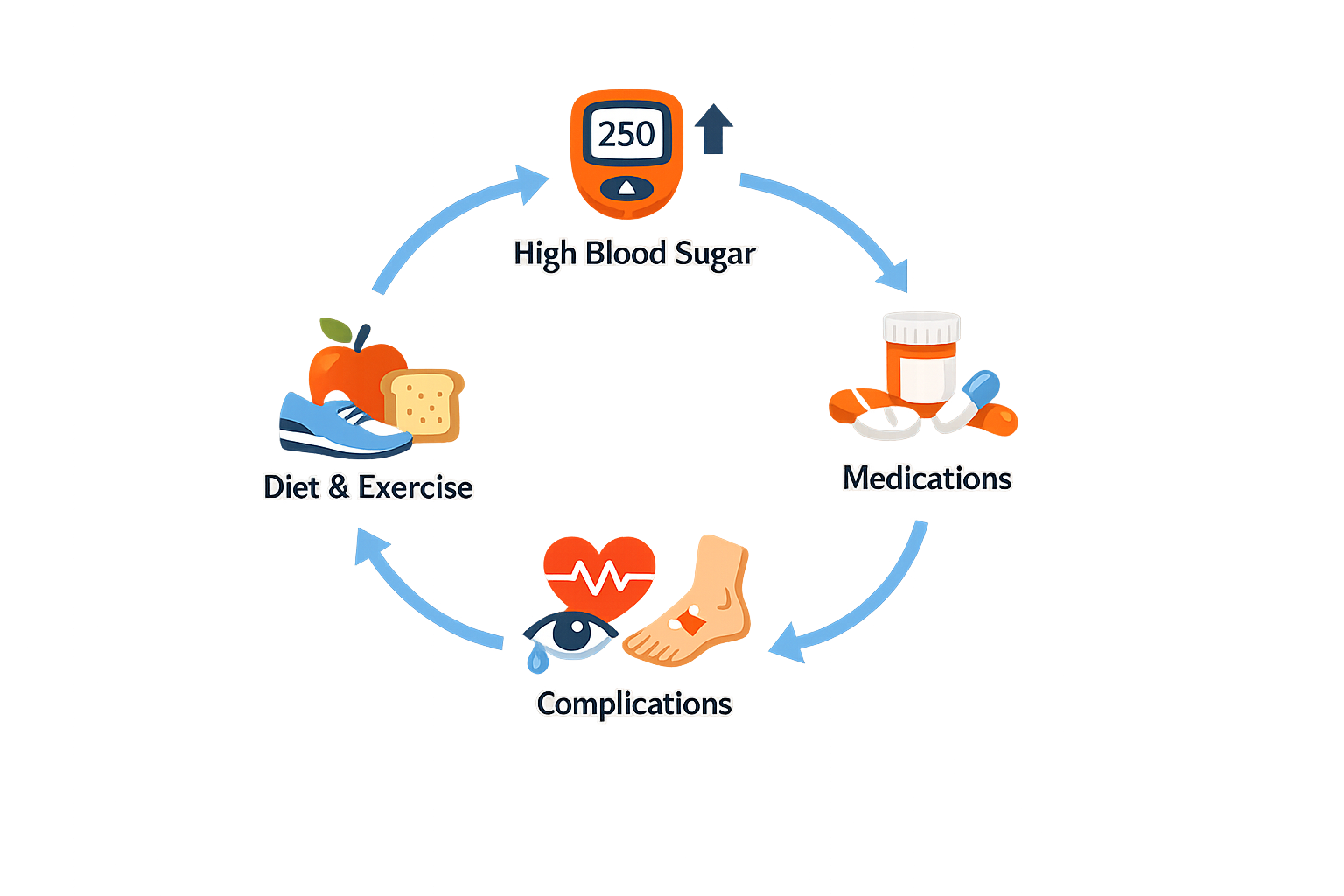
Living with diabetes means navigating a complex set of daily behaviors that extend far beyond checking blood glucose once in the morning. Research identifies 150 distinct self-management behaviors organized into three cycles: Routine (daily checks and adjustments), Reactive (responding to unexpected events like hypoglycemia), and Reflective (reviewing patterns over time to fine-tune your approach). Each cycle requires different skills, and many people find the Reflective cycle—stepping back to identify trends and adjust background strategies—the most challenging.
Why Initial Improvements Often Fade
Structured self-management programs typically produce strong results in the first few months, but those gains rarely last beyond 12 months. The reason is not a lack of knowledge—it is the accumulation of barriers that erode sustained engagement. Thirty-four distinct barriers have been identified across three domains: Capability (physical symptoms like impaired awareness of hypoglycemia), Opportunity (difficulty adapting routines when life circumstances change), and Motivation (anxiety about complications, lack of acceptance, or emotional discomfort that leads to disengagement).
The emotional and cognitive influences on diabetes management are particularly powerful. Anxiety about complications, for instance, may drive some people to disengage entirely as a way to reduce the psychological burden, while others may use that same fear as motivation to stay vigilant. Without addressing these emotional factors, even the most detailed management plan will struggle to hold.
What a Solid Plan Must Address
A diabetes management plan that works long-term must do more than teach carb counting or insulin adjustment. It must be person-centered, flexible, and tailored to individual needs, values, and motivations. This means identifying which specific behaviors are proving difficult—whether that is remembering to check glucose before meals, interpreting patterns in the data, or managing the emotional weight of constant vigilance—and selecting strategies that address the unique barriers standing in the way.
Establishing and maintaining routines is one of the few identified enablers: when behaviors become habitual, the cognitive burden decreases and the likelihood of disruption drops. But routines alone are not enough. Multi-disciplinary support, including psychological strategies to manage anxiety and build resilience, is critical for sustaining engagement over years rather than months.
For a deeper look at how medication fits into the broader management picture, see our guide to Wegovy for Prediabetes: Microdose GLP-1 for Type 2 & Prediabetes.
The need for a structured diabetes management plan is not about perfection—it is about creating a framework that acknowledges the complexity of the task, identifies the specific behaviors and barriers you are facing, and provides strategies that fit your life. Without that foundation, even the best intentions will struggle against the weight of daily demands and emotional fatigue.
Steps to Create Your Diabetes Management Plan
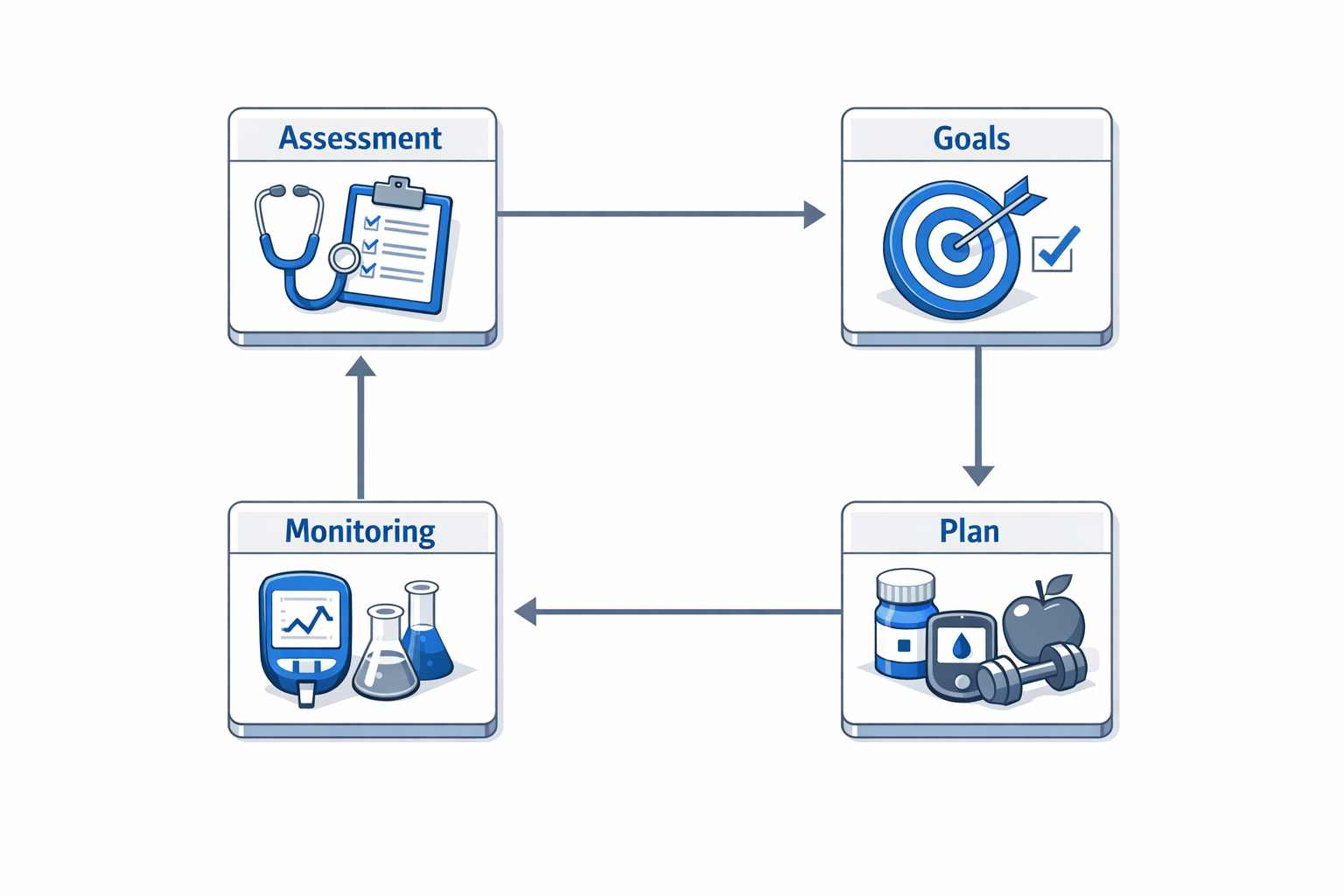
Building a diabetes management plan that works means moving beyond generic advice and identifying the specific behaviors that keep your glucose stable day to day. Research identifies three core cycles of self-management: routine daily adjustments, reactive responses to unexpected events, and reflective long-term review. Each cycle requires different skills, and most people find the reflective cycle—reviewing patterns over time—the most challenging.
Identify Your Routine Self-Management Behaviors
Regular self-monitoring of glucose levels forms the foundation of any management plan. Check your glucose at consistent times—before meals, after meals, and before bed—and record the results. Adjust insulin or medication based on objective data rather than physical sensations alone. This routine cycle may need to happen several times a day as food intake, physical activity, and other factors shift your glucose levels.
Proficiency in carbohydrate counting and appropriate insulin dosing in response to dietary intake is critical. Work with your care team to confirm your personal carbohydrate-to-insulin ratios and correction factors. Plan meals in advance when possible, and implement your insulin or medication response based on what you've learned about your body's patterns.
Build Your Reactive Management Skills
The reactive cycle addresses unexpected situations that affect glucose regulation—hypoglycemia, illness, or the presence of ketones. Planning and anticipatory management for scenarios like exercise or alcohol consumption are necessary to maintain glycemic balance. Keep fast-acting glucose on hand, know your symptoms of low blood sugar, and have a clear protocol for when to recheck and when to contact your care team.
Develop a Reflective Review Process
The reflective cycle supports fine-tuning of habitual behaviors by identifying patterns in blood glucose data. Set aside time each week to review your glucose log or CGM trace. Look for recurring highs or lows at specific times of day, and discuss these patterns with your care team. This longer-term review allows you to make adjustments to background insulin doses, mealtime ratios, or other aspects of your routine.
Tailor the Plan to Your Needs and Values
Self-management programs should be person-centered, flexible, and tailored to your individual needs, values, and motivations to ensure successful delivery and engagement. What works for someone else may not work for you. Identify which specific behaviors you find most challenging, and set behaviorally focused goals rather than vague intentions to "manage better." For example, instead of "improve glucose control," aim for "review glucose data every Sunday evening and identify one pattern to discuss with your care team."
If you're newly diagnosed or adjusting to a new medication, understanding what an A1C of 5.7 means for your health can help you set realistic targets and know what questions to ask at your next appointment.
Address Psychological and Emotional Factors
Self-management interventions should include psychological support to help manage anxiety and enhance long-term motivation, rather than focusing solely on knowledge and skill acquisition. Anxiety about hypoglycemia, complications, or "getting it wrong" can prompt withdrawal from self-management behaviors. If you find yourself avoiding glucose checks or skipping insulin doses because of fear or frustration, bring this up with your care team. Addressing cognitive and emotional experiences—beliefs, perceptions, anxieties, concerns, and acceptance—is as important as mastering technical skills.
Sustained self-management is driven predominantly by emotional and cognitive influences, not just knowledge and skill.
Tips and Tricks for Successful Management
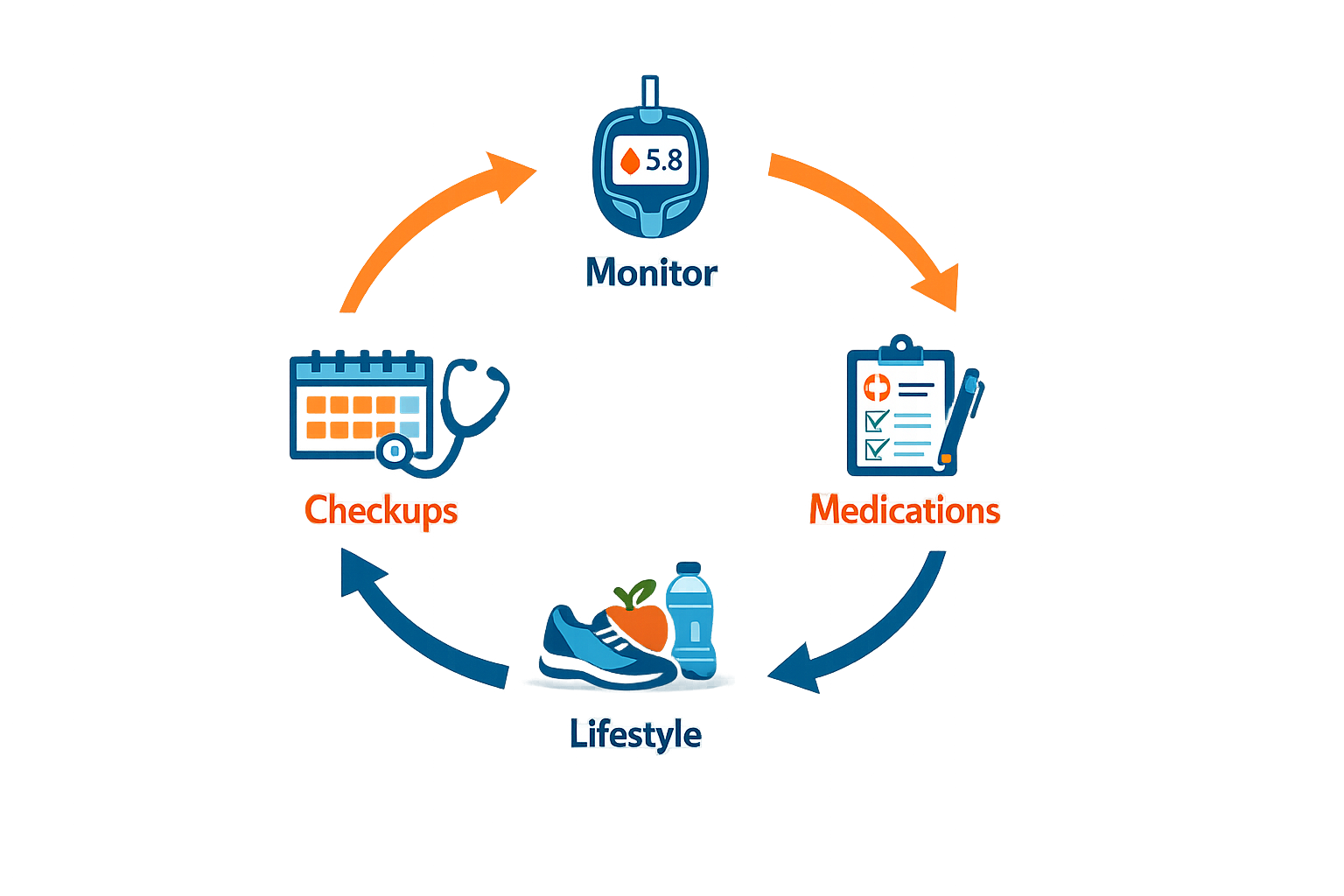
Once you have a diabetes management plan in place, sustaining it over the long term is where the real work begins. Research shows that initial improvements in blood sugar control often fade after the first year, not because the plan was wrong, but because life gets complicated and habits are hard to maintain. The strategies below address the common barriers that derail even well-designed plans — and offer practical ways to keep your management on track.
Build Routines That Stick
Establishing and maintaining daily routines reduces the mental load of diabetes management. When checking blood glucose, taking medication, and planning meals become automatic habits, you free up cognitive energy for handling the unexpected. Research identifies routine behaviors — like checking blood glucose at consistent times each day — as a foundational cycle that supports all other diabetes management tasks. The goal is to make these actions as automatic as brushing your teeth, so they require less willpower and are less likely to be disrupted by stress or schedule changes.
Plan for the Reactive Moments
Even the best routine gets interrupted. Unanticipated events — a low blood sugar episode, an illness, or unexpected physical activity — require a different set of management behaviors. The reactive cycle involves checking, re-checking, problem-solving, and adjusting in real time. Having a plan for these moments before they happen makes them less disruptive. Keep fast-acting carbohydrates accessible, know your symptoms of hypoglycemia, and have a clear protocol for when to contact your care team.
Identify your early warning signs and keep glucose tablets, juice, or another fast-acting carbohydrate in multiple locations — your bag, your car, your desk. Treat lows immediately, recheck in 15 minutes, and adjust your next meal or insulin dose if a pattern emerges.
When you're sick, blood sugar can spike even if you're not eating. Test more frequently, stay hydrated, and know when to check for ketones. Contact your care team if ketones are moderate or high, or if you're unsure how to adjust your insulin.
Review Your Data Weekly
The reflective cycle — reviewing blood glucose data over time to identify patterns and make longer-term adjustments — is often the most challenging part of diabetes management, yet it is critical for sustained control. Set aside time each week to look at your glucose log or CGM trace. Are there consistent highs or lows at certain times of day? Does a particular meal or activity always throw off your numbers? This review supports fine-tuning of background insulin doses, mealtime ratios, or activity strategies. If you're using a CGM, tools like Dexcom Stelo can simplify pattern recognition by displaying trends visually.
Tailor Your Plan to Your Exercise Goals
Physical activity affects blood sugar in complex ways, and the right management strategy depends on what you're trying to achieve. If your goal is weight loss, reducing insulin doses around exercise — rather than loading up on extra carbohydrates — can help you avoid offsetting the calorie deficit. If your goal is athletic performance, you may need to increase carbohydrate intake before and during exercise to fuel the activity, and adjust insulin accordingly. If the goal is simply to stay active and avoid interruptions, a modest insulin reduction before exercise can minimize the need to stop and treat lows.
A structured approach to exercise management starts with identifying your goal, then selecting the tools — insulin adjustments, carbohydrate timing, or both — that align with that goal. Revisit this plan as your fitness level changes, since increasing insulin sensitivity over time may require further dose reductions.
Address the Emotional Side
Anxiety about diabetes — fear of hypoglycemia, worry about long-term complications, or stress about "getting it wrong" — can quietly undermine your management plan. These emotional factors are not secondary; research shows they are among the most significant influences on whether people sustain their self-management behaviors over time. Anxiety can lead to avoidance (skipping glucose checks to avoid bad news) or over-correction (stacking insulin doses out of frustration). Conversely, a positive attitude toward diabetes and confidence in handling social stigma are linked to better self-management.
If you find yourself avoiding parts of your plan or feeling overwhelmed, that is a signal to seek support — whether from a diabetes educator, a therapist familiar with chronic illness, or a peer support group. Addressing the cognitive and emotional experience of living with diabetes is as important as adjusting your insulin dose.
Make Your Plan Flexible and Person-Centered
No two people with diabetes have identical lives, and no single management plan works for everyone. Effective programs are person-centered, flexible, and tailored to your specific needs, values, and motivations. If a strategy isn't working — whether it's a medication schedule, a meal plan, or a monitoring routine — bring that to your care team and ask for alternatives. The goal is a plan you can actually live with, not one that looks perfect on paper but collapses under real-world pressure.
Conclusion
Creating a diabetes management plan that actually works is not a one-time event — it's an ongoing process of learning, adjusting, and staying engaged with your care. The research on sustained self-management behaviors makes it clear: initial improvements often fade unless the plan adapts to your changing life, addresses emotional and cognitive barriers, and remains flexible enough to meet your individual needs. A truly effective plan is person-centered, built around your values and motivations, and supported by a care team that helps you navigate both the routine and the unexpected.
When it comes to creating a diabetes management plan that truly works, the importance of grounding your approach in reliable, evidence-based guidelines is emphasized. The ADA Standards of Care and other authoritative sources are consistently referred to ensure that the information provided is both accurate and practical. A key aspect of any effective management plan is understanding what your numbers mean and how they relate to your overall health. This involves a clear dialogue with your care team to confirm your personal targets and goals.
Sustained engagement requires more than knowledge and skill — it demands attention to the emotional side of living with diabetes. Anxiety about hypoglycemia, fear of complications, and the cognitive load of constant decision-making can all erode motivation over time. Addressing these factors through psychological support, habit formation, and realistic goal-setting is just as important as mastering carb counting or insulin adjustment. If you find yourself struggling with motivation or feeling overwhelmed, that's a signal to revisit your plan with your care team, not a sign of failure.
The three cycles of self-management — Routine (daily checking and adjusting), Reactive (responding to unexpected events), and Reflective (reviewing patterns over time) — offer a practical framework for thinking about where your plan might need reinforcement. Many people find the Reflective cycle the hardest to maintain, yet it's the one that supports fine-tuning and prevents the drift that leads to rising A1C months down the line. Building in time for weekly review, whether on your own or with a care partner, can make the difference between a plan that fades and one that evolves with you.
Ultimately, a diabetes management plan that works is one you can sustain. It acknowledges that life changes, that some days will be harder than others, and that the goal is progress, not perfection. By translating complex medical guidelines into plain language, the aim is to empower you with the knowledge needed to make informed decisions about your health. For more guidance on specific tools and strategies, explore our article on Best CGM for Non Diabetics: OTC Options for Prediabetes. Remember, while context and clarity are provided, every specific decision should be made in consultation with your healthcare provider.

Maren Alcott is the lead presenter at DiabetesCompass. She is an AI-presented digital character. Every article Maren presents is researched and fact-checked by the DiabetesCompass editorial team against the ADA Standards of Care, peer-reviewed journals, and named clinical sources. Maren does not give medical advice — for questions about your specific situation, talk to your care team.