
A1C of 5.7: What It Means for Your Health and Next Steps
An A1C of 5.7 indicates prediabetes, meaning elevated blood sugar levels. Learn what this result means for your health and what steps to take next.


On this page
Introduction
Receiving an A1C result of 5.7 often raises immediate questions: What does this number actually mean? Is it serious? What should you do next? An A1C of 5.7 indicates prediabetes, a condition where blood sugar levels are higher than normal but not yet high enough to be classified as type 2 diabetes. This result sits at the threshold—the American Diabetes Association defines prediabetes as an A1C between 5.7% and 6.4%.
The A1C test measures your average blood glucose levels over the past two to three months by looking at the percentage of hemoglobin in your red blood cells that has glucose attached to it. Unlike a single blood sugar reading that captures one moment in time, A1C provides a longer-term view of how your body has been managing glucose. When you see 5.7%, it means that 5.7% of your hemoglobin has been glycated—bound to glucose—over that period.
For many people, this number appears on routine lab work without any symptoms or warning signs. Prediabetes typically doesn't cause noticeable symptoms, which is why regular screening matters, especially if you have risk factors like a family history of diabetes, carry extra weight, or are over 45. The good news is that prediabetes is not inevitable progression to diabetes. Understanding what's considered a normal blood sugar level can help you see where 5.7 fits in the broader picture and what changes might bring your levels back to the normal range (below 5.7%).
This result is a checkpoint, not a verdict. It's your body signaling that glucose regulation has shifted slightly, and it's an opportunity to make changes before type 2 diabetes develops. The sections ahead will explain exactly what A1C measures, what the 5.7 number indicates about your health, and the concrete steps you can take to lower your A1C and reduce your risk.
Understanding A1C Levels
The A1C test measures the percentage of your red blood cells that have glucose attached to them. Because red blood cells live for approximately three to four months, the A1C result reflects your average blood sugar over that period — not just a single moment in time like a fingerstick reading.
When glucose circulates in your bloodstream, some of it binds to hemoglobin inside red blood cells through a process called glycation. The more glucose present over time, the higher the percentage of hemoglobin that becomes glycated. This is why A1C is reported as a percentage: an A1C of 5.7% means that 5.7% of your hemoglobin is glycated.
How A1C Ranges Are Defined
The American Diabetes Association defines A1C ranges as follows:
- Below 5.7%: Normal (not diabetes or prediabetes)
- 5.7% to 6.4%: Prediabetes
- 6.5% or above: Diabetes (when confirmed by repeat testing)
An A1C of 5.7 sits at the threshold — it's the first value that signals prediabetes, meaning your average blood sugar is higher than normal but not yet in the diabetes range. If you're looking for practical ways to bring that number down, our guide on how to lower your A1C fast offers realistic strategies.
Why A1C Monitoring Matters
Regular A1C testing helps you and your care team spot patterns before they become problems. For someone with prediabetes, tracking A1C every three to six months shows whether lifestyle changes are working or whether additional interventions are needed. For people with diabetes, A1C monitoring guides medication adjustments and helps prevent complications.
However, A1C has limitations. Factors unrelated to blood sugar — such as anemia, kidney disease, or certain genetic traits — can affect the result. Anemia due to iron deficiency, for example, can increase HbA1c levels by up to 2%, which may not reflect true glycemic control. If your A1C result doesn't align with your daily glucose readings or symptoms, discuss alternative tests with your care team.
What an A1C of 5.7 Indicates
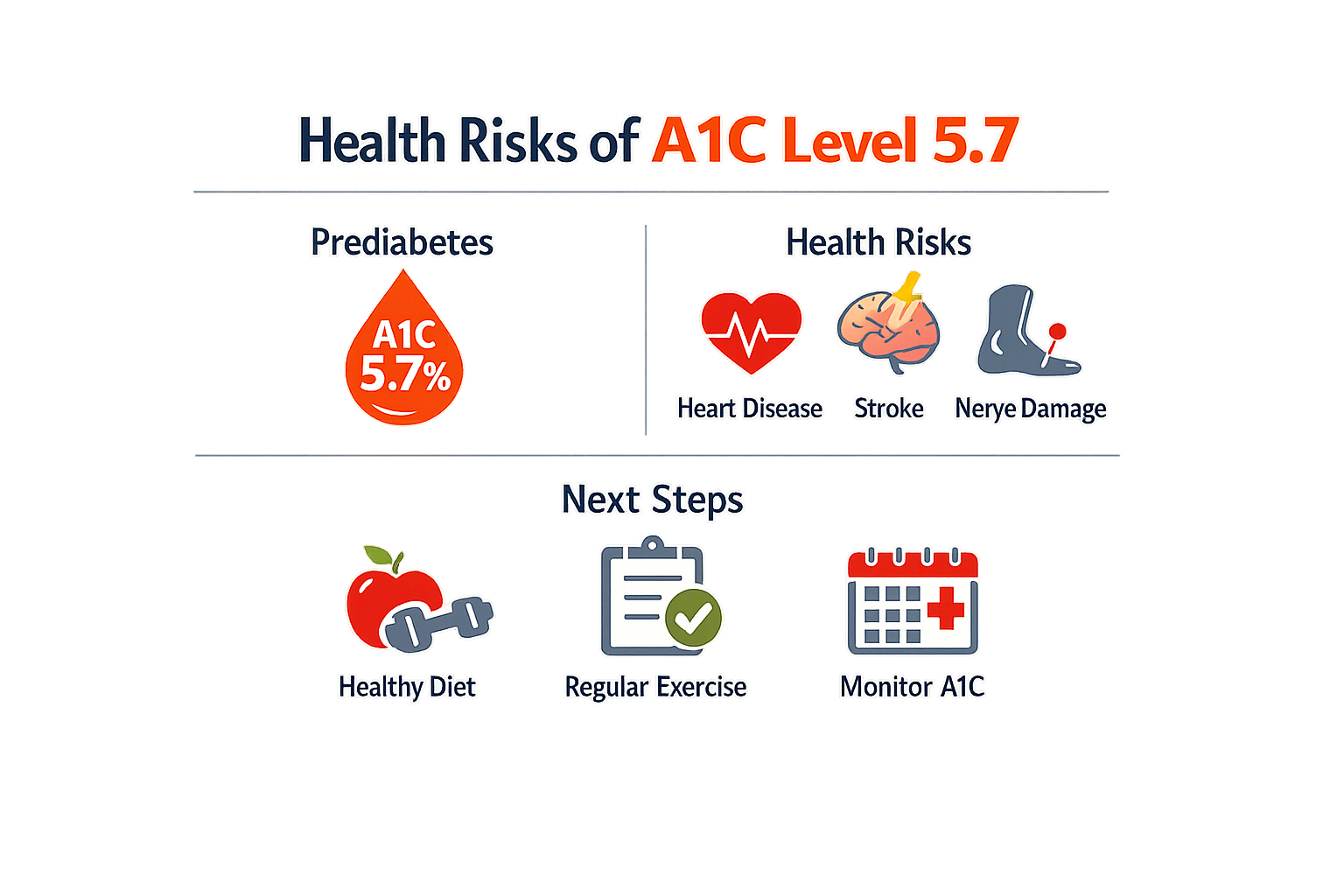
An A1C of 5.7% places you in the prediabetes range according to American Diabetes Association criteria. This means your average blood glucose over the past two to three months has been higher than normal but not yet high enough to be classified as type 2 diabetes. The prediabetes range spans A1C values from 5.7% to 6.4%; normal is below 5.7%, and diabetes is diagnosed at 6.5% or above.
Prediabetes is not a benign holding pattern. Research shows that A1C values between 6.0% and 6.5% carry a 25% to 50% risk of progressing to type 2 diabetes within five years. While your 5.7% result sits at the lower end of the prediabetes range, it signals that your body's glucose regulation is under strain and warrants attention now rather than later.
What Prediabetes Means for Your Health
Prediabetes increases your risk for several long-term complications even before diabetes develops. Elevated blood glucose — even at levels below the diabetes threshold — can begin to damage blood vessels, nerves, and organs over time. Cardiovascular disease risk rises with prediabetes, and some individuals experience early signs of nerve damage or changes in kidney function.
The good news is that prediabetes is one of the most modifiable stages in the glucose spectrum. Small, sustained changes in diet, physical activity, and weight can bring A1C back into the normal range and significantly reduce the risk of progression. For context on what normal blood glucose looks like day-to-day, see What's a Normal Blood Sugar Level and Why It Matters.
Recommended Next Steps
If you've received an A1C result of 5.7%, your care team will likely recommend a combination of monitoring and lifestyle intervention. Here's what typically comes next:
- Retest in three to six months to track whether your A1C is stable, rising, or improving. Prediabetes can fluctuate, and a single result is a snapshot rather than a diagnosis set in stone.
- Discuss your personal risk factors with your provider — family history of diabetes, weight, activity level, and other metabolic markers like blood pressure and cholesterol all influence your trajectory.
- Start with achievable lifestyle changes focused on diet quality, regular movement, and modest weight loss if indicated. Even a 5% to 7% reduction in body weight has been shown to reduce diabetes risk by more than half in people with prediabetes.
- Consider additional testing if your provider suspects other factors influencing glucose regulation, such as insulin resistance or metabolic syndrome.
Prediabetes is a call to action, not a verdict. The numbers at 5.7% give you a clear baseline and a window to intervene before glucose regulation becomes harder to manage. Confirm your individualized A1C target and monitoring schedule with your care team — these recommendations are general guidance, and your situation may call for a different approach.
How to Lower A1C Levels
Lowering your A1C from 5.7 into the normal range is achievable through consistent lifestyle changes and regular monitoring. The goal is to reduce average blood glucose over time, which directly translates to a lower A1C reading. Small, sustainable adjustments often produce better long-term results than drastic overhauls that are difficult to maintain.
Physical Activity and Movement
Regular physical activity is one of the most effective tools for improving glycemic control. Research shows that 150 minutes of activity per week can reduce HbA1c in the long term. This breaks down to about 30 minutes of movement on most days of the week — walking, cycling, swimming, or any activity that raises your heart rate counts.
Physical inactivity and a sedentary lifestyle increase the risk of progression to type 2 diabetes. Even small increases in daily movement — taking the stairs, parking farther away, standing during phone calls — contribute to better glucose regulation over time.
Dietary Adjustments
What you eat directly affects your blood sugar levels. Focus on whole foods with fiber, lean proteins, and healthy fats, which slow glucose absorption and prevent sharp spikes. Reducing refined carbohydrates and added sugars helps stabilize blood glucose throughout the day.
Practical dietary steps include:
- Choosing whole grains over white bread, rice, and pasta
- Adding non-starchy vegetables to every meal
- Including protein and fat with carbohydrate-containing foods to slow digestion
- Limiting sugary drinks and swapping them for water, unsweetened tea, or sparkling water
- Watching portion sizes, especially for starchy foods
These changes don't require eliminating entire food groups or following restrictive diets. Small, consistent shifts in eating patterns often produce measurable A1C improvements within three months.
Weight Management
If you're carrying extra weight, losing even a modest amount — 5 to 10 percent of your body weight — can significantly improve insulin sensitivity and lower A1C. Weight loss is not required for everyone with an A1C of 5.7, but it is one of the most evidence-backed interventions for those who are overweight.
Combining dietary changes with regular physical activity creates the conditions for gradual, sustainable weight loss. Avoid crash diets or extreme calorie restriction, which are difficult to maintain and can lead to rebound weight gain.
Regular Monitoring and Check-Ups
Schedule follow-up A1C testing with your healthcare provider, typically every three to six months. Tracking your progress helps you and your care team assess whether your current strategies are working or if adjustments are needed.
Regular check-ups also allow your provider to screen for other cardiovascular risk factors — blood pressure, cholesterol, kidney function — that often accompany prediabetes and require coordinated management.
Why Lowering A1C Matters
Reducing your A1C from 5.7 into the normal range (below 5.7) lowers your risk of developing type 2 diabetes and its complications. A 1% reduction in HbA1c can reduce the risk of microvascular complications by 37%. Lowering HbA1c also reduces the risk of myocardial infarction by 14% and diabetes-associated death by 21%.
These statistics underscore the real-world impact of the lifestyle changes outlined above. Prediabetes is not a diagnosis to ignore, but it is also not a foregone conclusion — it is a window of opportunity to take action before progression occurs.
For detailed strategies on bringing your A1C down quickly and safely, see our guide on how to lower your A1C fast.
Conclusion
An A1C of 5.7 is a signal, not a sentence. It marks the threshold of prediabetes—a window where blood sugar is elevated but type 2 diabetes has not yet developed. Understanding what this number means gives you the opportunity to act before progression occurs. The key points to remember: an A1C of 5.7 reflects average glucose levels over the past two to three months, it indicates increased risk, and it responds to lifestyle changes.
The steps forward are straightforward. Work with your care team to confirm the result and rule out other factors that might affect A1C accuracy. Focus on sustainable changes—gradual weight loss if needed, consistent physical activity, and a balanced eating pattern that emphasizes whole foods and limits refined carbohydrates. Regular monitoring allows you to track progress and adjust your approach as needed.
Prediabetes is reversible for many people, but it requires consistent effort and coordination with your healthcare provider. If you're looking for practical strategies to bring your A1C down, How to Lower Your A1C Fast: Realistic Strategies offers evidence-based guidance. The most important step is the one you take today—whether that's scheduling a follow-up appointment, adding a 15-minute walk to your routine, or adjusting one meal at a time. Small, sustained changes compound over months, and an A1C of 5.7 is early enough to make those changes count.
An A1C level of 5.7 indicates prediabetes, signifying elevated blood sugar levels. Understand its implications and next steps.
Related reading

Maren Alcott is the lead presenter at DiabetesCompass. She is an AI-presented digital character. Every article Maren presents is researched and fact-checked by the DiabetesCompass editorial team against the ADA Standards of Care, peer-reviewed journals, and named clinical sources. Maren does not give medical advice — for questions about your specific situation, talk to your care team.