
Preventing Diabetes Kidney Problems: Protect Your Kidneys with Diet
Learn how preventing diabetes kidney problems can protect your kidneys through dietary choices, blood sugar management, and lifestyle strategies.


On this page
Introduction
Preventing diabetes complications is not a vague hope — it is a measurable outcome tied to specific choices, and diet is one of the most powerful tools you control. Our team at DiabetesCompass has spent years translating diabetes research into practical guidance for people navigating a new diagnosis or managing the condition long-term. One question comes up repeatedly: what can I do right now to protect my kidneys? The answer starts with understanding that preventing diabetes complications, particularly kidney problems, requires consistent, kidney-friendly choices that keep blood sugar in a range your care team has set with you.
Research tracking people with glucose intolerance over decades shows that those who prevent or delay diabetes through lifestyle intervention experience fewer complications overall. The Diabetes Prevention Program Outcomes Study found that individuals who did not develop diabetes had a lower prevalence of both microvascular and macrovascular complications than those who did develop the condition. This finding underscores a central truth: preventing diabetes complications is not just about avoiding a diagnosis — it is about protecting every organ system, including the kidneys, from the damage elevated blood sugar can cause over time.
Your kidneys filter waste from your blood, regulate fluid balance, and manage electrolytes. When blood sugar stays elevated, the kidneys work harder, and over time that extra work damages the filtering units inside them. Diet influences blood sugar directly, which means the foods you choose today shape your kidney health years from now. For a structured approach to meal planning that supports blood sugar control, see our guide to the Diabetes Plate Method.
This article walks through the connection between diabetes and kidney health, the dietary strategies that protect kidney function, and the practical tips that make kidney-friendly eating sustainable. Every recommendation traces to research or clinical guidelines, and every decision about your own care belongs with you and your care team. We are here to orient you to what the evidence shows and what questions are worth bringing to your next appointment.
How Does Diabetes Affect Kidney Health?
Diabetic kidney disease — sometimes called diabetic nephropathy — is one of the most common long-term complications of type 2 diabetes. Research indicates that about one-third of adults with type 2 diabetes develop some degree of kidney impairment. The kidneys do more than filter waste; they also help regulate blood sugar through glucose reabsorption and production. When diabetes affects the kidneys, that regulatory role breaks down, creating a cycle that makes blood-sugar management harder and raises the risk of both dangerously high and dangerously low glucose levels. For guidance on recognizing dangerous blood sugar drops, see our article on low blood sugar symptoms.
How Diabetes Damages the Kidneys
Persistent high blood sugar damages the small blood vessels in the kidneys' filtering units, called glomeruli. Over time, this damage allows protein — primarily albumin — to leak into the urine, a condition called albuminuria. Early-stage kidney disease often presents no symptoms; albuminuria may be the first measurable sign. As damage progresses, the kidneys lose their ability to filter waste efficiently, and the glomerular filtration rate (GFR) declines. Both high and low blood-sugar episodes contribute to this decline: hyperglycemia triggers oxidative stress and inflammation, while hypoglycemia becomes more frequent as the kidneys' ability to clear insulin and process glucose diminishes.
The Prediabetes Connection
Kidney damage can begin before a diabetes diagnosis. Research indicates that individuals with prediabetes — characterized by insulin resistance and mild hyperglycemia — face an elevated risk of chronic kidney disease (CKD) even if they never progress to full diabetes. The mechanisms driving this risk include low-grade inflammation, endothelial dysfunction, and early changes in how the kidneys handle blood flow and filtration. This means that preventing diabetes complications starts earlier than many people realize: protecting kidney health is relevant at the prediabetes stage, not only after a type 2 diagnosis. To understand the spectrum of diabetes conditions, see our guide to types of diabetes.
Why Glycemic Control Matters
Improving blood-sugar control reduces the incidence and progression of kidney disease. The ADVANCE trial demonstrated that intensive glycemic management reduced albuminuria, slowed nephropathy progression, and decreased the need for dialysis. Similarly, the ACCORD trial found significant reductions in albuminuria with intensive therapy. These findings reinforce that consistent glucose management — tailored to each person's kidney function and risk of hypoglycemia — is a primary tool for protecting kidney health. However, glycemic targets become more complex as kidney disease progresses: the risk of hypoglycemia rises, and standard glucose-monitoring approaches may need adjustment.
For a structured approach to balancing carbohydrate intake and blood-sugar stability, see The Diabetes Plate Method: Simple Meal Planning That Works.
What This Means for Your Care Plan
If you have diabetes or prediabetes, routine kidney-function monitoring — including urine tests for albumin and blood tests for estimated GFR — helps catch changes early. Ask your care team how often these tests fit your situation, what your current numbers mean, and what blood-sugar range balances glycemic control with hypoglycemia risk given your kidney function. Early detection and tailored glucose management are the foundation of preventing diabetes complications that affect the kidneys.
What Dietary Strategies Protect Your Kidneys from Diabetes Complications?
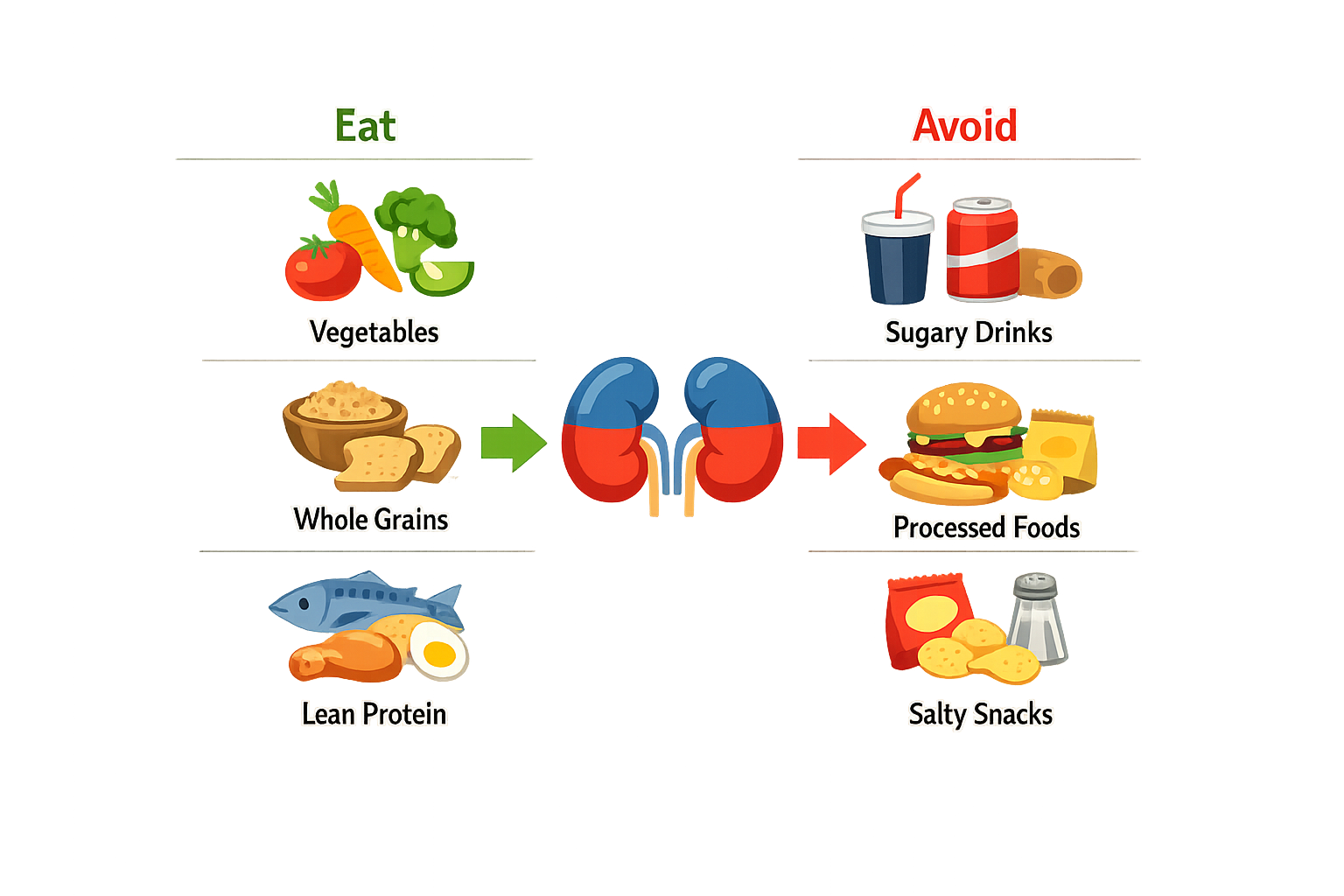
Preventing diabetes complications starts with choices you make at every meal. The research on dietary patterns for kidney protection points to a few consistent themes: reduce processed foods and red meat, increase fiber and plant-based foods, and manage sodium and saturated fat. Our team reviewed the evidence from large-scale studies and clinical guidelines to translate those findings into practical steps you can discuss with your care team.
Step 1: Shift Toward a Mediterranean-Style Eating Pattern
The Mediterranean diet has shown an inverse association with type 2 diabetes risk — meaning the more closely people follow it, the lower their risk. This pattern emphasizes fruits, vegetables, whole grains, legumes, nuts, and olive oil, with moderate amounts of fish and poultry and limited red meat. For kidney protection, the combination of high fiber, healthy fats, and lower animal protein intake addresses both blood sugar control and the metabolic stress that damages kidney filters over time.
Start by building meals around vegetables, whole grains, and legumes rather than meat. Use olive oil as your primary fat. If you eat animal protein, favor fish or poultry and keep portions modest. The goal is not perfection but a consistent pattern that reduces the inflammatory and oxidative stress linked to both diabetes progression and chronic kidney disease.
Step 2: Increase Plant-Based Foods and Fiber
Plant-based diets — which emphasize foods from plants and reduce (but do not necessarily eliminate) animal-derived foods — have demonstrated benefits in lowering glycemic indices and cardiovascular markers. High-fiber foods slow glucose absorption, improve insulin sensitivity, and support a healthier gut microbiome, all of which contribute to better blood sugar control and reduced kidney stress.
Fill half your plate with non-starchy vegetables, add a serving of whole grains or starchy vegetables, and include a source of plant protein like beans, lentils, or tofu. Nuts and seeds make nutrient-dense snacks. If you are managing both diabetes and early kidney disease, confirm your potassium and phosphorus targets with your care team before making large shifts in legume or nut intake. For straightforward meal-planning guidance, see The Diabetes Plate Method: Simple Meal Planning That Works.
Step 3: Reduce Red Meat, Sodium, and Saturated Fat
Dietary regimens that support kidney health share a few key restrictions: reduced red meat, lower sodium, and less saturated fat. Red and processed meats contribute to inflammation and oxidative stress; high sodium raises blood pressure and accelerates kidney damage; and saturated fats worsen insulin resistance and cardiovascular risk — all of which compound the kidney burden in diabetes.
Swap red meat for fish, poultry, or plant proteins most days of the week. Read labels and choose lower-sodium versions of canned goods, broths, and condiments. Cook at home when possible so you control the salt. Replace butter and cream with olive oil or avocado. These changes reduce the metabolic load on your kidneys and help stabilize blood pressure and blood sugar.
Step 4: Focus on Overall Dietary Quality, Not Just Single Nutrients
For years, kidney-disease nutrition focused narrowly on restricting protein, potassium, and phosphorus. The evidence now suggests that overall dietary quality — the synergistic effect of whole foods, fiber, healthy fats, and micronutrients — matters as much as any single restriction. A high-quality diet improves palatability, adherence, and long-term outcomes, whereas overly restrictive rules can compromise nutrition and make the plan unsustainable.
Work with a registered dietitian or your care team to tailor these principles to your specific kidney function, medication list, and blood-sugar patterns. The numbers that matter — your A1C, blood pressure, potassium, and phosphorus levels — guide how much you adjust each element. The goal is a pattern you can maintain, not a short-term fix.
Tips and Tricks for Kidney-Friendly Eating

Making kidney-friendly dietary choices does not require perfect execution every day — it requires a framework you can work with over time. Our team has seen many readers benefit from building habits gradually rather than attempting a complete dietary overhaul overnight. The tips below are designed to make preventing diabetes complications practical in everyday life.
Start With What You Already Eat
Rather than abandoning familiar meals, adjust them. If you typically eat a meat-centered dinner, reduce the portion of protein and add more vegetables or whole grains. A healthy diet that decreases chronic kidney disease incidence and progression can significantly reduce the burden on healthcare and may avoid or reduce the need for pharmacological intervention, according to research on dietary patterns in kidney disease. Small, consistent changes compound over time.
Plan Around Blood Sugar Stability
Kidney protection and blood sugar management work together. Individuals with diabetes and kidney disease are exposed to a high risk of both hyperglycemia and hypoglycemia, both of which are associated with increased morbidity. A restricted diet can reduce hepatic gluconeogenesis, which may help prevent hypoglycemic episodes in diabetic patients with chronic kidney disease. Work with your care team to understand how your meal timing and composition affect your glucose readings, and adjust portions or food combinations accordingly.
For practical meal-planning strategies that support stable blood sugar, see our guide to the Diabetes Plate Method, which offers a visual framework for balancing your plate without counting every gram.
Keep a Short List of Go-To Meals
Decision fatigue is real. Maintain a rotating list of five to seven kidney-friendly meals you can prepare without consulting a recipe. This reduces the mental load and makes it easier to stay consistent when you are tired or pressed for time. Include at least one option that requires minimal cooking — a salad with grilled chicken, canned low-sodium beans, and olive oil, for example.
Address Prediabetes and Prehypertension Early
If your care team has identified prediabetes or prehypertension, earlier treatment of hyperglycemia or high blood pressure may be necessary to prevent kidney damage. Dietary changes are often the first line of intervention. Discuss specific blood pressure and glucose targets with your provider, and use those numbers to guide your food choices and portion sizes.
Use Your Grocery List as a Tool
Write your list by category: fresh vegetables, lean proteins, whole grains, healthy fats. This structure helps you avoid impulse purchases of processed or high-sodium items. Shop the perimeter of the store first, where fresh and minimally processed foods are typically located, and limit time in the center aisles where packaged goods dominate.
Monitor and Adjust
What works for one person may not work for another, and what works now may need adjustment as kidney function or glucose control changes. Keep a simple log of meals, glucose readings, and how you feel. Share this log with your care team at appointments so they can help you refine your approach over time.
Conclusion
Preventing diabetes complications — particularly diabetic kidney disease — requires a coordinated approach that combines dietary choices, blood sugar management, and ongoing communication with your care team. Our team has reviewed the evidence showing that lifestyle interventions, when sustained over time, reduce the incidence of complications and improve long-term outcomes for people living with diabetes.
The dietary strategies outlined in this article — controlling protein intake, monitoring sodium and potassium, managing phosphorus, and keeping blood sugar stable — form a foundation that protects kidney function. Research demonstrates that those who do not develop diabetes experience a lower prevalence of complications compared to those who do, underscoring the value of prevention at every stage. Even when kidney disease is already present, glycemic control remains a powerful tool to slow progression and reduce the risk of advanced kidney damage.
Your kidneys play a critical role in glucose metabolism, and as kidney function changes, so do your nutritional needs and medication responses. The complexity of managing diabetes alongside kidney disease means that a one-size-fits-all approach does not work. Regular monitoring, individualized meal planning, and adjustments tailored to your current kidney function are essential. Bring the questions that arise from your daily experience to your next appointment — your care team can help you refine your plan as your situation evolves.
Preventing diabetes complications is not about perfection; it is about consistent, informed choices that add up over time. For more guidance on structuring balanced meals that support stable blood sugar, see The Diabetes Plate Method: Simple Meal Planning That Works. Small, sustainable changes in what you eat and how you monitor your health can protect your kidneys and improve your quality of life for years to come.

Maren Alcott is the lead presenter at DiabetesCompass. She is an AI-presented digital character. Every article Maren presents is researched and fact-checked by the DiabetesCompass editorial team against the ADA Standards of Care, peer-reviewed journals, and named clinical sources. Maren does not give medical advice — for questions about your specific situation, talk to your care team.
DiabetesCompass uses clearly identified digital editorial voices. See our AI disclosure for how bylines and AI-assisted production work.