
Types of Diabetes: Type 1, Type 2, Gestational & More
Learn about the different types of diabetes including type 1, type 2, gestational diabetes, and rare forms—what they mean for your health and management.


On this page
Introduction
Diabetes is no longer a rare condition — it is a global health challenge affecting hundreds of millions of people. In 2014, an estimated 422 million adults worldwide were living with diabetes, more than double the 108 million diagnosed in 1980. The scale and pace of this increase have led the United Nations to recognize diabetes as a 21st-century pandemic.
Yet despite its prevalence, diabetes remains widely misunderstood. Many people hear the word "diabetes" and assume all cases are the same, or they conflate type 1 and type 2 diabetes without recognizing the fundamental differences in how these conditions develop and respond to treatment. This confusion can delay diagnosis, lead to inappropriate management strategies, and increase the risk of serious complications including heart attack, stroke, kidney failure, and vision loss.
Understanding the different types of diabetes — including type 1, type 2, gestational diabetes, and rarer forms — is the foundation for effective care. Each type has its own underlying cause, typical age of onset, progression pattern, and treatment approach. Knowing which type you or a family member has allows you to ask the right questions at appointments, recognize what to expect from medications or devices, and build a management plan that fits the specific condition rather than a generic "diabetes" label.
This article walks through the major types of diabetes, what distinguishes them, and what each diagnosis means for day-to-day management. It is written as orientation for people who are newly diagnosed, caring for a family member with diabetes, or trying to make sense of conflicting information. The goal is clarity — not medical advice, but a plain-language map of the landscape so you can navigate your own care with confidence.
Problem Statement

A diagnosis of diabetes often arrives with a label—type 1, type 2, gestational—but the distinctions between these categories are rarely explained in a way that makes practical sense. Many people leave their first appointment unclear about what their specific diagnosis means for daily management, what treatments they might need now versus later, and whether the advice they find online even applies to their situation. This confusion is not trivial: misunderstanding your diabetes type can lead to delayed treatment, inappropriate self-management strategies, and unnecessary anxiety about complications that may not apply to you.
The Cost of Misclassification and Delayed Clarity
Type 2 diabetes accounts for approximately 90% of all diabetes cases worldwide, yet the remaining 10%—type 1, gestational, and rarer forms like LADA and MODY—are frequently misunderstood or misdiagnosed in the early stages. A person with slowly progressing autoimmune diabetes (LADA) may be told they have type 2 and prescribed oral medications that will not address the underlying insulin deficiency. Someone with gestational diabetes may assume their condition will resolve after pregnancy without understanding their elevated risk for type 2 diabetes later in life. These gaps in understanding are not the fault of the person diagnosed; they reflect a healthcare system that often prioritizes labeling over explanation.
The consequences of this confusion extend beyond missed appointments or forgotten prescriptions. Many people with type 2 diabetes struggle to achieve recommended blood-glucose targets despite the availability of effective medications, in part because they do not fully understand what those medications are meant to do or why intensifying treatment—such as adding insulin—might become necessary as the disease progresses. Fear of side effects, particularly hypoglycemia, and a lack of clear communication about treatment goals contribute to reluctance to adjust therapy even when glycemic control deteriorates.
For those navigating a new diagnosis, the first step is not mastering every clinical detail but rather understanding which type of diabetes you have, what that means for your body's insulin production and use, and what questions to bring to your next appointment. If you're trying to make sense of a prediabetes result or an A1C that sits in a gray zone, reading about what an A1C of 5.7 means for your health can clarify where you stand and what comes next.
Why the Distinctions Matter for Your Care Plan
The differences between diabetes types are not academic. Type 1 diabetes is an autoimmune condition in which the body's immune system destroys insulin-producing beta cells in the pancreas, requiring lifelong insulin therapy from the outset. Type 2 diabetes is a progressive condition characterized by insulin resistance and eventual beta-cell decline, often managed initially with lifestyle changes and oral medications before insulin becomes necessary. Gestational diabetes develops during pregnancy and typically resolves after delivery, but it signals a higher lifetime risk for type 2 diabetes. LADA (latent autoimmune diabetes in adults) and MODY (maturity-onset diabetes of the young) are less common but require distinct diagnostic and treatment approaches.
Each of these conditions demands a different management strategy, a different timeline for treatment escalation, and different expectations for long-term outcomes. Misunderstanding your type can lead to inappropriate dietary advice, ineffective medication regimens, and missed opportunities for early intervention. The problem is not that the information does not exist—it does, in clinical guidelines, research papers, and manufacturer instructions—but that it is rarely translated into plain language that a newly diagnosed person can act on without a medical degree.
The label you receive at diagnosis is only useful if you understand what it means for the decisions you will make tomorrow, next month, and five years from now.
The next section will walk through the defining features of each major diabetes type, the mechanisms behind them, and the management approaches that align with each diagnosis. The goal is not to replace your care team's guidance but to give you the context you need to ask the right questions and recognize when your treatment plan may need adjustment.
Solution Steps
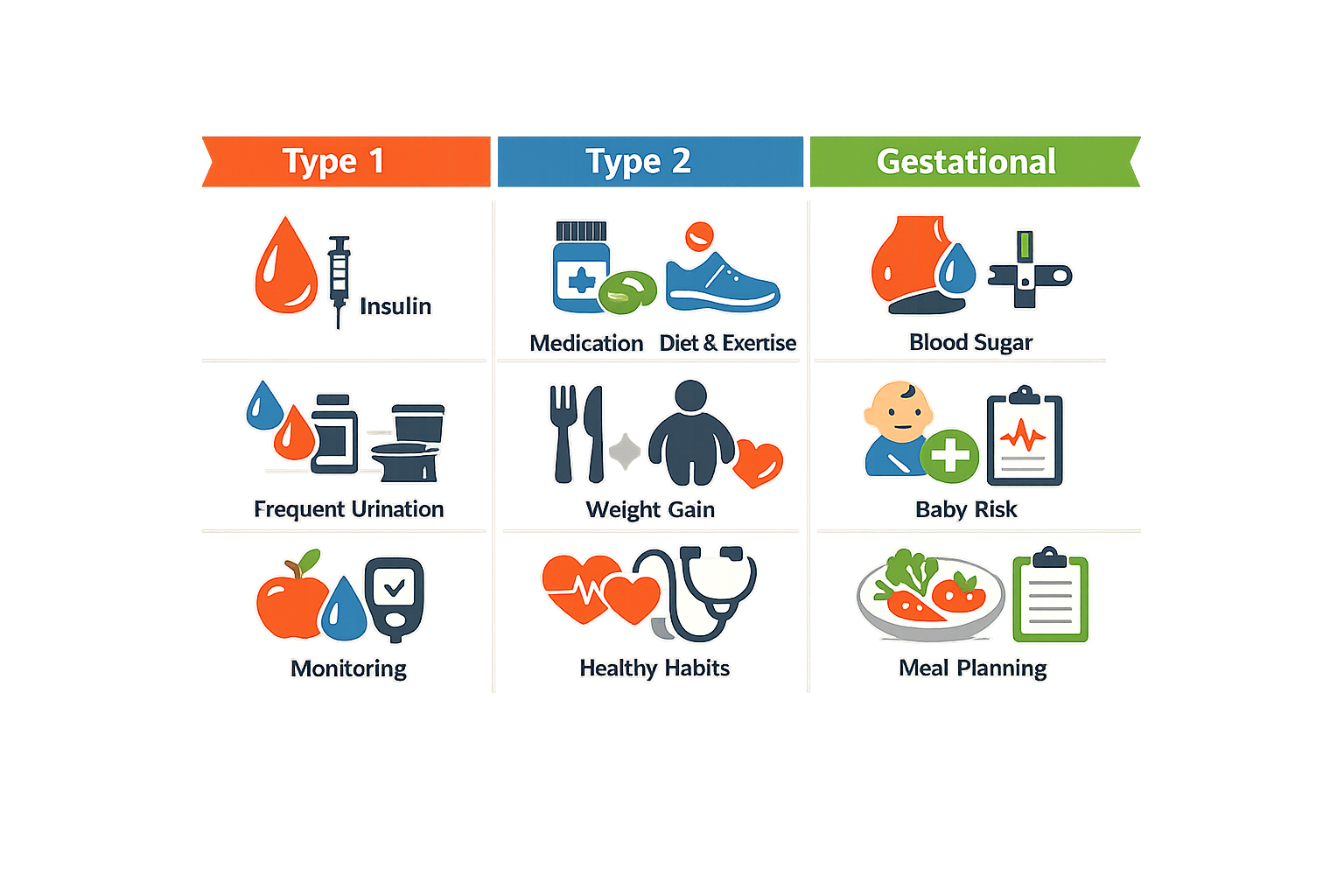
Understanding the different types of diabetes starts with recognizing that each type has a distinct underlying mechanism, even though they all affect how your body handles glucose. The steps below walk through the major types, their defining characteristics, and what management typically looks like for each.
Type 1 Diabetes: Absolute Insulin Deficiency
Type 1 diabetes is characterized by absolute insulin deficiency resulting from autoimmune destruction of the insulin-producing beta cells in the pancreas. Without these cells, the body cannot produce insulin at all, which means glucose cannot enter cells for energy and instead accumulates in the bloodstream.
Key characteristics:
- Autoimmune process destroys beta cells
- Typically diagnosed in children, adolescents, or young adults (though it can occur at any age)
- Requires insulin therapy from diagnosis onward—there is no alternative to insulin replacement
- Symptoms often appear suddenly: extreme thirst, frequent urination, unexplained weight loss, fatigue
Management approach:Treatment for type 1 diabetes has historically remained almost exclusively glucocentric, with insulin as the only licensed drug treatment. Management involves multiple daily insulin injections or an insulin pump, continuous glucose monitoring (CGM) to track blood sugar in real time, and carbohydrate counting to match insulin doses to food intake. Regular screening for complications—eye exams, kidney function tests, foot checks—is essential.
Type 2 Diabetes: Insulin Resistance and Secretion Defects
Type 2 diabetes arises due to defective insulin activity in body tissues, defective insulin secretion from the pancreas, or a combination of the two. The body's cells become resistant to insulin's effects, and over time the pancreas may not produce enough insulin to overcome that resistance. Type 2 diabetes usually occurs in older adults, but with changes in lifestyle factors such as inactivity and obesity, the condition is increasingly detected in children, adolescents, and young adults.
Key characteristics:
- Insulin resistance in muscles, liver, and fat cells
- Progressive beta-cell dysfunction
- Often develops gradually; many people are asymptomatic for years before diagnosis
- Strongly associated with obesity, physical inactivity, family history, and age
Management approach:Current management of type 2 diabetes involves lifestyle modification: increasing physical activity, improving diet, reaching a healthy body weight, and stopping smoking, all monitored by regular screening. If lifestyle changes do not result in sufficiently decreased blood glucose levels, medication may be prescribed—options include metformin, GLP-1 receptor agonists, SGLT2 inhibitors, and others. Some people with type 2 diabetes eventually require insulin, particularly as beta-cell function declines over time. The latest treatment guidelines recommend medications not just for glucose-lowering but also for weight reduction and for their evidence base in cardiovascular and renal risk reduction.
For more on early intervention options, see Wegovy for Prediabetes: Microdose GLP-1 for Type 2 & Prediabetes.
The complication with type 2 diabetes is the long latency period, often lasting several years, during which the individual is often asymptomatic and unaware of their condition.
Gestational Diabetes: Glucose Intolerance During Pregnancy
Gestational diabetes develops during pregnancy in people who did not have diabetes before conception. Hormonal changes during pregnancy increase insulin resistance, and if the pancreas cannot produce enough extra insulin to compensate, blood glucose rises.
Key characteristics:
- Diagnosed during routine prenatal screening, typically in the second or third trimester
- Increases risk of complications during pregnancy and delivery
- Usually resolves after delivery, but significantly raises the risk of developing type 2 diabetes later in life
Management approach:Management focuses on blood glucose monitoring, dietary changes to control carbohydrate intake, physical activity, and in some cases insulin or oral medication. Close monitoring of both the pregnant person and the baby is standard, with more frequent prenatal visits and ultrasounds. After delivery, follow-up glucose testing is recommended to confirm resolution and screen for progression to type 2 diabetes.
Prediabetes: Elevated Glucose Below the Diabetes Threshold
Prediabetes is not a type of diabetes, but it represents blood glucose levels higher than normal yet below the diagnostic threshold for type 2 diabetes. It signals increased risk of progressing to type 2 diabetes, as well as cardiovascular disease.
Key characteristics:
- A1C between 5.7% and 6.4%, fasting glucose 100–125 mg/dL, or oral glucose tolerance test result 140–199 mg/dL
- Often no symptoms
- Reversible with lifestyle intervention
Management approach:Lifestyle modification is the first-line intervention: weight loss (if overweight), increased physical activity, and dietary changes focused on whole foods and reduced refined carbohydrates. Some healthcare providers prescribe metformin for people at very high risk of progression. Regular monitoring—annual A1C or fasting glucose—tracks whether intervention is working or if progression to type 2 diabetes is occurring.
Rare and Atypical Forms: LADA, MODY, and Secondary Diabetes
Several less common forms of diabetes exist, each with distinct causes and management needs.
LADA (Latent Autoimmune Diabetes in Adults):Sometimes called "type 1.5," LADA is autoimmune diabetes that progresses more slowly than classic type 1. It is often initially misdiagnosed as type 2 because it appears in adults and may respond to oral medications at first. Over time, beta-cell destruction progresses and insulin becomes necessary. Diagnosis requires antibody testing.
MODY (Maturity-Onset Diabetes of the Young):MODY is a group of inherited forms of diabetes caused by single-gene mutations affecting beta-cell function. It typically appears before age 25, runs strongly in families, and may not require insulin. Genetic testing confirms the diagnosis, and treatment depends on the specific gene mutation—some forms respond well to sulfonylureas, while others require insulin.
Secondary diabetes:Diabetes can result from other medical conditions or treatments—pancreatic disease, certain medications (such as corticosteroids), hormonal disorders (such as Cushing's syndrome), or cystic fibrosis-related diabetes. Management addresses both the underlying condition and glucose control.
Tips and Tricks
Navigating a diabetes diagnosis — regardless of type — requires building a working relationship with your care team and learning to ask the right questions. The first 90 days after diagnosis are often the most disorienting, and many people leave appointments without the practical context they need to make sense of their numbers or their treatment plan.
Questions to Ask Your Healthcare Provider
Every diabetes type has its own management path, but certain questions apply across the board. Ask your provider which type of diabetes you have and what that means for your daily routine. If your diagnosis sits between categories — for example, if you're labeled "prediabetes" or "borderline" — ask whether your care plan will change if your numbers shift, and what timeline to expect.
For medication decisions, ask what each drug does (not just its name), how long it takes to work, and what side effects to watch for. If insulin is part of your plan, ask whether your dose will change over time and who you should contact with dosing questions. For type 2 diabetes, ask whether lifestyle changes alone are an option, or whether medication is recommended from the start — and why.
If you're managing gestational diabetes, ask how often you'll need to check your blood sugar, what your target range is, and whether those targets will change as your pregnancy progresses. Ask what happens after delivery — whether you'll need continued monitoring and what your risk is for type 2 diabetes later.
Practical Steps for Day-to-Day Management
Understanding your type of diabetes means knowing which daily actions matter most. For type 1 diabetes, that means learning to count carbohydrates, recognizing the signs of low blood sugar, and keeping fast-acting glucose on hand. For type 2 diabetes, it often means coordinating meals with medication timing and watching for patterns in your blood-glucose readings.
If your care plan includes regular blood-sugar monitoring, ask your provider how often to check, what times of day matter most, and what range to aim for. Write down your target numbers — don't rely on memory. If you're using a continuous glucose monitor, ask how to interpret the trace and what patterns to report at your next visit.
For gestational diabetes, ask whether you'll need to test fasting glucose, post-meal glucose, or both — and what to do if a reading falls outside your target range. Ask whether your care team expects you to adjust your diet on your own or whether you'll work with a dietitian.
Building Your Diabetes Knowledge Base
The ADA Standards of Care are updated annually and offer the most current guidance on diagnosis and management for all types of diabetes. Your care team should be working from these standards, but you can read them yourself — they're publicly available and written in clinical language that's dense but not impenetrable.
If you're newly diagnosed with type 2 diabetes or prediabetes, ask whether a diabetes self-management education program (DSME) is available in your area. These programs are often covered by insurance and provide structured, evidence-based guidance on meal planning, medication, and monitoring.
For rare forms like LADA or MODY, ask your provider whether genetic testing or additional antibody testing would clarify your diagnosis. These types are sometimes misdiagnosed as type 2 diabetes, and the distinction affects treatment — particularly whether insulin is needed and when.
The cheapest tool in diabetes management is a notebook — write down your questions before every appointment, and write down the answers you get.
When to Seek a Second Opinion
If your diagnosis feels uncertain — if you've been told you have type 2 diabetes but you're not overweight, or if your blood sugar isn't responding to standard treatment — ask whether additional testing might clarify your type. If your provider dismisses the question, consider seeking a second opinion from an endocrinologist.
If you're managing gestational diabetes and your blood-sugar readings remain high despite following your meal plan, ask whether insulin is the next step and what that means for your delivery plan. If your provider suggests waiting to see whether your numbers improve on their own, ask what the timeline is and what risks you're balancing.
For any type of diabetes, if your care plan isn't working — if your A1C isn't improving, if you're experiencing frequent lows, or if side effects are making it hard to stay on your medication — bring that to your provider's attention and ask what adjustments are possible. Diabetes management is iterative, and a plan that isn't working should be revised, not endured.
Conclusion
Understanding the different types of diabetes is the first step toward effective management and better health outcomes. Whether you're navigating a new diagnosis of type 1, type 2, gestational diabetes, or one of the rarer forms, knowing what distinguishes your condition helps you ask the right questions, set realistic expectations, and work with your care team to build a plan that fits your life.
Diabetes is a metabolic disease characterized by elevated blood glucose, but the path to that elevation—and the tools to manage it—differs across types. Type 1 diabetes requires lifelong insulin because the pancreas produces little to none. Type 2 diabetes often starts with insulin resistance and may be managed with lifestyle changes, oral medications, or insulin as the condition progresses. Gestational diabetes appears during pregnancy and usually resolves after delivery, though it signals increased risk for type 2 later. LADA and MODY occupy the in-between spaces, each with distinct genetic or autoimmune signatures that affect treatment choices.
Recognizing these distinctions matters because diabetes is the seventh leading cause of death globally and a major driver of complications including heart attack, stroke, kidney failure, blindness, and lower-limb amputation. Early, accurate classification and individualized care reduce those risks. If you're newly diagnosed or supporting someone who is, the editorial team at DiabetesCompass is here to translate the research, decode the device manuals, and help you navigate the first 90 days and beyond.
For more context on what happens when blood sugar sits in the prediabetes range and what interventions are available, see our guide on A1C of 5.7: What It Means for Your Health and Next Steps.
No two diabetes journeys look the same, but understanding your type gives you the foundation to make informed decisions, advocate for the care you need, and manage the condition with confidence rather than confusion.

Maren Alcott is the lead presenter at DiabetesCompass. She is an AI-presented digital character. Every article Maren presents is researched and fact-checked by the DiabetesCompass editorial team against the ADA Standards of Care, peer-reviewed journals, and named clinical sources. Maren does not give medical advice — for questions about your specific situation, talk to your care team.
DiabetesCompass uses clearly identified digital editorial voices. See our AI disclosure for how bylines and AI-assisted production work.