
Choosing the Right Blood Glucose Meter for Your Needs

On this page
Introduction
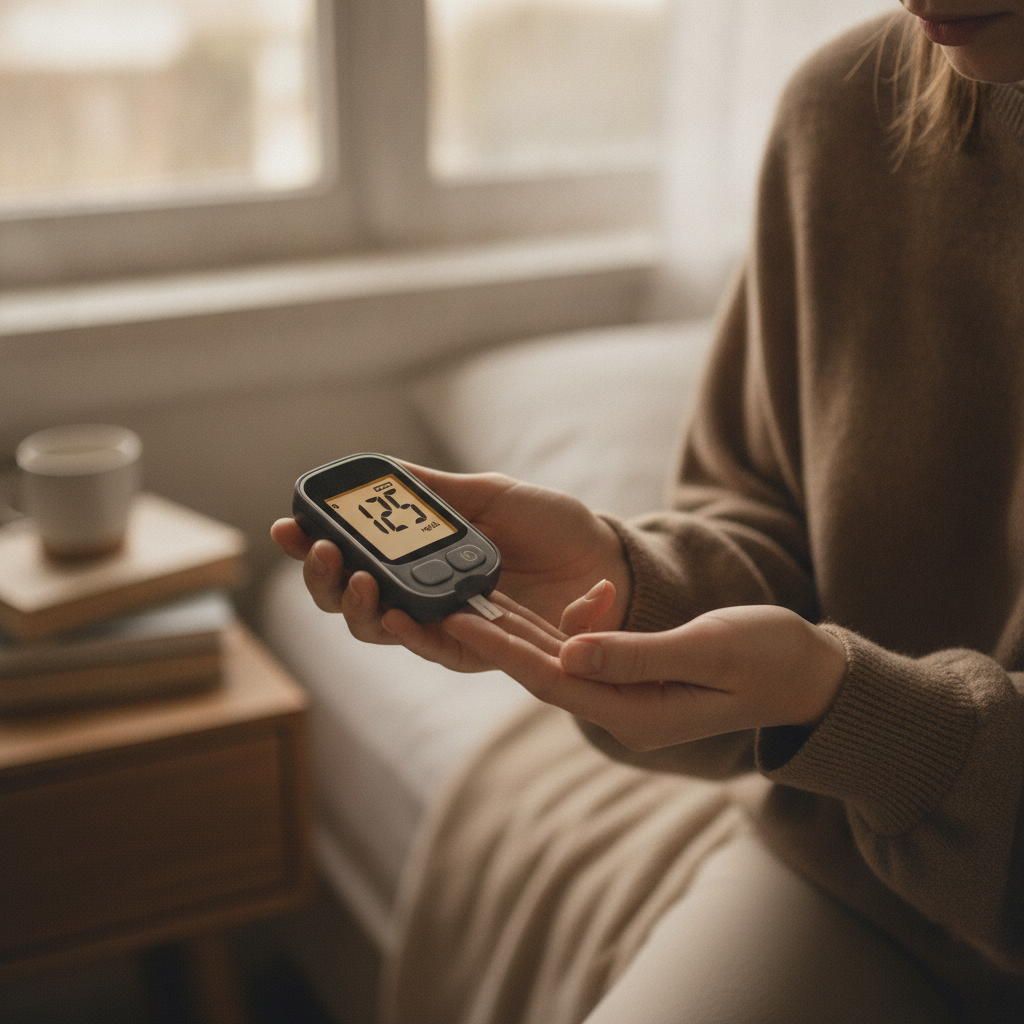
Selecting a blood glucose meter is one of the first practical decisions you'll make after a diabetes or prediabetes diagnosis. The device you choose becomes a daily companion in managing your condition — it tells you whether your blood sugar is in range, helps you spot patterns, and gives you the information you need to make decisions about food, activity, and medication timing.
A blood glucose meter measures the concentration of glucose in your blood, typically using a small drop from a finger prick. While the basic function is the same across devices, the experience of using them varies widely. Some meters offer large displays and simple navigation, which can be critical if you have vision challenges or dexterity issues. Others integrate with smartphone apps, allowing you to track trends over time and share data with your care team. When selecting a blood glucose meter, it's essential to consider several factors to ensure it meets your specific needs.
The research shows that self-monitoring of blood glucose, though useful in managing diabetes, does not provide continuous data because readings depend on when you decide to test. Pain, inconvenience, and the need for frequent finger pricks can lead to lower testing frequency and make it harder to catch nocturnal hypoglycemia or rapid glucose changes. This is where understanding your monitoring options becomes important — traditional meters give you snapshots, while continuous glucose monitoring systems provide a fuller picture by automatically measuring glucose throughout the day and night.
The right meter for you is the one you'll actually use consistently. Ease of use matters — look for meters with features that match your daily routine and physical needs. Accuracy is non-negotiable, and while all meters sold in the U.S. must meet FDA standards, some offer additional features like automatic coding or advanced data management that can enhance precision. Cost is another critical factor, particularly the ongoing expense of test strips, which can add up quickly if you're testing multiple times per day.
Finally, think about integration. Many modern meters offer Bluetooth connectivity, making it easier to sync readings with a smartphone app or share data with your healthcare provider. Our team has extensively reviewed guidelines and studies to help clarify what might be important in making this choice. However, while these features can guide your selection, it's crucial to confirm any decisions with your care team to ensure the meter you choose aligns with your personal health goals and management plan.
Quick Verdict
A blood glucose meter is a device that measures the concentration of glucose in your blood — a foundational tool for managing diabetes and prediabetes. While all meters sold in the United States must meet FDA accuracy standards, choosing the right one depends on how you'll use it, what features matter most in your daily routine, and how it fits into your broader diabetes management plan.
The key trade-offs center on ease of use, ongoing strip costs, data management, and whether the meter integrates with other devices you already use. Meters with large displays, simple navigation, and minimal setup steps work well if you're newly diagnosed or managing dexterity challenges. Strip costs vary widely and accumulate quickly — some meters lock you into a single brand of strips, while others offer more flexibility. Many modern meters now include Bluetooth connectivity, syncing readings to a smartphone app and making it easier to share data with your care team.
No single meter is universally "best" — the right choice aligns with your testing frequency, insurance coverage, and whether you value features like automatic coding, spoken results, or compatibility with continuous glucose monitoring (CGM) systems. If you're considering a CGM for prediabetes or early type 2 management, understanding how traditional meters and continuous systems differ can help you decide which tool — or combination of tools — fits your situation.
The meter that works is the one you'll actually use consistently — features matter less than reliability and affordability in your specific context.
Before committing to a meter, confirm that your insurance covers the test strips, check whether your pharmacy stocks them reliably, and ask your care team whether any specific meter integrates with the electronic health record or data platform they use. The decision isn't permanent — many people switch meters as their needs or insurance change — but starting with a clear sense of what you're optimizing for (cost, convenience, data export, or ease of use) will save you frustration later.
Key Features
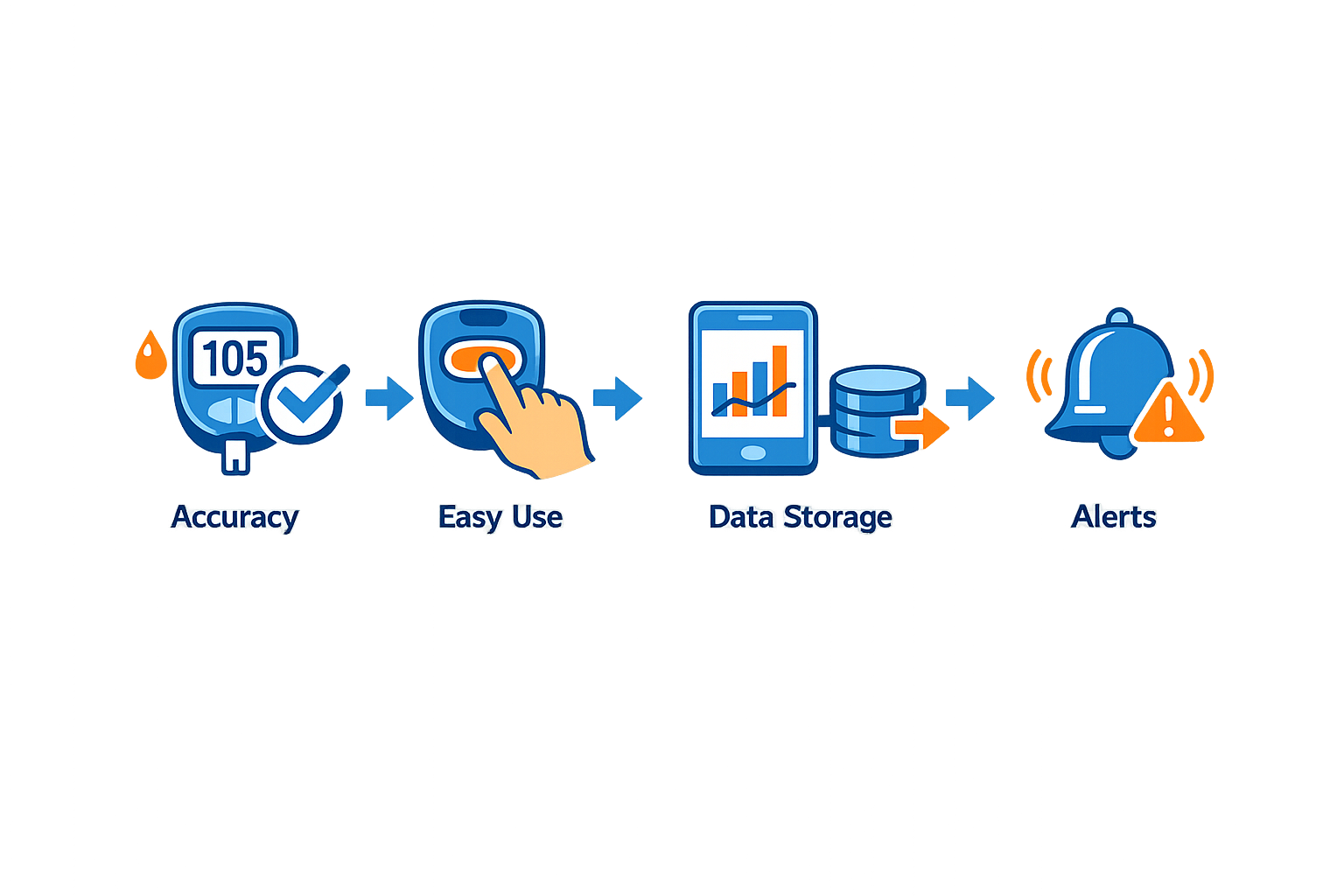
When selecting a blood glucose meter, several essential features determine whether the device will fit smoothly into your daily routine. Understanding what to look for helps you choose a meter that supports accurate readings, simplifies testing, and integrates with your broader diabetes management plan.
Accuracy and Measurement Standards
Accuracy is the foundation of effective glucose monitoring. All blood glucose meters sold in the United States must meet FDA standards, but some devices offer tighter precision than others. Measurement accuracy is commonly assessed using the mean absolute relative difference (MARD), with lower values indicating increased accuracy against reference glucose values. A MARD of ≤10% has been hypothesized to facilitate non-adjunctive use of glucose sensors, meaning the device can be trusted for treatment decisions without confirmation from another test.
Traditional blood glucose meters measure capillary blood glucose from a finger-prick sample. While glycated hemoglobin (A1C) remains the reference test to monitor glucose levels over two to three months, this measure fails to consider fluctuations in blood glucose levels during the day and fails to detect acute events of hypoglycemia or postprandial hyperglycemia. Self-monitoring with a meter fills that gap by capturing real-time snapshots of your glucose.
Ease of Use and Display
A meter's usability directly affects how consistently you'll test. Look for large, easy-to-read displays with clear numbers and intuitive navigation. Some meters feature backlit screens for testing in low light, while others offer audio readouts for users with vision impairment.
Integrated designs can simplify the process further. The Mendor Discreet All-in-one Blood Glucose Meter, for example, includes an integrated lanceting device and test strip cartridge, reducing the number of components you need to carry and manage. This all-in-one approach can be especially helpful for people who test frequently or need to test discreetly in public settings.
For more context on how continuous monitoring compares to traditional meters, see our guide on how a Dexcom CGM actually works.
Data Management and Connectivity
Modern meters often include memory storage to track readings over days or weeks, allowing you and your care team to spot patterns. Many devices now offer Bluetooth connectivity, syncing your readings to a smartphone app where you can view trends, set reminders, and share data with your healthcare provider.
Graphical displays of blood glucose trends are a desired feature among people with diabetes and have been found to promote app use. Study participants have appreciated being able to automatically import data and view results in formats that reduce worrying about hypo- or hyperglycemia. Some apps also include food database connectivity or a food diary to assist with carbohydrate tracking, which is crucial for managing blood glucose levels.
Test Strip Compatibility and Sample Size
Test strips are the ongoing cost of meter use, so compatibility and availability matter. Some meters work with a variety of strip brands, offering flexibility in managing expenses, while others require proprietary strips. Check whether your insurance covers the strips for a given meter, as out-of-pocket costs can vary widely.
Sample size—the amount of blood required for a reading—also affects ease of use. Meters that need smaller samples are generally less painful and easier to use, especially for people who test multiple times per day.
Additional Features
Depending on your needs, you may want to consider:
- Coding requirements: Some meters require manual coding to match each new batch of test strips, while others auto-code, reducing user error.
- Alternative site testing: A few meters allow testing on the forearm or palm, which can be less painful than fingertip testing.
- Ketone testing: For people with type 1 diabetes or those at risk of diabetic ketoacidosis, meters that also measure blood ketones can be valuable.
- Memory and flagging: The ability to flag readings as pre-meal or post-meal, or to mark readings taken during illness or exercise, helps contextualize your data.
People with diabetes consistently name personalized screen displays, simplified interfaces, and the ability to track physical activity as features that promote sustained meter and app use.
Choosing a blood glucose meter is not a one-size-fits-all decision. The features that matter most depend on your diabetes type, your testing frequency, your dexterity and vision, and how you prefer to manage your data. Confirm any choice with your care team to ensure the meter aligns with your personal health goals and management plan.
Pros and Cons
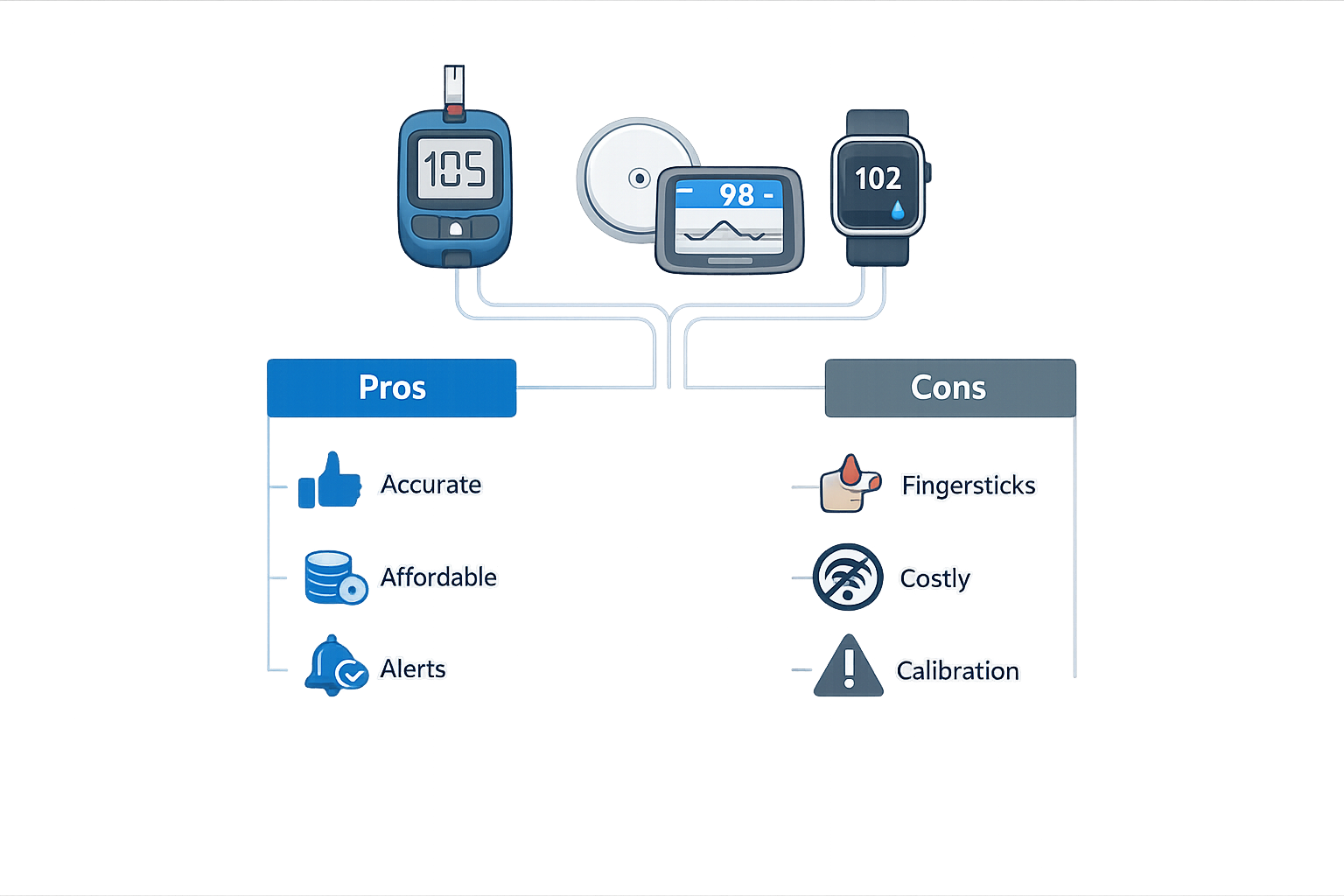
When choosing between traditional fingerstick meters and newer continuous glucose monitoring systems, each approach carries distinct advantages and limitations. Understanding these trade-offs can help you and your care team select the monitoring method that best fits your daily routine and clinical needs.
Traditional Fingerstick Meters: Advantages
Traditional self-monitoring of blood glucose (SMBG) meters remain widely used because they deliver results from capillary blood samples in seconds. They are generally affordable upfront, covered by most insurance plans, and require no sensor insertion or waiting period. Many people appreciate the simplicity: a single test strip, a drop of blood, and an immediate reading. For those who test infrequently or whose glucose levels remain stable, fingerstick meters provide sufficient data without the complexity of continuous systems.
Traditional Fingerstick Meters: Limitations
SMBG is limited by its inability to provide continuous data and is dependent on the patient's decision to test, which can lead to infrequent evaluations. Pain and inconvenience often result in fewer checks throughout the day, making it difficult to detect nocturnal hypoglycemia or rapid glucose swings. Because each reading is a single snapshot, you miss the trend—whether your glucose is rising, falling, or stable—which can be critical for adjusting insulin or meals.
Flash and Continuous Glucose Monitoring: Advantages
Flash glucose monitoring systems measure interstitial glucose every minute and store readings automatically. Studies have shown improvements in HbA1c and reduced time in hypoglycemia with the use of flash glucose monitoring compared to SMBG in insulin-treated type 2 diabetes. Beyond glycemic control, flash glucose monitoring offers additional benefits over SMBG, including reductions in acute diabetes events, all-cause hospitalizations, and improved treatment satisfaction. Higher scanning frequency is associated with significantly greater reductions in HbA1c and improvements in time spent in range, suggesting that active engagement with the data drives better outcomes.
Flash and Continuous Glucose Monitoring: Limitations
While continuous systems provide richer data, they introduce new considerations. Sensors measure interstitial fluid glucose, not blood glucose directly, and a physiological time lag exists—particularly when glucose levels are changing rapidly. This means sensor readings may trail behind fingerstick results by several minutes. Accuracy is commonly assessed using the mean absolute relative difference (MARD); a MARD of 11.4% has been reported for some flash systems, which is acceptable for most clinical decisions but may require confirmatory fingerstick tests during hypoglycemia or rapid changes. Sensor insertion, though minimally invasive, requires a small device worn on the arm for up to 14 days, and some people find the adhesive irritating or the visibility of the sensor inconvenient. Cost can also be a barrier: while some insurance plans cover continuous systems, out-of-pocket expenses for sensors and transmitters may exceed the cost of test strips for infrequent testers.
| Feature | Fingerstick Meters | Flash/Continuous Monitors |
|---|---|---|
| Data continuity | Single snapshots | Continuous trend data |
| Pain/convenience | Requires fingersticks | Sensor worn on arm |
| Hypoglycemia detection | Misses nocturnal events | Alerts and trends available |
| Upfront cost | Low | Moderate to high |
| Insurance coverage | Widely covered | Varies by plan and indication |
| Accuracy during rapid changes | Immediate capillary result | May lag behind blood glucose |
For more context on how continuous glucose monitors work and what the data means, see How Does a Dexcom CGM Work: Real-Time Glucose Monitoring.
Detailed Analysis
Choosing a blood glucose meter means understanding the trade-offs between traditional self-monitoring of blood glucose (SMBG) devices and newer continuous or flash glucose monitoring systems. Each approach measures glucose differently, and the right choice depends on how often you need readings, how comfortable you are with technology, and what your insurance covers.
Traditional Blood Glucose Meters vs. Flash Monitoring
Traditional blood glucose meters require a fingerstick each time you want a reading. The result reflects your blood glucose at that exact moment, but it doesn't tell you where your glucose is heading or what happened overnight. Self-monitoring of blood glucose is limited by its inability to provide continuous data and depends entirely on your decision to test — which can lead to infrequent evaluations, especially when testing is uncomfortable or inconvenient.
Flash glucose monitoring systems, such as the FreeStyle Libre, measure glucose in the interstitial fluid (the fluid between cells) rather than blood. A small sensor worn on the back of the arm stores a reading every 15 minutes, and you scan it with a reader or smartphone to see your current level, a trend arrow, and an 8-hour graph. The system is factory-calibrated and doesn't require routine fingerstick calibration, though a confirmation with a traditional meter is recommended during rapidly changing glucose levels, in the first 24 hours after sensor insertion, or if symptoms don't match the sensor reading.
Accuracy and Clinical Outcomes
All blood glucose meters sold in the United States must meet FDA accuracy standards, but not all meters perform identically in real-world conditions. Flash glucose monitoring has been studied extensively in people with type 2 diabetes on insulin therapy. In the 6-month REPLACE trial, the FreeStyle Libre system significantly reduced the time spent in hypoglycemia and the frequency of hypoglycemic events compared to traditional SMBG, though it did not show a significant change in A1C in that particular study. Subsequent trials and real-world studies, however, have demonstrated that flash glucose monitoring can significantly reduce A1C from baseline, particularly when users scan more frequently.
Higher scanning frequency — checking the sensor more often throughout the day — was associated with significantly greater reductions in A1C and improvements in time spent in hypoglycemia, hyperglycemia, and time in range (the percentage of time glucose stays between 70 and 180 mg/dL). Time in range is increasingly recognized as a key measure of glucose control; a time in range of 70% corresponds roughly to an A1C of 7%, and an 8–10% increase in time in range is associated with a 0.5% decrease in A1C.
Feature Comparison: What to Look For
When comparing blood glucose meters, consider these factors:
- Ease of use: Large, backlit displays and simple button layouts matter if you have vision challenges or dexterity issues. Flash systems eliminate the need for repeated fingersticks but require learning to interpret trend arrows and graphs.
- Data management: Many traditional meters now offer Bluetooth connectivity and sync with smartphone apps, making it easier to share data with your care team. Flash systems automatically log every reading and can generate detailed reports.
- Cost of consumables: Test strips for traditional meters vary widely in price, and insurance coverage is inconsistent. Flash sensors are replaced every 14 days; some insurers cover them for people on insulin, but out-of-pocket costs can be significant if you're paying yourself.
- Calibration requirements: Traditional meters require coding or automatic calibration with each new vial of strips. Flash systems are factory-calibrated, reducing user error.
- Alarms and alerts: Newer flash systems (such as FreeStyle Libre 2 and 3) include optional alarms for high and low glucose, a feature not available in the original Libre or in most traditional meters.
| Feature | Traditional SMBG | Flash Glucose Monitoring |
|---|---|---|
| Measurement type | Blood glucose (fingerstick) | Interstitial glucose (sensor) |
| Frequency | User-initiated | Automatic every 1–15 min |
| Calibration | Per vial or automatic | Factory-calibrated |
| Trend data | No | Yes (arrows and graphs) |
| Alarms | Rare | Optional (newer models) |
| Typical cost per month | Varies by strip price | Sensor replacement every 14 days |
Real-World Usability
In clinical trials and real-world studies, people using flash glucose monitoring reported greater treatment satisfaction, improved well-being, and decreased disease burden compared to those using traditional SMBG. The ability to see glucose trends without a fingerstick reduced anxiety around testing and made it easier to adjust food, activity, and medication timing. However, the systems are not interchangeable: if you're used to seeing a blood glucose number and acting on it immediately, the lag between interstitial and blood glucose can be confusing at first.
Traditional meters remain the standard for confirming a low reading before treating hypoglycemia, for situations where interstitial readings are unreliable (such as during rapid glucose changes), and for people who prefer the simplicity of on-demand testing without wearing a sensor.
For more on how continuous monitoring compares to over-the-counter options, see Dexcom Stelo vs Abbott Lingo: Which OTC CGM Is Right for You.
Newer Flash Systems and Professional Use
The FreeStyle Libre 2 added Bluetooth connectivity and optional alarms for high and low glucose. The FreeStyle Libre 3, approved in Europe and expected in other markets, provides continuous real-time glucose readings sent to a smartphone every minute, eliminating the need to scan the sensor. The FreeStyle Libre Pro is a professional version: the sensor is applied by a healthcare provider, the data is blinded to the patient, and the results are downloaded after 14 days to inform treatment adjustments.
These systems are designed for different use cases. The original Libre and Libre 2 are for daily self-management; the Libre 3 offers real-time alerts and tighter integration with digital health platforms; and the Libre Pro is a diagnostic tool for providers to assess glucose patterns without changing the patient's behavior during the wear period.
Who Is It For
Blood glucose meters serve different populations with distinct monitoring needs, and understanding which features matter most for your situation can help narrow the field. The right meter depends on your diabetes type, how often you check, and what level of data management supports your care plan.
People with Type 1 Diabetes
If you have type 1 diabetes, frequent glucose monitoring is essential for adjusting insulin therapy and maintaining metabolic control. Many people with type 1 diabetes check their blood glucose four or more times daily — before meals, at bedtime, and sometimes overnight — which makes ease of use, speed, and data-logging features particularly important. Look for meters that integrate with insulin-dosing apps or offer Bluetooth connectivity to track trends over time. Some meters pair directly with continuous glucose monitors (CGMs), providing a backup option when sensor data is unavailable or when you need to confirm a reading before dosing insulin.
Self-care data monitoring features — such as food diaries, insulin logs, and graphical displays of blood glucose trends — are highly valued by people managing type 1 diabetes, as they support pattern recognition and treatment adjustments. If you're considering a CGM for real-time glucose data, a compatible meter can still play a role in calibration or troubleshooting.
People with Type 2 Diabetes
For type 2 diabetes, monitoring frequency varies widely depending on your treatment plan. If you take insulin or a medication that can cause hypoglycemia, your care team may recommend checking once or twice daily, or before and after meals to observe how food affects your levels. If you manage type 2 diabetes with lifestyle changes or medications that do not typically cause low blood sugar, you may check less often — perhaps a few times per week or when you feel symptoms.
In this context, cost and simplicity often take priority. Test strip expenses add up quickly, so meters that accept lower-cost generic strips or are covered by your insurance plan can make a meaningful difference. Large, easy-to-read displays and straightforward operation are especially helpful if you have vision concerns or dexterity challenges. Some meters offer fewer bells and whistles but deliver reliable results without a steep learning curve.
People with Gestational Diabetes
Gestational diabetes requires close monitoring during pregnancy to keep blood glucose within a narrow target range and protect both maternal and fetal health. Most care teams recommend checking fasting glucose in the morning and one or two hours after each meal — often four or more times daily. Meters that store dated results and allow you to mark readings as fasting, pre-meal, or post-meal can help you and your provider spot patterns quickly.
Because gestational diabetes is time-limited, ease of use and clear result displays are more important than long-term data integration. If you're managing gestational diabetes, confirm your target ranges and monitoring schedule with your care team, as these numbers are specific to pregnancy and differ from general diabetes targets.
Caregivers and Family Members
If you're helping a family member monitor their blood glucose — whether a child, an older adult, or someone with limited dexterity — look for meters with large screens, audible result announcements, and simple button layouts. Some meters offer color-coded results (green for in-range, yellow or red for out-of-range) that make it easier to interpret readings at a glance. Data-sharing features, such as Bluetooth sync to a caregiver app, can provide peace of mind when you're not physically present.
People Exploring Prediabetes or Metabolic Health
Some individuals without diabetes use blood glucose meters to observe how food, exercise, and sleep affect their glucose levels, particularly if they have prediabetes or a family history of diabetes. In this case, you may check sporadically rather than on a fixed schedule. A basic, affordable meter with accurate results is often sufficient, as you're not making medication decisions based on the data. If you're interested in more continuous insight, over-the-counter CGM options designed for non-diabetics may also be worth exploring — see our comparison of OTC CGM devices for prediabetes for more context.
Pricing
The cost of a blood glucose meter extends beyond the initial device purchase — ongoing expenses for test strips, lancets, and control solution typically represent the larger share of your total spending. Understanding these factors helps you budget realistically and avoid surprises at the pharmacy counter.
Upfront Meter Costs and Strip Economics
Many blood glucose meters are available at low or no cost, sometimes even free with a prescription or insurance approval. Manufacturers often subsidize the meter itself because the recurring revenue comes from test strips. A meter priced at $10 to $40 may seem affordable, but if you test four times daily, you'll purchase 120 strips per month — and strip costs range widely depending on brand, insurance coverage, and pharmacy pricing.
Some meters accept only proprietary strips from a single manufacturer, while others work with generic or third-party strips that may cost less. Before committing to a meter, confirm the per-strip price your insurance covers or the out-of-pocket cost if you're paying directly. A slightly more expensive meter that uses lower-cost strips often saves money over time.
Insurance Coverage and Prescription Requirements
Most insurance plans, including Medicare Part B, cover blood glucose meters and a set quantity of test strips when prescribed by your healthcare provider. Coverage terms vary: some plans fully cover specific meter brands on their formulary, while others require a copay or impose quantity limits. If your plan designates a preferred meter, switching to that model may reduce or eliminate your out-of-pocket costs.
Without insurance, cash prices for meters range from under $20 for basic models to $75 or more for meters with advanced features like Bluetooth connectivity or larger memory. Test strips purchased without insurance typically cost $0.50 to $2.00 each, though discount programs and mail-order pharmacies sometimes offer lower rates. Always ask your care team and your pharmacist about available assistance programs if cost is a barrier.
Factors That Influence Total Cost
Several variables shape your long-term spending on blood glucose monitoring:
- Testing frequency: More frequent testing increases strip consumption and total monthly cost.
- Strip brand and availability: Proprietary strips from major manufacturers often cost more than generic alternatives, but not all meters accept generics.
- Lancet and control-solution needs: Lancets are inexpensive individually but add up; control solution, used to verify meter accuracy, is a periodic expense.
- Meter features: Bluetooth sync, backlit screens, and data-management software may raise the initial meter price but don't typically affect strip costs.
- Pharmacy and supplier choice: Prices vary between retail pharmacies, mail-order suppliers, and online vendors — comparing options can yield significant savings.
If you're considering a move to continuous glucose monitoring (CGM) instead of or alongside traditional meters, note that CGM sensors and transmitters carry separate pricing structures and insurance considerations. For an overview of how CGM costs and features compare to standard meters, see our guide to the best CGM for non-diabetics and OTC options.
The meter you can afford to use consistently is the right meter — cost should never force you to skip necessary testing.
Confirm your specific coverage details and any prior-authorization requirements with your insurance provider and your care team before purchasing a meter or ordering supplies. Your healthcare team can often recommend cost-effective options that meet your clinical needs without stretching your budget.
Alternatives
While traditional blood glucose meters remain the most widely used tool for diabetes management, several alternatives offer different approaches to monitoring glucose levels. These options vary in how they collect data, the frequency of readings, and the level of user interaction required.
Continuous Glucose Monitors (CGMs)
Continuous glucose monitors represent a significant shift from fingerstick testing. Rather than measuring glucose in blood, CGMs measure glucose levels in the interstitial fluid — the fluid surrounding your cells — using a small sensor inserted just under the skin. The sensor automatically takes readings every few minutes, storing data that can be viewed on a receiver or smartphone app.
Flash glucose monitoring systems (also called intermittently scanned CGMs or isCGM/FGM) work similarly but require you to scan the sensor with a reader or phone to see your current glucose level. These systems are factory-calibrated and typically do not require fingerstick calibration, though confirmation with a blood glucose meter is recommended during rapid glucose changes, in the first 24 hours after sensor insertion, or when symptoms don't match the sensor reading.
CGMs provide metrics that traditional meters cannot capture. Time in range (TIR) — the percentage of time your glucose stays within a target range, typically 70–180 mg/dL — has become a key measure of glucose control. Studies have found associations between higher TIR and lower rates of microvascular complications. CGMs also track time below range (hypoglycemia) and time above range (hyperglycemia), offering a more complete picture than isolated readings.
The primary limitation of self-monitoring with a traditional meter is that it provides only snapshots of glucose levels at the moments you choose to test. Pain, inconvenience, and the need to carry supplies can lead to less frequent testing, and nocturnal hypoglycemia often goes undetected. CGMs address these gaps by providing continuous data without the need for repeated fingersticks.
For readers interested in over-the-counter CGM options, our guide to the best CGM for non-diabetics compares systems available without a prescription.
Mobile Apps and Data Management Tools
Many modern blood glucose meters now connect to smartphone apps via Bluetooth, allowing automatic logging of readings. These apps can track patterns over time, flag trends, and often integrate with other health data such as meals, physical activity, and medication timing. Some CGM systems send glucose data directly to an app every minute, eliminating the need for manual scanning.
While apps do not replace the measurement device itself, they enhance the value of the data by making it easier to spot patterns and share information with your care team. Some apps generate reports that summarize average glucose, variability, and time spent in different glucose ranges — metrics that can inform treatment adjustments.
The choice between a traditional blood glucose meter, a CGM, or a combination of both depends on your diabetes type, treatment regimen, insurance coverage, and personal preferences. People using insulin — particularly those on multiple daily injections or insulin pumps — often benefit most from continuous monitoring, while those managing type 2 diabetes with oral medications may find periodic fingerstick testing sufficient. Always confirm any monitoring approach with your care team to ensure it aligns with your treatment plan.
Final Verdict
Choosing the right blood glucose meter is a decision that balances accuracy, ease of use, cost, and how well the device fits into your daily routine. While self-monitoring of blood glucose (SMBG) with a traditional meter provides essential snapshots of your glucose levels, it depends on your decision to test and may miss fluctuations that occur between readings. For many people managing diabetes, a meter with a large display, simple navigation, and affordable test strips will meet their needs reliably.
However, SMBG has inherent limitations: it does not provide continuous data, and factors like pain and inconvenience can lead to less frequent testing. This can make it harder to detect nocturnal hypoglycemia or rapid glucose changes throughout the day. If you find yourself needing more detailed insight into your glucose patterns, or if you're struggling with the frequency of fingerstick tests, it may be worth discussing continuous glucose monitoring (CGM) or flash glucose monitoring options with your care team.
Flash glucose monitoring systems, for example, have shown benefits beyond SMBG, including reductions in acute diabetes events, all-cause hospitalizations, and improved treatment satisfaction. These systems measure interstitial glucose levels automatically and can provide trend data that helps you and your care team make more informed decisions. For individuals on insulin therapy or those who need tighter glycemic control, these features can be especially valuable.
When selecting a blood glucose meter, prioritize what matters most to your situation: if dexterity or vision is a concern, look for meters with ergonomic design and clear displays. If cost is a primary factor, compare test strip prices and insurance coverage carefully. If data tracking is important, choose a meter with Bluetooth connectivity or app integration. And if you're newly diagnosed or managing diabetes for a family member, consider how much support the manufacturer provides in terms of customer service and educational resources.
Ultimately, the "right" meter is the one you'll use consistently and that gives you confidence in your readings. Start with the features that address your immediate needs, and revisit your choice as your management evolves. Your care team can help you assess whether a traditional meter, a more advanced model, or a continuous monitoring system is the best fit for where you are now—and where you're headed.
For more context on glucose monitoring technology and how different systems compare, see our guide to Best CGM for Non Diabetics: OTC Options for Prediabetes.
Learn how to choose the right blood glucose meter for your needs with this comprehensive guide.
Table of Contents
- Introduction — Introduce the importance of selecting the right blood glucose meter and how it can impact diabetes management.
- Quick Verdict — Provide a concise summary of key points to consider when choosing a blood glucose meter.
- Key Features — Highlight the essential features to look for in a blood glucose meter, such as accuracy, ease of use, and data management.
- Pros and Cons — Discuss the advantages and disadvantages of different types of blood glucose meters to help readers make an informed choice.
- Detailed Analysis — Provide an in-depth analysis of popular blood glucose meters, comparing their features, usability, and pricing.
- Who Is It For — Identify the different user groups that may benefit from various types of blood glucose meters, such as type 1, type 2, and gestational diabetes patients.
- Pricing — Outline the price range of blood glucose meters and what factors influence these prices.
- Alternatives — Discuss alternative methods of blood glucose monitoring, such as continuous glucose monitors (CGMs) and mobile apps.
- Final Verdict — Summarize the key takeaways for choosing the right blood glucose meter and encourage readers to consult their healthcare providers.
- Table of Contents

Maren Alcott is the lead presenter at DiabetesCompass. She is an AI-presented digital character. Every article Maren presents is researched and fact-checked by the DiabetesCompass editorial team against the ADA Standards of Care, peer-reviewed journals, and named clinical sources. Maren does not give medical advice — for questions about your specific situation, talk to your care team.
DiabetesCompass uses clearly identified digital editorial voices. See our AI disclosure for how bylines and AI-assisted production work.