
How to Find the Right Diabetes Doctor for Your Care
Learn how to find the right diabetes doctor for your care, including what credentials to look for, questions to ask, and when to seek specialist support.


On this page
Introduction
Diabetes affects an estimated 463 million adults worldwide, with type 2 diabetes representing approximately 90% of all cases. When it comes to managing diabetes, finding the right doctor is crucial. The disease requires regular monitoring, screening examinations, and often complex treatment plans that evolve over time. The right specialist can make a significant difference in your care journey, whether you're newly diagnosed or have been managing diabetes for years.
Our editorial team has reviewed the ADA's Standards of Care to ensure the guidance here aligns with current clinical standards. This article walks through the types of diabetes specialists available, what credentials matter, and how to evaluate whether a provider is the right fit for your specific situation. For those with type 2 diabetes or prediabetes, a primary care physician with strong diabetes management experience may be sufficient. However, more complex cases—such as gestational diabetes, LADA, MODY, or insulin-dependent diabetes with frequent adjustments—often benefit from specialist expertise.
The multiplicity of examinations and treatment decisions can be overwhelming, and patient adherence to follow-up recommendations varies widely depending on the clarity of communication and the strength of the provider relationship. Choosing a diabetes doctor should be based on your personal health needs, the complexity of your condition, and the level of care you require. The goal is to find a provider you feel comfortable communicating with and who respects your treatment preferences and health goals.
The Challenge of Finding the Right Diabetes Doctor
Finding the right diabetes doctor is rarely straightforward. The condition itself requires sustained, multifaceted management—regular monitoring, screening examinations, medication adjustments, and lifestyle coordination—and the sheer volume of appointments and follow-ups can overwhelm even the most organized patient. When compliance with the recommended schedule of care becomes difficult, the search for a physician who can simplify, prioritize, and communicate clearly becomes critical.
Why the Search Feels Complicated
Diabetes management is inherently complex. According to clinical research, the disease demands regular fundus examinations, electrocardiograms, microalbuminuria detection, dental follow-ups, and vaccination schedules, among other interventions. The multiplicity of these examinations often decreases patient adherence—one study found that compliance with ocular screening recommendations ranged from just 35% to 65%, depending on the severity of retinopathy. When the care plan feels fragmented or the physician's communication style doesn't match your needs, staying on track becomes harder.
Many people who would benefit from intensified treatment—particularly insulin therapy—delay or avoid it altogether. Fear of hypoglycemia, poor understanding of treatment regimens, and lack of engagement with the care team are common barriers. These concerns are compounded when the diabetes doctor doesn't take time to explain the reasoning behind a recommendation or when the patient doesn't feel heard.
What Makes a Good Match
Not every diabetes specialist will be the right fit for your situation. Some patients do well with a primary care physician who has strong diabetes management experience, particularly in straightforward type 2 or prediabetes cases. Others—those with gestational diabetes, LADA, MODY, or complex medication regimens—benefit from an endocrinologist's specialized knowledge. The challenge is knowing which credential matters for your case, and then finding a provider who communicates in a way that makes sense to you.
For a detailed comparison of over-the-counter glucose monitoring options that can support your conversations with your care team, see our guide to the Best CGM for Non Diabetics: OTC Options for Prediabetes.
The search is further complicated by logistical factors: insurance networks, appointment availability, geographic access, and whether the practice uses telehealth or requires in-person visits. A physician with excellent credentials may not be reachable within your insurance plan, or their next available appointment may be months out. These practical constraints often force compromises that feel frustrating when the stakes are high.
The right diabetes doctor simplifies the care plan without oversimplifying the condition—and makes you feel like a partner in the process, not a passive recipient of instructions.
Steps to Find the Right Diabetes Doctor
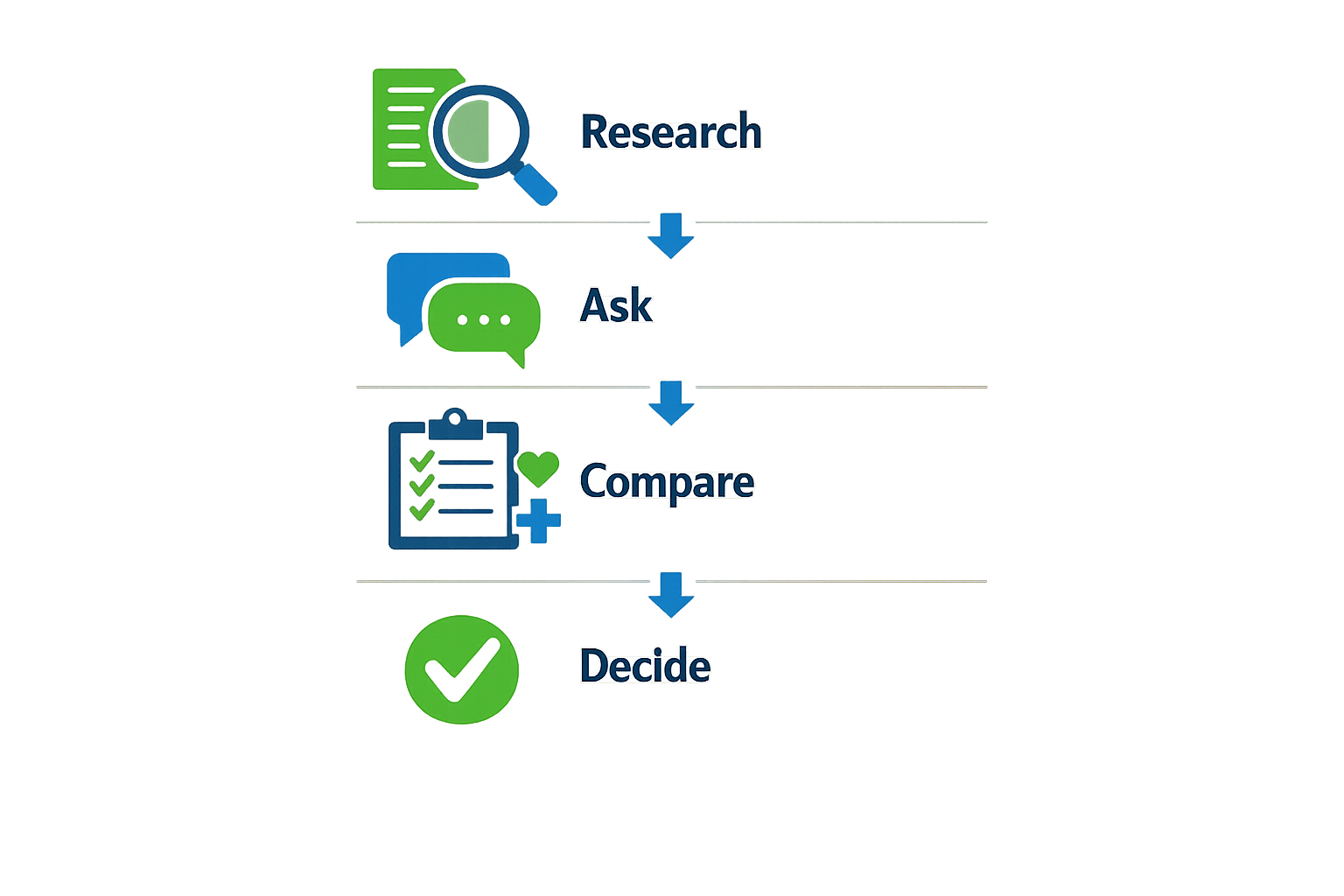
Finding the right diabetes doctor requires a systematic approach. These steps will help you identify a provider who meets your specific care needs and supports your health goals.
Step 1: Determine What Type of Specialist You Need
Start by clarifying the level of care your situation requires. For straightforward type 2 diabetes or prediabetes management, a primary care physician with strong diabetes experience may be sufficient. If you're dealing with type 1 diabetes, gestational diabetes, or complex cases requiring insulin therapy, an endocrinologist — a physician specializing in hormone and metabolic conditions — is often the better choice.
Consider whether you need access to diabetes educators as part of your care team. Research shows that diabetes educators can proactively increase the effectiveness of treatment and help achieve desired health goals by serving as a connecting link between you and your clinical team. If you're newly diagnosed or struggling with medication adherence, a practice that includes certified diabetes care and education specialists (CDCES) can provide structured support.
Review your current diagnosis, medications, and any complications with your existing provider. If you're on multiple medications, require insulin adjustments, or have other conditions like kidney disease or neuropathy, note these — they signal the need for specialist-level care.
Step 2: Verify Credentials and Board Certification
Once you know what type of provider you need, confirm their credentials. For endocrinologists, check that they are board-certified by the American Board of Internal Medicine in Endocrinology, Diabetes, and Metabolism. For primary care physicians managing diabetes, look for additional certifications or demonstrated experience in diabetes care.
You can verify board certification through online databases maintained by medical boards. This step ensures the physician has completed the required training and maintains current knowledge in diabetes management.
Visit the American Board of Medical Specialties (ABMS) website or your state medical board's lookup tool. Enter the physician's name and confirm active certification in their specialty. Note the year of certification and any subspecialty credentials listed.
Step 3: Evaluate Access to Diabetes Technologies
Modern diabetes care increasingly relies on technology. Recent advances in diabetes technologies — including continuous glucose monitoring systems, insulin pumps, and automated insulin delivery systems — can improve the accuracy and safety of insulin therapy. When evaluating potential doctors, ask whether they prescribe and support these tools.
If you're interested in a continuous glucose monitor for prediabetes or type 2 diabetes, confirm that the provider is familiar with CGM data interpretation and willing to incorporate it into your care plan. Not all physicians are comfortable with device-based management, and this gap can limit your treatment options.
Step 4: Assess Telemedicine and Remote Care Options
Care-in-place strategies — remote monitoring and virtual visits — have become essential for reducing the burden of frequent in-person appointments. If you live far from the practice, have mobility challenges, or simply prefer flexible scheduling, confirm that the provider offers telemedicine visits and remote glucose monitoring support.
Telemedicine has shown potential to facilitate patient monitoring and improve short-term glycemic control in some contexts. A provider who integrates remote care into their standard workflow can help you avoid unnecessary travel while maintaining consistent oversight.
Call the office and ask: "Do you offer telemedicine appointments for routine diabetes follow-ups?" and "Can I send glucose data electronically between visits?" Document the answers and compare across providers if you're evaluating multiple options.
Step 5: Schedule a Consultation and Prepare Your Questions
Before committing to a new provider, schedule an initial consultation. Bring your recent lab results, a list of current medications, and a short summary of your diabetes history. Use this visit to assess communication style, willingness to answer questions, and whether the provider's approach aligns with your preferences.
Prepare questions in advance: What are your treatment goals for my A1C? How often will we adjust my medications? What should I do if I experience a low blood sugar episode? The quality of the answers — and whether the provider listens to your concerns — will tell you whether this is the right fit.
Step 6: Confirm Insurance Coverage and Appointment Availability
Finally, verify that the provider accepts your insurance and that appointment availability matches your needs. Diabetes management requires regular follow-ups — quarterly visits are common for insulin users — so a practice with long wait times or limited scheduling flexibility may not be practical.
Call the billing office to confirm in-network status and ask about typical wait times for new patient appointments and follow-up visits. If the next available appointment is months away, consider whether that delay is acceptable given your current health status.
Tips and Tricks for Choosing a Diabetes Doctor
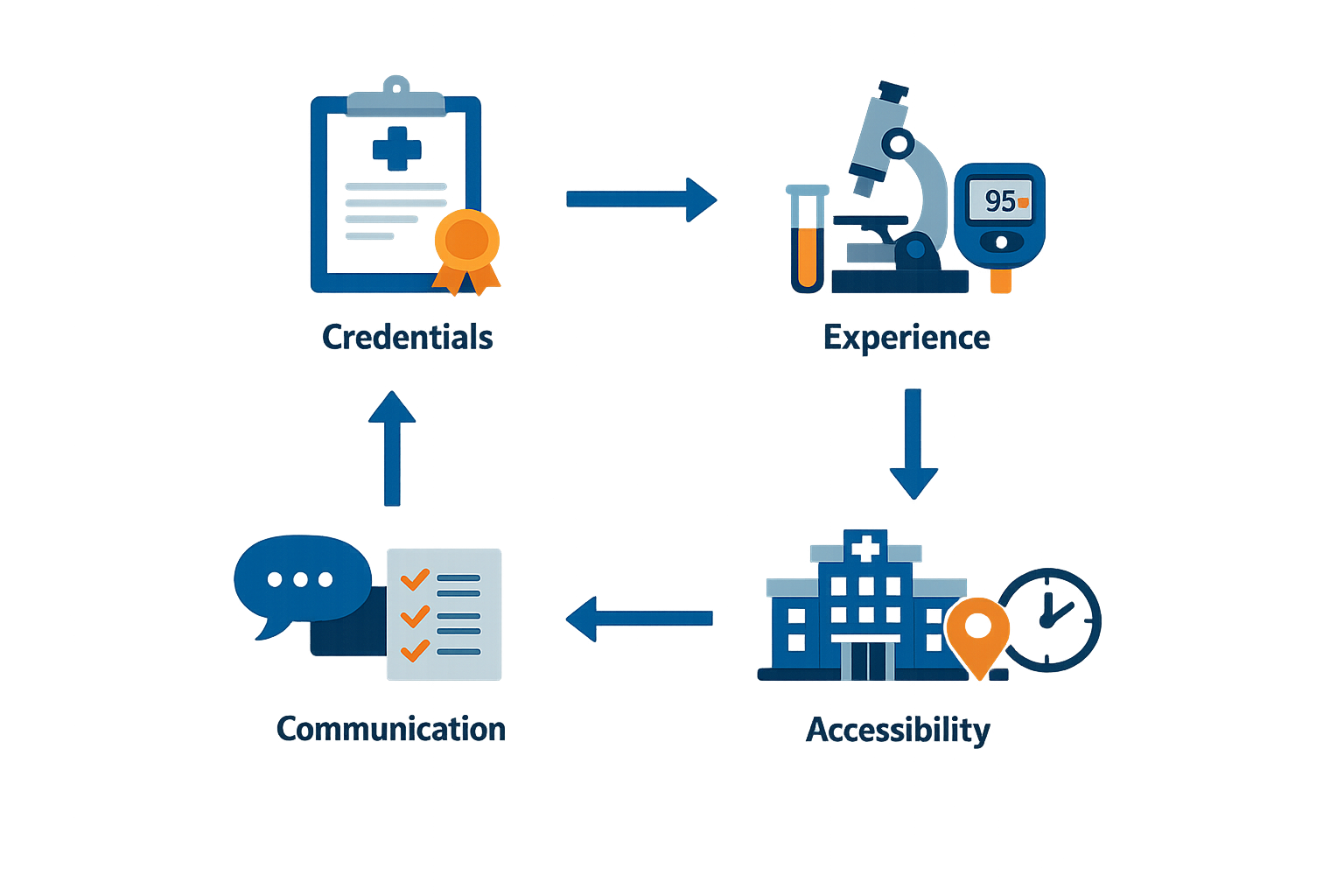
Beyond the formal credentials and logistical factors, several practical strategies can help you identify a diabetes doctor who fits your needs. These tips focus on ensuring your care is personalized, accessible, and responsive to your evolving health situation.
Prioritize Individualized Care
Diabetes management is not one-size-fits-all. The American Diabetes Association and the European Association for the Study of Diabetes emphasize that treatment should be tailored to patient-specific factors, including lifestyle, blood glucose patterns, and hypoglycemia risk. When evaluating a potential diabetes doctor, ask how they approach personalization — do they account for your work schedule, physical activity level, and personal preferences when designing a treatment plan? A doctor who listens to your daily routine and adjusts recommendations accordingly is more likely to help you sustain long-term glucose control.
For example, if you work irregular shifts or have an active lifestyle, your insulin regimen or medication timing may need flexibility. A doctor who acknowledges these factors and adjusts your plan can help you avoid hypoglycemia and maintain stable glucose levels without disrupting your routine.
Ask About Monitoring and Adjustment Protocols
Effective diabetes care requires ongoing monitoring and timely adjustments. Ask your prospective diabetes doctor how often they review glucose data, what monitoring tools they recommend, and how quickly they respond when patterns change. Continuous glucose monitoring (CGM) or frequent self-monitoring of blood glucose provides valuable data for tailoring treatment timing and dosing. If your doctor encourages regular monitoring and uses that data to refine your plan, you're more likely to stay ahead of complications.
Some doctors prefer scheduled check-ins every three months, while others offer more frequent touchpoints during the initial titration phase or when starting a new medication. Clarify how your doctor handles urgent questions between visits — can you message through a patient portal, or do you need to call the office? For those newly diagnosed or managing complex cases, responsive communication can make a significant difference in confidence and outcomes. Learn more about what an A1C of 5.7 means and how monitoring helps track progress.
Evaluate Access to Education and Support Resources
Access to education and information is crucial to overcoming barriers in diabetes care delivery. A good diabetes doctor doesn't just prescribe medication — they ensure you understand why you're taking it, what to watch for, and how to adjust your habits as needed. Ask whether the practice offers diabetes education classes, nutritionist consultations, or support groups. These resources can help you navigate daily decision-making, from meal planning to managing sick days.
Some practices have certified diabetes care and education specialists (CDCES) on staff, while others refer patients to external programs. Either model can work, but confirm that education is part of the care plan, not an afterthought. If you're managing diabetes for a family member, ask whether the practice provides caregiver-focused resources or coordination support.
Consider Continuity and Long-Term Availability
Diabetes is a lifelong condition, and continuity of care matters. When interviewing a diabetes doctor, ask about their practice stability — do they plan to stay in the area, or are they part of a rotating clinic? If the doctor you're meeting with leaves, will you be reassigned to another provider in the same practice, or will you need to start over elsewhere?
Continuity helps your doctor recognize subtle changes in your health over time and builds trust that makes difficult conversations easier. If you're choosing a specialist in a large health system, confirm whether you'll see the same doctor at each visit or rotate among a team. Some patients prefer the consistency of one provider; others appreciate the collaborative input of a multidisciplinary team.
Conclusion
Finding the right diabetes doctor is a process that requires time, research, and honest self-assessment of your needs. Whether you choose a primary care physician with strong diabetes experience or seek out an endocrinologist for specialized management, the goal remains the same: a partnership that supports your health goals and respects your treatment preferences. The steps outlined in this guide — from verifying credentials and insurance coverage to asking direct questions about communication style and treatment philosophy — give you a framework for making an informed decision.
Our editorial team has reviewed the ADA's Standards of Care to ensure the guidance here reflects current clinical standards. One critical takeaway from that review: confirm your own treatment targets with your care team. A diabetes doctor's role is to translate those standards into a plan that fits your life, your values, and your medical complexity. For some, that means managing type 2 diabetes or prediabetes with a trusted primary care provider; for others, it means working with a specialist who can navigate gestational diabetes, LADA, or MODY with precision.
The choice of a diabetes doctor should never feel rushed or forced. If your first appointment doesn't feel like the right fit, it's okay to continue your search. The best care happens when you feel comfortable asking questions, sharing concerns, and collaborating on decisions. For additional context on managing early-stage diabetes, see our guide on A1C of 5.7: What It Means for Your Health and Next Steps.
Ultimately, the right diabetes doctor is the one who listens, adapts, and works with you — not just for you. Take charge of your diabetes care by choosing a provider who meets your needs today and has the flexibility to grow with you as those needs change.

Maren Alcott is the lead presenter at DiabetesCompass. She is an AI-presented digital character. Every article Maren presents is researched and fact-checked by the DiabetesCompass editorial team against the ADA Standards of Care, peer-reviewed journals, and named clinical sources. Maren does not give medical advice — for questions about your specific situation, talk to your care team.
DiabetesCompass uses clearly identified digital editorial voices. See our AI disclosure for how bylines and AI-assisted production work.