
Type 2 Diabetes Medications: What Works for Blood Sugar
Learn about type 2 diabetes medications, how they work to manage blood sugar, and what to discuss with your care team when choosing treatment.


On this page
Introduction
Type 2 diabetes medications are not one-size-fits-all. What works well for one person may not suit another, even when their A1C numbers look similar on paper. The landscape of treatment options has expanded significantly over the past decade, giving care teams more tools but also creating more decision points for newly diagnosed individuals and those adjusting their regimen.
The goal of any type 2 diabetes medication is to help your body manage blood sugar more effectively. Some medications help your pancreas release insulin more efficiently, others reduce how much glucose your liver produces, and still others help your kidneys remove excess glucose or slow digestion to prevent spikes. Understanding these mechanisms — in plain language — makes the conversation with your care team more productive.
Recent data shows that fewer people with type 2 diabetes are meeting their blood-sugar targets compared to a decade ago, even as new medications have become available. This trend underscores a gap: not between available treatments and effectiveness, but between the options on the table and finding the right match for each individual's daily life, other health conditions, and tolerance for side effects.
Many people delay starting or intensifying medication — particularly insulin — due to concerns about low blood sugar, weight gain, or simply not understanding how a new drug fits into their routine. These are legitimate considerations, and they belong in the treatment conversation from the start. The right medication is the one that works with your biology and your life, not against either. For context on how emerging options like microdose GLP-1 therapies fit into the broader treatment landscape, see Wegovy for Prediabetes: Microdose GLP-1 for Type 2 & Prediabetes.
This article walks through the major classes of type 2 diabetes medications, what each does, and the questions to bring to your next appointment. It does not prescribe or recommend specific drugs — that is your care team's role, based on your full medical picture. What it does provide is a framework for understanding what you are being offered and why.
Problem Statement
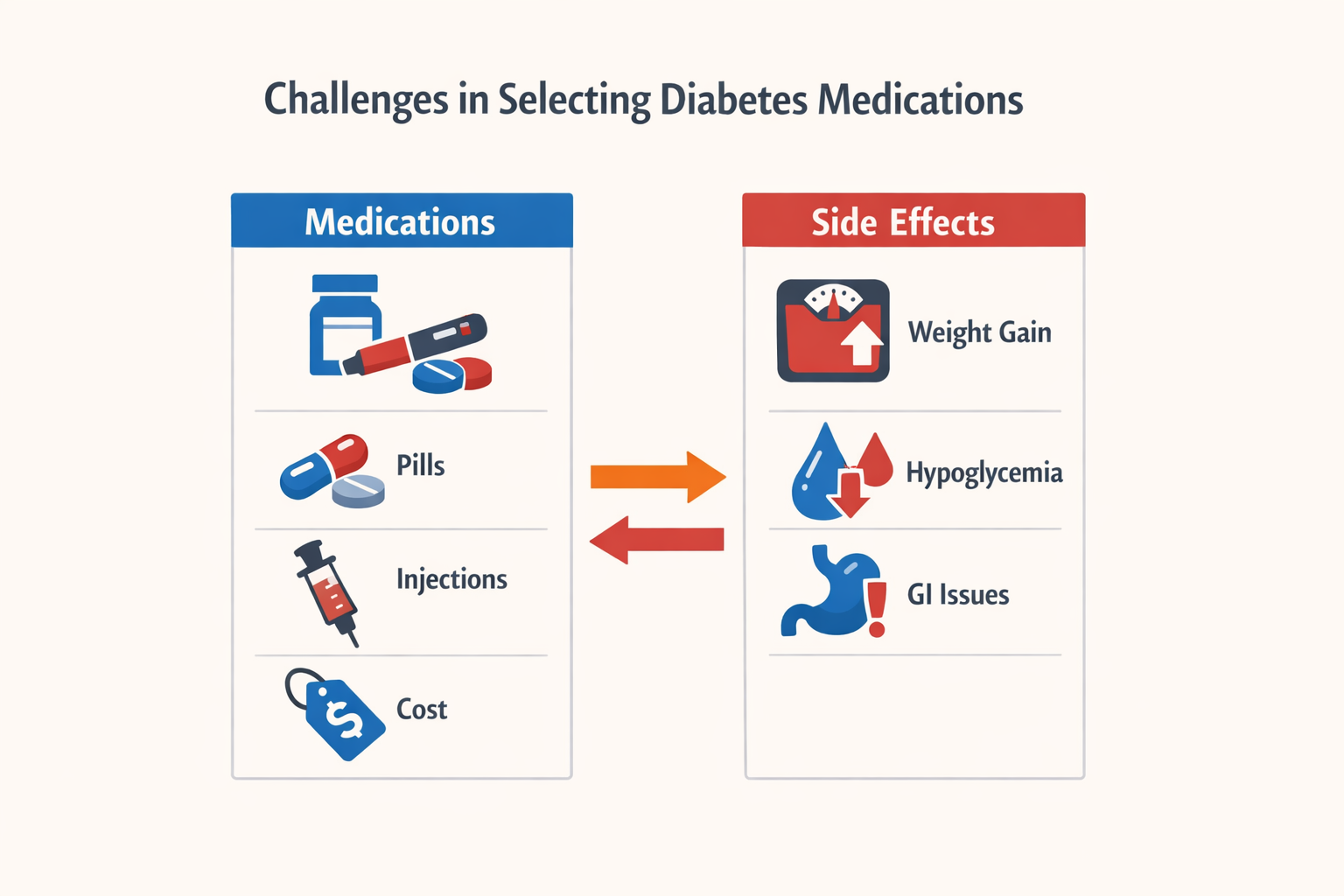
Choosing the right medication for type 2 diabetes is rarely straightforward. Even when a care team recommends a specific treatment, many people face uncertainty about how it will affect their daily life, whether the side effects will be manageable, and if it will actually bring their blood sugar into range. The number of medication classes has grown significantly over the past two decades, which means more options — but also more complexity when deciding what fits your situation.
Why Medication Selection Feels Overwhelming
Type 2 diabetes medications work through different mechanisms: some help your pancreas release more insulin, others improve how your cells respond to insulin, and still others prevent your kidneys from reabsorbing glucose. Each class comes with its own profile of benefits, risks, and practical considerations like dosing frequency, injection versus oral administration, and cost. Without a clear understanding of how these medications differ, it's difficult to evaluate whether a recommendation aligns with your health goals and daily routine.
Another layer of difficulty: many people with type 2 diabetes are not meeting their A1C targets despite being on medication. Recent data shows that the proportion of individuals achieving an A1C below 7% declined from 57.4% in the late 2000s to 50.5% by the late 2010s. This suggests that either medications are not being intensified when needed, or barriers — fear of side effects, cost, complexity — are preventing people from following through with treatment adjustments.
Common Barriers to Starting or Intensifying Treatment
When a care team suggests adding a new medication or moving to insulin, resistance is common. For insulin specifically, many people delay starting therapy because of concerns about hypoglycemia (low blood sugar), weight gain, or the perceived complexity of injections and dosing schedules. These fears are not irrational — they reflect real risks that need to be managed — but they often lead to prolonged periods of elevated blood sugar, which increases the risk of complications over time.
Even for non-insulin medications, the decision can feel high-stakes. GLP-1 receptor agonists, for example, are effective at lowering A1C and supporting weight loss, but they require weekly injections and can cause nausea in the first few weeks. SGLT2 inhibitors protect the kidneys and heart but carry a small risk of urinary tract infections and require adequate kidney function to work. Understanding these trade-offs — and knowing which risks matter most in your specific case — is essential but not always clearly communicated during a brief appointment.
Fear of side effects and poor understanding of how a medication works are two of the most common reasons people delay intensifying diabetes treatment, even when their blood sugar remains above target.
Technology is also changing the landscape. Continuous glucose monitors and insulin pumps have made insulin therapy more precise and less burdensome for many people, but access to these tools is uneven, and not everyone knows they exist or that they might be covered by insurance. For those who do use them, the learning curve can be steep, and without adequate support, the technology can add to the sense of overwhelm rather than reducing it.
What This Means for Your Next Appointment
If you're facing a medication decision, the core challenge is not just picking the "best" drug — it's understanding what each option does, how it will affect your daily life, and what your care team expects you to monitor. The sections that follow break down the major medication classes, explain how they work, and outline the questions you should ask before starting or switching treatment. The goal is not to replace your care team's guidance, but to give you the context you need to participate in the decision with confidence.
Solution Steps
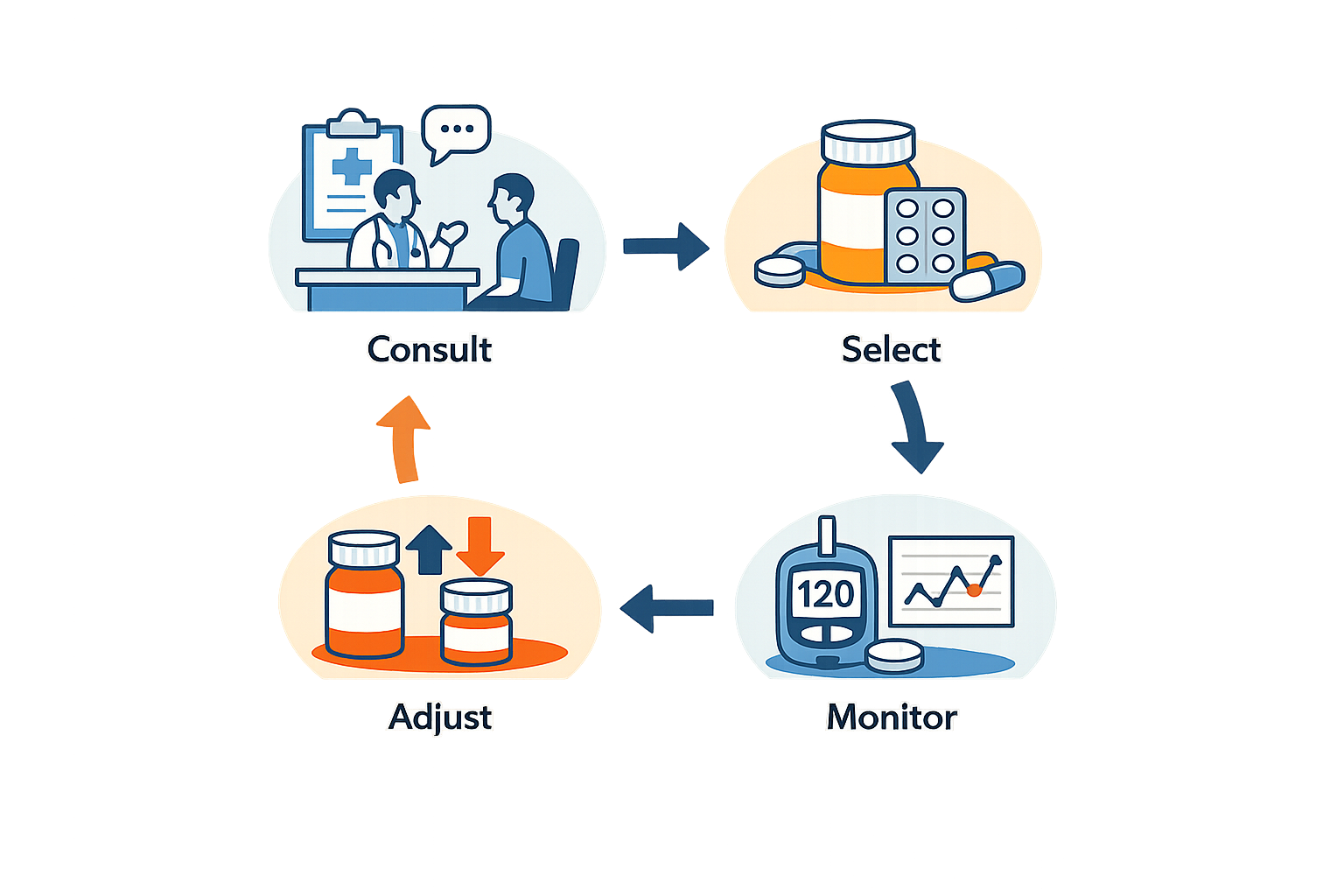
Choosing and managing type 2 diabetes medications is a step-by-step process that involves working closely with your care team, understanding how different medications work, and monitoring your response over time. These steps provide a framework for navigating treatment decisions — not a prescription, but a roadmap for the conversations you'll have with your provider.
Step 1: Start with a Baseline Assessment
Before any medication discussion, your care team will establish where you are now. That means checking your A1C, fasting glucose, and sometimes post-meal glucose levels. They'll also review your cardiovascular health, kidney function, and any other conditions that might influence which medications are safe and effective for you.
Bring a list of current medications, supplements, and any side effects you've experienced in the past. If you're already on diabetes medication and it's not working as expected, note when you take it, whether you've missed doses, and any patterns you've noticed in your glucose readings.
Collect recent lab results (A1C, fasting glucose, kidney function), a list of current medications, and notes on any symptoms or side effects. Your provider will use these to tailor the medication choice to your situation.
Step 2: Understand the Medication Options
Type 2 diabetes medications fall into several classes, each working through a different mechanism. Metformin is often the first-line choice because it lowers glucose production in the liver and improves insulin sensitivity. GLP-1 receptor agonists slow digestion and help the pancreas release insulin when glucose is present. SGLT2 inhibitors work in the kidneys to remove excess glucose through urine. Insulin therapy may be introduced when other medications aren't enough to reach target glucose levels.
Your provider will explain which class makes sense for you based on your A1C, other health conditions, and treatment goals. Ask how the medication works, what side effects are common, and what to expect in the first few weeks. For those considering Wegovy for prediabetes or early type 2, understanding the GLP-1 mechanism and microdose protocols can clarify what the medication does and how it fits into a broader plan.
Step 3: Initiate Treatment with Clear Titration Guidance
Most diabetes medications start at a low dose and increase gradually. This reduces side effects and gives your body time to adjust. If your provider prescribes insulin, the typical starting dose is 10–12 units once daily, adjusted based on your fasting or pre-meal glucose readings. Titration schedules vary by medication class, and your provider will give you specific instructions on when and how to adjust.
Providers sometimes hesitate to initiate insulin therapy due to concerns about patient confidence or the risk of hypoglycemia. If insulin is recommended and you're uncertain, ask your provider to walk through the practical details: how to inject, how to store it, what to do if you miss a dose, and what glucose level signals a problem. Addressing these barriers early makes the transition smoother.
Step 4: Monitor Effectiveness and Adjust
Once you start a new medication, track your glucose levels according to your provider's instructions — typically fasting readings and sometimes post-meal checks. Note any side effects, even minor ones, and bring that log to your follow-up appointment. A1C is rechecked every 3 months to assess whether the medication is moving you toward your target.
If your A1C or daily glucose readings aren't improving after a full titration cycle, your provider may adjust the dose, add a second medication, or switch to a different class. Real-world studies show that even with optimized basal insulin, only about a quarter of people starting therapy reach an A1C below 7.0% on insulin alone — which is why combination therapy (insulin plus metformin or a GLP-1) is common.
Step 5: Address Barriers and Refine the Plan
Weight gain and hypoglycemia are two common challenges with some diabetes medications, particularly insulin and sulfonylureas. If you're experiencing either, tell your provider — there are strategies to mitigate both, including dose adjustments, timing changes, or switching to a medication with a lower risk profile.
If cost, injection anxiety, or daily routine disruption is making adherence difficult, bring that up too. Many medication classes now have once-weekly formulations, and patient-assistance programs exist for most brand-name drugs. The goal is a regimen you can sustain, not one that works in theory but fails in practice.
Tips and Tricks
Managing type 2 diabetes medications effectively requires more than just taking pills on schedule. The practical details — when to take a dose, what to track, how to stay consistent — often determine whether a medication delivers the results your care team expects. These strategies help bridge the gap between a prescription and real-world control.
Build a Medication Routine That Sticks
Adherence improves when medications fit naturally into your day. Take metformin with meals to reduce gastrointestinal side effects; set a daily alarm for once-daily GLP-1 injections so the timing becomes automatic. If you're on basal insulin, choose a consistent time — morning or evening — that aligns with your sleep schedule and stick to it. Pill organizers with day-of-week compartments catch missed doses before they become patterns, and pairing medication with an existing habit (morning coffee, brushing teeth) creates a behavioral anchor that doesn't rely on memory alone.
Track What Matters, Not Everything
Your care team needs specific data points to adjust treatment: fasting glucose, post-meal peaks if you're using a CGM, and any symptoms that coincide with medication changes. A simple logbook — paper or app — with date, time, glucose reading, and a one-line note ("felt shaky," "skipped breakfast") gives your provider the pattern they need without turning tracking into a second job. If you're on insulin, record doses alongside readings; if you're starting a new medication, note the first week's side effects so you and your doctor can distinguish normal adjustment from a problem that needs intervention.
The goal is a record your care team can act on, not a perfect dataset — three weeks of consistent tracking beats six months of sporadic entries.
Combine Medication With Lifestyle Adjustments
Medications work better when supported by movement and meal timing. Aerobic exercise, resistance training, and high-intensity interval training all improve insulin sensitivity and glucose control, though each carries different time commitments and injury considerations — discuss which fits your current fitness level and schedule with your care team. Eating at regular intervals helps medications like sulfonylureas and insulin avoid hypoglycemia, and spacing carbohydrate intake throughout the day reduces post-meal spikes that even effective medications struggle to cover. These aren't substitutes for prescribed treatment, but they extend what the medication can accomplish within its therapeutic range.
For readers exploring glucose monitoring to support these adjustments, the Dexcom Stelo Review: Features, Accuracy & Cost (2024) covers what an over-the-counter CGM reveals about meal and activity impacts in real time.
Know When to Call Your Care Team
Some medication issues resolve with time — mild nausea in the first week of a GLP-1, for example — while others require immediate adjustment. Contact your provider if you experience repeated hypoglycemia (blood sugar below 70 mg/dL), persistent gastrointestinal symptoms that interfere with eating or hydration, unexplained weight loss, or any symptom the prescribing information lists as serious. If a medication isn't bringing your A1C or fasting glucose into the target range your doctor set after three months, that's also a signal to revisit the plan rather than waiting for the next scheduled appointment. Early course correction prevents months of inadequate control and the complications that follow.
Conclusion
Managing type 2 diabetes medications is not a one-time decision — it's an ongoing conversation with your care team. The research shows that the most effective treatment plans balance blood-sugar control with cardiovascular protection, side-effect tolerance, and what fits into your daily routine. No single medication works for everyone, and what works well at diagnosis may need adjustment as your body and your diabetes change over time.
Patient choice matters. The evidence confirms that treatment selection for a chronic condition like type 2 diabetes requires weighing effectiveness against potential side effects, and your preferences — whether that's avoiding injections, minimizing hypoglycemia risk, or managing cost — are part of the clinical picture. Fixed-dose combinations can reduce pill burden and improve adherence, but they also mean less flexibility to adjust individual drugs. DPP-4 inhibitors offer a practical oral option with a favorable safety profile, though they don't lower A1C or body weight as much as GLP-1 receptor agonists. When insulin becomes necessary, basal insulins are generally preferred over fast-acting analogues because they provide similar glucose control with a lower risk of hypoglycemia.
The broader goal is not just lower blood sugar — it's reducing long-term complications. Emerging evidence shows that targeted therapies, including lipid-lowering and anti-inflammatory agents, can reduce coronary plaque burden in people with type 2 diabetes, underscoring the importance of integrated cardiometabolic care. Your medication regimen should address both glycemic control and cardiovascular risk, and tools like rapid cardiovascular risk stratification are now part of routine diabetes management.
If you're navigating a new diagnosis or a medication change, start with the basics: understand what each drug does, how it fits with the others, and what side effects to watch for. For additional context on glucose monitoring and tracking your response to treatment, see our guide on how continuous glucose monitors work.
Your care team can adjust doses, switch classes, or add combination therapy as needed — but they rely on your feedback about what's working and what isn't. Keep the conversation open, ask questions when something doesn't make sense, and confirm your own target numbers and medication plan at every visit. The right medication is the one that keeps your blood sugar in range, protects your heart and kidneys, and fits into the life you're actually living.
Learn about Type 2 diabetes medications, their effectiveness, and how to choose the right one for managing your condition.

Maren Alcott is the lead presenter at DiabetesCompass. She is an AI-presented digital character. Every article Maren presents is researched and fact-checked by the DiabetesCompass editorial team against the ADA Standards of Care, peer-reviewed journals, and named clinical sources. Maren does not give medical advice — for questions about your specific situation, talk to your care team.
DiabetesCompass uses clearly identified digital editorial voices. See our AI disclosure for how bylines and AI-assisted production work.