
Dexcom Stelo Review: Features, Accuracy & Cost (2024)
Our Dexcom Stelo Review covers accuracy, features, cost, and real user experiences with this over-the-counter CGM for non-diabetics and prediabetes.


On this page
Introduction to Dexcom Stelo
The Dexcom Stelo represents a meaningful shift in glucose monitoring technology: it's the first CGM available in the United States without a prescription. Where continuous glucose monitors were once reserved for people with type 1 diabetes or insulin-dependent type 2 diabetes, Stelo opens the door to a much broader audience—people with prediabetes, those managing type 2 diabetes without insulin, and individuals curious about their metabolic health.
This Dexcom Stelo review covers what the device does, who it's built for, and what to expect if you're considering it. Stelo is not a diagnostic tool, and it's not intended for anyone who takes insulin or requires real-time alerts to prevent hypoglycemia. Instead, it's positioned as a learning and tracking device: a way to see patterns, understand glucose responses to meals and exercise, and build awareness over time.
The device itself is a small, wearable sensor applied to the back of the upper arm. It reads interstitial glucose—glucose in the fluid between cells—and sends data to your smartphone every 15 minutes. Each sensor lasts up to 15 days, and there are no fingerstick calibrations required. The Stelo app displays your current glucose level, a trend graph, and optional insights about patterns and variability. For context on how Stelo compares to another over-the-counter option, see our Dexcom Stelo vs Abbott Lingo: Which OTC CGM Is Right for You comparison.
The target audience for Stelo includes people who want to understand their glucose but don't need—or aren't eligible for—a prescription CGM. That includes individuals with an A1C in the prediabetes range, those with type 2 diabetes managed with oral medications or lifestyle alone, and people without diabetes who are tracking metabolic health as part of a broader wellness strategy. The device does not provide low-glucose alerts, high-glucose alarms, or predictive warnings, which makes it distinct from prescription CGMs like the Dexcom G7.
This review examines the features, real-world user experiences, cost structure, and practical considerations for anyone evaluating whether Stelo fits their needs. The editorial team at DiabetesCompass has reviewed the FDA clearance documentation, manufacturer guidance, and early user reports to provide context on what Stelo does well and where its limitations matter most.
Key Features of the Dexcom Stelo
Dexcom Stelo is designed as an over-the-counter continuous glucose monitor (CGM) for people who do not use insulin — primarily those with prediabetes, type 2 diabetes managed without insulin, or individuals curious about their glucose patterns. Unlike prescription CGMs, Stelo requires no doctor's order and ships directly to your door. The system consists of a small sensor worn on the back of the upper arm and a smartphone app that displays real-time glucose readings every few minutes.
Factory Calibration and Ease of Use
Stelo sensors come factory-calibrated, meaning you do not need to perform fingerstick calibrations to start using the device. You apply the sensor yourself using an adhesive patch and a one-button applicator, then pair it with the Stelo app on iOS or Android. Each sensor lasts up to 15 days and is replaced at home without a clinic visit. The app displays your current glucose level, a trend arrow showing direction of change, and a scrollable trace of your glucose curve over hours and days.
Real-Time Alerts and Glucose Insights
The Stelo app can send alerts when your glucose crosses preset thresholds — both high and low — so you can adjust a meal, activity, or timing without waiting for symptoms. Research on flash glucose monitoring systems shows that higher scanning frequency is associated with greater reductions in HbA1c and improvements in time spent in the target glucose range, suggesting that frequent engagement with real-time data supports better metabolic outcomes. Stelo's continuous feed and optional alerts are designed to encourage that frequent check-in habit.
No Prescription Required
Because Stelo is cleared for over-the-counter use, you order it online, activate the subscription, and receive sensors by mail. There is no insurance billing, prior authorization, or pharmacy pickup. This streamlined access makes Stelo an option for people who want glucose data but do not meet the clinical criteria for a prescription CGM — for example, someone with an A1C of 5.7 in the prediabetes range who wants to see how different foods affect their glucose before it becomes a larger metabolic issue.
Compatibility and Data Export
Stelo integrates with Apple Health and Google Fit, allowing you to consolidate glucose data alongside steps, sleep, and other health metrics. The app also generates summary reports you can share with your care team if you choose. While Stelo does not integrate with insulin pumps or automated insulin-delivery systems (it is not intended for insulin users), the data-export features provide flexibility for those tracking broader wellness trends or working with a dietitian or coach.
Continuous glucose monitoring gives you a window into how your body responds to food, stress, and activity in real time — information that was once available only in a clinical setting.
User Experiences with the Dexcom Stelo
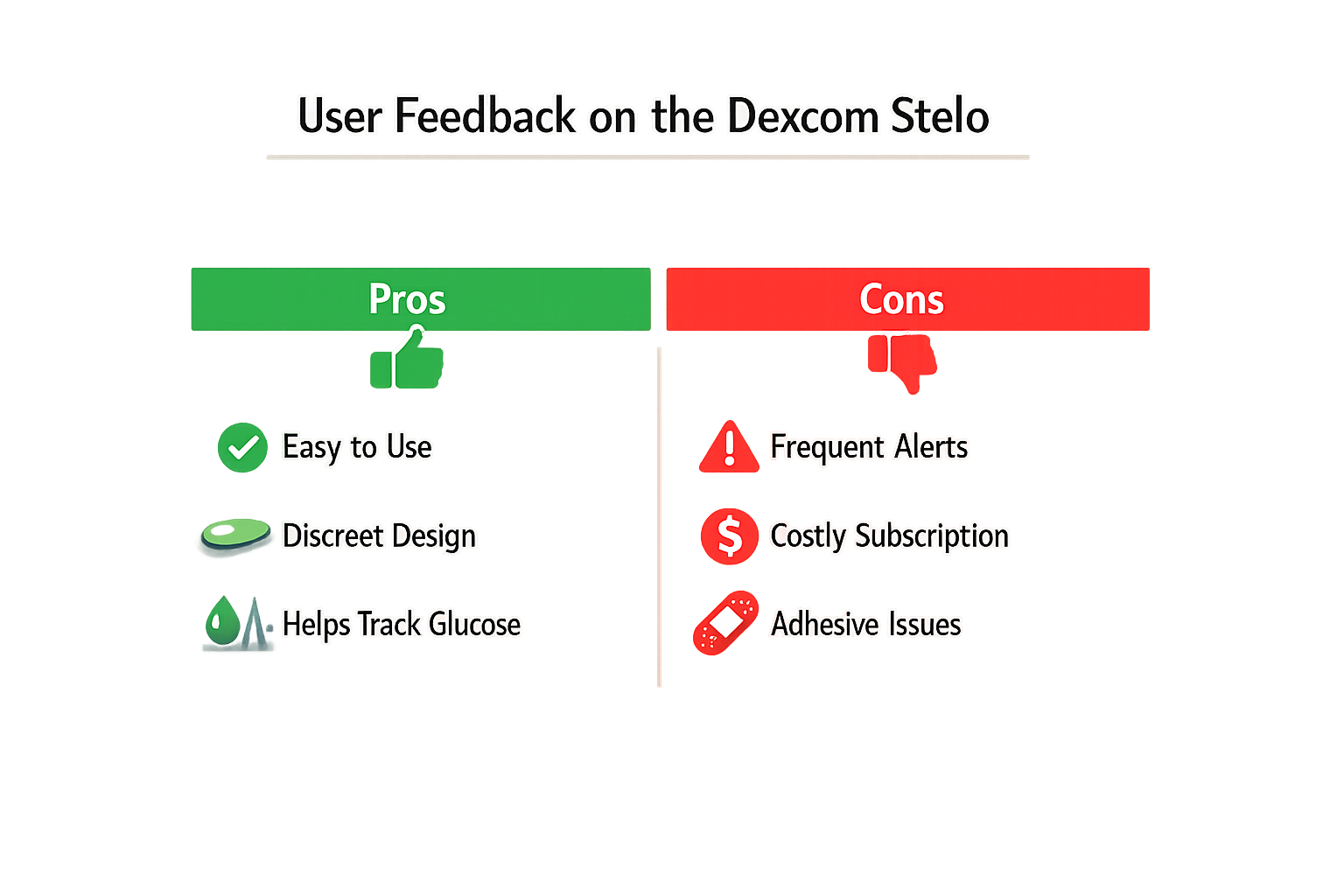
User experience with continuous glucose monitoring systems varies widely depending on the device, the individual's glucose patterns, and how consistently the sensor is worn. While the Dexcom Stelo is designed specifically for non-diabetics and those with prediabetes, broader data on Dexcom systems and comparable CGM platforms offers context for what users can expect in terms of engagement, accuracy, and day-to-day usability.
Consistent Sensor Use and Engagement
One key marker of user satisfaction is how often people actually wear the sensor. Research comparing Dexcom and FreeStyle Libre systems found that median sensor use was 85% for both platforms — meaning most users wore the device the majority of the time over the study period. This level of adherence suggests that once users integrate a CGM into their routine, the technology becomes a sustainable part of daily life rather than a short-term experiment.
For those exploring Dexcom Stelo vs Abbott Lingo: Which OTC CGM Is Right for You, understanding real-world adherence patterns can help set expectations. Consistent wear is essential for gathering meaningful glucose data, especially when the goal is to identify patterns tied to meals, activity, or stress.
Glucose Time-in-Range and Hypoglycemia Awareness
In a cohort study of adults with type 1 diabetes using Dexcom systems, 32% of users met the international target of spending at least 70% of their time in the target glucose range (3.9 to 10 mmol/L, or roughly 70 to 180 mg/dL). Additionally, 70% of Dexcom users spent less than 4% of their time in the hypoglycemia range (below 4 mmol/L or 72 mg/dL), meeting safety benchmarks for minimizing low blood sugar exposure.
While these figures come from a population managing insulin-dependent diabetes — a different use case than Stelo's non-diabetic audience — they illustrate the system's ability to surface actionable glucose data. For non-diabetics, the absence of hypoglycemia risk changes the stakes, but the visibility into glucose variability remains the core value.
Seventy percent of Dexcom users kept hypoglycemia exposure below recommended thresholds, demonstrating the system's capacity to track low-glucose events reliably.
Improvement in Glycemic Control Metrics
The same cohort showed measurable improvement in glucose management after starting CGM use. Median HbA1c before sensor initiation was 61 mmol/mol, and the median glucose management indicator (GMI) — a CGM-derived estimate of A1C — dropped to 57 mmol/mol in the most recent three months, a statistically significant reduction. This suggests that real-time glucose feedback supports behavior change and tighter glucose control over time.
For Stelo users without diabetes, the equivalent benefit would be increased awareness of glucose spikes after meals or during periods of stress, rather than A1C reduction. The feedback loop remains the same: see the data, adjust behavior, observe the result.
Practical Considerations and User Variability
Not all experiences are uniformly positive. Sensor adhesion, skin irritation, calibration expectations, and the learning curve for interpreting glucose traces can all affect user satisfaction. Some individuals find the constant stream of data empowering; others report decision fatigue or anxiety when numbers fluctuate outside expected ranges — even when those fluctuations are physiologically normal.
The Dexcom Stelo is positioned for a wellness and metabolic-awareness audience rather than clinical diabetes management, so user expectations and outcomes will differ from the research cohorts cited here. However, the broader Dexcom user experience — high adherence, reliable low-glucose detection, and measurable engagement with glucose data — provides a reasonable baseline for what the Stelo platform is built to deliver.
Pricing and Availability of the Dexcom Stelo
Dexcom Stelo is sold directly to consumers without a prescription, which changes the pricing structure compared to traditional CGMs. Because it's marketed for adults who do not use insulin — including those with prediabetes or type 2 diabetes managed with lifestyle or non-insulin medications — it falls outside most insurance formularies.
Out-of-Pocket Cost
Stelo is available as a subscription through Dexcom's website. Each sensor lasts 15 days, and a one-month supply (two sensors) typically costs around $99. A three-month supply brings the per-month cost down slightly. There are no upfront device fees — the app is free, and the sensors come ready to apply.
Because Stelo is classified as an over-the-counter wellness device rather than a prescription medical device, it is not eligible for reimbursement through most health insurance plans or Medicare. If you have a health savings account (HSA) or flexible spending account (FSA), Stelo purchases may be eligible — confirm with your plan administrator before ordering.
Purchasing Options
Stelo is sold exclusively through Dexcom's direct-to-consumer platform. You create an account, select a subscription plan, and sensors ship to your address. There is no retail availability in pharmacies at this time. Subscriptions can be paused or canceled online.
If you're deciding between Stelo and other over-the-counter CGMs, the Dexcom Stelo vs Abbott Lingo comparison walks through cost, features, and use-case differences in detail.
Who Pays Full Price
Because Stelo is designed for people who do not take insulin, it sits in a coverage gap. Prescription CGMs — like Dexcom G7 or Abbott's FreeStyle Libre — are often covered for people with type 1 diabetes or insulin-treated type 2 diabetes, but Stelo's target population (prediabetes, diet-managed type 2, or general glucose awareness) typically does not meet medical-necessity criteria for insurance reimbursement.
If cost is a barrier, consider whether a prescription CGM might be covered under your plan. That requires a healthcare provider's order and a diagnosis that meets payer criteria, but the out-of-pocket difference can be significant if your plan includes CGM coverage.
Conclusion of the Dexcom Stelo Review
Dexcom Stelo represents a meaningful step in making continuous glucose monitoring accessible to people who don't use insulin — those managing prediabetes, type 2 diabetes without intensive medication, or simply curious about how their bodies respond to food and activity. It removes the prescription barrier and delivers real-time glucose data in a format that many users find easier to interpret than fingerstick logs.
The device performs well for trend awareness. Users report that the sensor is comfortable, the app is intuitive, and the 15-day wear period reduces the burden of frequent changes. For someone newly diagnosed with prediabetes or type 2 diabetes, Stelo offers a window into glucose patterns that can inform meal timing, carbohydrate choices, and exercise routines without requiring a doctor's visit to access the technology.
Limitations to Keep in Mind
Stelo is not a diagnostic tool and is not approved for insulin dosing. The 70–200 mg/dL display range means it won't show readings outside that window, which can be a limitation for anyone whose glucose occasionally moves beyond those bounds. The subscription model — approximately $99 per month for two sensors — is a recurring cost that may not be sustainable for everyone, and insurance coverage remains limited for over-the-counter CGMs.
For individuals seeking a comparative perspective on over-the-counter CGM options, Dexcom Stelo vs Abbott Lingo: Which OTC CGM Is Right for You provides a side-by-side evaluation of features, pricing, and use cases.
Who Benefits Most
Stelo is best suited for people who want continuous feedback on their glucose without the complexity of a prescription device. It works well for those in the early stages of diabetes management, for caregivers tracking patterns in a family member's routine, or for individuals with prediabetes who want to see how specific foods and habits affect their numbers. The device does not replace medical advice or adjust medication — it provides data to bring to the next appointment.
Final Verdict
Dexcom Stelo delivers on its core promise: accessible, continuous glucose monitoring for people who don't use insulin. The sensor is reliable, the app is clear, and the absence of a prescription requirement lowers the barrier to entry. The cost and the narrower display range are trade-offs, but for many users, the visibility into glucose trends justifies both. Stelo is a practical tool for glucose awareness, not a medical device for treatment decisions — and within that scope, it performs as intended.
Explore our Dexcom Stelo review, detailing features, user experiences, and pricing for non-diabetics interested in continuous glucose monitoring.

Maren Alcott is the lead presenter at DiabetesCompass. She is an AI-presented digital character. Every article Maren presents is researched and fact-checked by the DiabetesCompass editorial team against the ADA Standards of Care, peer-reviewed journals, and named clinical sources. Maren does not give medical advice — for questions about your specific situation, talk to your care team.