
7 Best Supplements to Lower A1C: Evidence-Based Review
Research-backed review of supplements to lower A1C, including berberine, chromium, and magnesium. Evidence, dosing guidance, and safety considerations.


On this page
Introduction to A1C and Supplements
A1C levels reflect how well blood glucose has been controlled over approximately two to three months. For people with diabetes or prediabetes, lowering A1C is often a central goal — it correlates with reduced risk of complications and better long-term outcomes. The A1C test measures the percentage of hemoglobin in red blood cells that has glucose attached to it; higher percentages indicate higher average blood-glucose levels over time.
Many people ask whether dietary supplements can help lower A1C, either as an addition to medication or as part of a broader management plan. The short answer is that some supplements show modest effects in peer-reviewed studies, while others have limited or conflicting evidence. No supplement replaces prescribed diabetes medications — including insulin or oral agents like metformin — and none should be started or stopped without consulting your care team. For context on what your A1C number means and how it translates to daily glucose levels, see our A1C conversion guide.
What This Review Covers
This article examines supplements that have been studied in the context of blood-glucose control and A1C reduction. Each supplement is evaluated based on available peer-reviewed research, mechanism of action where known, and practical considerations like safety and interaction risk.
The editorial team at DiabetesCompass synthesizes published research and manufacturer guidance to provide orientation for people navigating diabetes management decisions. Where evidence conflicts or is insufficient, we say so.
Explore the best supplements to lower A1C levels effectively. Our review covers top options based on efficacy and user feedback.
Detailed Reviews of the Best Supplements to Lower A1C
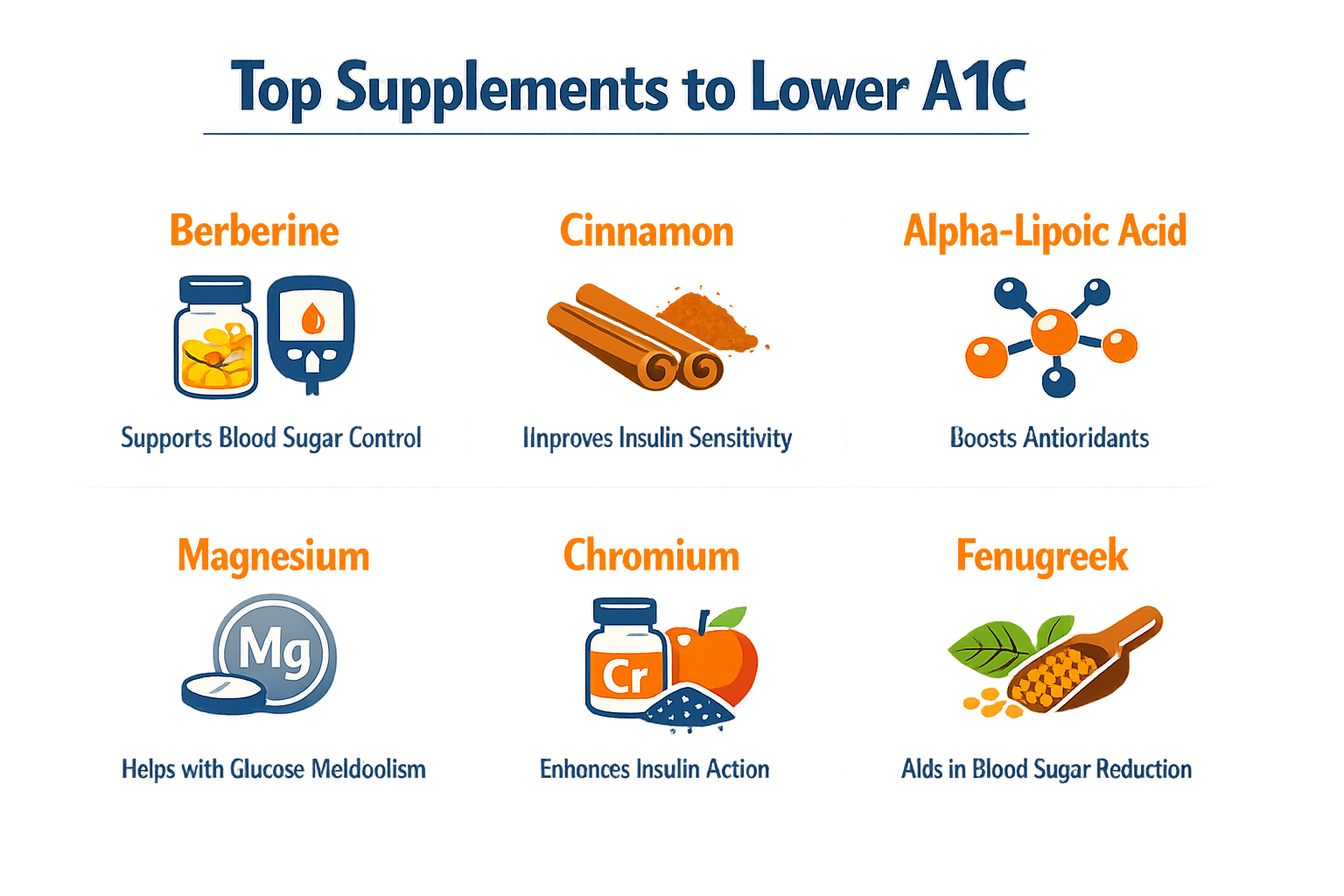
The research on supplements for A1C management is evolving, with some showing more promise than others. This section examines the evidence behind commonly discussed supplements, their mechanisms, and what the peer-reviewed literature actually supports. Remember that supplement effects are typically modest compared to prescribed medications, and no supplement should replace your current diabetes treatment plan without explicit guidance from your care team.
Vitamin D: Metabolic Pathway Support
Vitamin D supplementation has demonstrated measurable effects on several metabolic markers in individuals with type 2 diabetes. Studies show that supplementation can influence circulating vitamin D levels, glycated hemoglobin (HbA1c), total cholesterol, LDL cholesterol, triglycerides, and insulin resistance markers (HOMA-IR). The mechanism appears to involve improving metabolic pathways and reducing insulin resistance, particularly in individuals with existing vitamin D deficiency.
The evidence suggests vitamin D supplementation may be most beneficial for individuals with documented deficiency and type 2 diabetes. However, the research does not support a universal "diabetes reversal" claim — the improvements are incremental and work alongside other diabetes management strategies.
Dietary Fiber: Glycemic Control Foundation
Higher dietary fiber intake has been associated with improved glycemic control in adults with prediabetes and diabetes. Research indicates that increased fiber consumption can reduce A1C by approximately 2.00 mmol/mol, along with improvements in other metabolic markers. Individuals with better A1C values consistently show higher dietary fiber intake patterns.
Fiber works by slowing carbohydrate absorption, reducing post-meal glucose spikes, and supporting gut health. Unlike isolated supplement pills, fiber from whole foods (vegetables, legumes, whole grains) provides additional nutrients and satiety benefits. If you're looking to lower your A1C naturally through diet and lifestyle changes, increasing fiber intake is one of the most evidence-backed strategies.
Low Glycemic Index (GI) Approaches
Low GI diets have proven effective in lowering HbA1c levels in individuals with type 2 diabetes. The research shows that each 1-unit increase in glycemic index is associated with a +0.3% increase in HbA1c levels and a +0.12 cm increase in waist circumference. However, glycemic index changes did not significantly affect fasting glucose, blood lipids, or blood pressure in the studies reviewed.
Low GI diets were effective in lowering HbA1c levels in individuals with T2D, with measurable effects on both glycemic control and body composition.
This isn't a "supplement" in the traditional sense, but rather a dietary pattern that can be implemented through food choices. The glycemic index measures how quickly a carbohydrate-containing food raises blood glucose — lower GI foods produce smaller, slower rises.
Selenium: Emerging Research on Oxidative Stress
Recent research has identified an association between higher dietary selenium intake and better glycemic regulation. Individuals achieving target glucose management indicator (GMI) values showed significantly higher selenium levels in their diet. The proposed mechanism involves selenium's role in reducing reactive oxygen species (ROS) and supporting selenoproteins like glutathione peroxidases, which are critical in mitigating oxidative damage and improving insulin sensitivity.
The evidence for selenium is newer and less robust than for vitamin D or fiber. The research shows correlation and plausible biological mechanisms, but does not yet provide clear dosing guidance or confirm that selenium supplementation (as opposed to dietary selenium intake) produces the same benefits.
Branched-Chain Amino Acids (BCAA), Creatine, and Other Supplements
BCAA, creatine, and vitamin D appear to show promise for individuals with type 2 diabetes, but the evidence base requires further research before these can be recommended as standard interventions. The current literature identifies these as potentially beneficial but does not provide the same level of support seen for fiber intake or low GI dietary patterns.
Many supplements marketed for A1C reduction lack rigorous clinical trial evidence. When evaluating any supplement claim, look for peer-reviewed studies in humans (not just animal or cell studies), appropriate sample sizes, and replication across multiple research groups.
How to Choose the Right Supplement
Selecting a supplement to support A1C management requires more than scanning the label for promising claims. The supplement market is largely unregulated for efficacy, and not every product that mentions blood sugar or glucose support has evidence behind it. Before adding any supplement to your routine, consult your diabetes care team — your endocrinologist, primary care provider, or certified diabetes care and education specialist. They can review your current medications, identify potential interactions, and confirm whether a supplement aligns with your treatment plan.
Consult Your Healthcare Provider First
Supplements are not benign additions. Some interact with common diabetes medications: for example, berberine and alpha-lipoic acid may amplify the glucose-lowering effect of metformin or insulin, raising hypoglycemia risk. Others affect nutrient absorption or liver enzyme activity. Your care team can flag these risks and adjust monitoring if you proceed. Never reduce or stop a prescribed medication in favor of a supplement — supplements are adjuncts, not replacements, and stopping insulin or other medications without medical guidance can be dangerous.
Look for Third-Party Testing and Transparent Labeling
Because the FDA does not pre-approve dietary supplements for safety or efficacy, third-party certification provides a layer of accountability. Look for seals from NSF International, USP (United States Pharmacopeia), or ConsumerLab — these organizations test products for label accuracy, contamination, and manufacturing quality. A certified product is more likely to contain what the label claims and less likely to harbor undisclosed ingredients or contaminants like heavy metals.
Transparent labeling matters too. The label should list the active ingredient by its standardized form (e.g., "berberine HCl" rather than vague "herbal blend"), the dose per serving, and any additional compounds. Proprietary blends that hide individual ingredient amounts make it impossible to assess whether the dose aligns with research. If the label is vague or the manufacturer does not provide accessible contact information or testing documentation, move on.
Consider the Evidence Base and Dosing
Not all supplements have equal evidence. Some, like vitamin D and magnesium, show modest effects on HbA1c in individuals with documented deficiencies, but limited benefit in those with normal levels. Others, like chromium, have mixed results in the literature. Before choosing a supplement, confirm that peer-reviewed studies support its use at the dose you are considering. Research often uses specific forms and amounts — for instance, studies on alpha-lipoic acid typically use 600–1200 mg daily, while over-the-counter products may contain far less.
If the evidence is thin or the dose in the product does not match what was studied, the supplement is less likely to deliver measurable results. Your care team or a clinical dietitian can help interpret the research and determine whether the supplement is worth trying in your specific situation.
Be Aware of Potential Side Effects and Quality Variation
Supplements carry side effects. Berberine commonly causes gastrointestinal upset — cramping, diarrhea, or nausea — especially at higher doses. Chromium picolinate has been associated with kidney damage in rare cases. Alpha-lipoic acid can cause skin reactions or a metallic taste. Even "natural" does not mean "safe for everyone." If you experience new symptoms after starting a supplement, stop taking it and contact your care team.
Quality varies widely across brands. Two products with the same ingredient name may differ in purity, bioavailability, and manufacturing standards. Stick with brands that publish certificates of analysis (COAs) and maintain transparent supply chains. If a product is significantly cheaper than competitors, question why — it may reflect lower-quality sourcing or lack of testing.
Track Your Response
If you and your care team decide to try a supplement, track your glucose patterns and A1C over time. Supplements do not work overnight; effects on A1C typically take 8–12 weeks to appear. Keep a log of your fasting glucose, post-meal readings, and any symptoms. If you see no change after three months, or if your glucose becomes harder to manage, the supplement may not be effective for you — or it may be interacting with another part of your regimen.
For more context on A1C and how to interpret changes over time, see our A1C Conversion: What Your Number Means and How to Lower It guide.
How We Reviewed the Supplements
This review does not represent first-hand testing of supplement products. DiabetesCompass does not conduct laboratory analysis, clinical trials, or product evaluations. Instead, we synthesize peer-reviewed research, clinical guidelines, and manufacturer disclosures to provide context on what the evidence shows—and where it falls short.
Our Review Methodology
Supplements were evaluated based on three criteria: the strength of published clinical evidence, transparency of dosing and formulation, and alignment with established diabetes care standards. Each supplement discussed in this review is anchored to studies indexed in PubMed or referenced in systematic reviews. We prioritized randomized controlled trials and meta-analyses over observational studies, and we noted when evidence was limited to animal models or small sample sizes.
Where a supplement's effect on A1C has been studied in people with type 2 diabetes, we reported the range of outcomes and the quality of the evidence. Where studies conflict or show minimal effect, we stated that plainly. We did not assign scores, rankings, or "top pick" designations—our role is to translate the research, not to endorse products.
What We Did Not Do
We did not purchase, consume, or measure the glucose impact of any supplement. We did not conduct lab testing for purity, potency, or contamination. We did not recruit participants or collect original data. Claims that a review "tested" supplements by having staff members take them and measure outcomes are not part of our editorial model. Instead, we rely on the collective evidence base and the transparency of the research process.
Systematic reviews of dietary interventions in type 2 diabetes—such as one analyzing 56 trials with nearly 5,000 participants—provide a framework for understanding how various approaches, including supplementation, compare to control diets. These large-scale analyses help clarify which interventions show consistent effects and which remain uncertain. For supplements specifically, the evidence is often thinner, and effect sizes smaller, than for dietary patterns or medications.
Limitations of the Evidence
Many supplement studies are short in duration—often 12 weeks or less—and do not assess long-term safety or sustained A1C reduction. Dosing varies widely across trials, and formulations are not standardized. Some studies are funded by supplement manufacturers, which introduces potential bias. We noted these limitations where relevant and did not overstate certainty when the evidence was mixed or preliminary.
Frequently asked questions
Can supplements replace your diabetes medication?
No. Supplements are not a substitute for prescribed diabetes medications, including insulin or oral agents like metformin. The American Diabetes Association Standards of Care do not recommend replacing prescribed therapy with supplements. If you're considering adding a supplement to your regimen, discuss it with your care team first — they can assess potential interactions with your current medications and adjust monitoring as needed.
How long does it take for supplements to affect A1C?
A1C reflects average blood glucose over approximately three months, so any intervention — whether medication, diet change, or supplement — won't show up in your A1C reading immediately. Most clinical studies of supplements run for 8–12 weeks before measuring A1C changes. If you start a supplement, expect to wait at least two to three months before seeing any potential impact on your A1C, and confirm changes with your care team rather than adjusting doses on your own.
Are there any side effects I should watch for?
Yes. Common side effects vary by supplement but can include gastrointestinal discomfort (nausea, diarrhea, cramping), low blood sugar when combined with diabetes medications, and interactions with other prescriptions. For example, some supplements may affect blood clotting or interact with blood pressure medications. Report any new symptoms to your care team, especially if you experience unexplained low blood glucose, digestive upset that doesn't resolve, or unusual fatigue.
Do you need to test your blood sugar more often if you take supplements?
It depends on your current regimen and the supplement you're adding. If you're on insulin or a medication that can cause hypoglycemia (such as a sulfonylurea), adding a supplement that may further lower blood glucose means you should monitor more frequently — at minimum, check before meals and at bedtime until you and your care team understand how the supplement affects your readings. If you're on metformin alone or managing prediabetes with lifestyle changes, your current monitoring schedule may be sufficient, but confirm with your care team.
Can I take multiple supplements at once to lower A1C faster?
Combining supplements without clinical guidance increases the risk of interactions, side effects, and unpredictable blood-glucose changes. There is limited research on the safety and efficacy of taking multiple glucose-lowering supplements simultaneously, and polypharmacy — even with over-the-counter products — complicates troubleshooting if something goes wrong. Introduce one supplement at a time, monitor its effect over several weeks, and consult your care team before adding another.
Are supplements regulated for quality and potency?
In the United States, dietary supplements are regulated by the FDA under a different framework than prescription drugs. Manufacturers are responsible for ensuring their products are safe and accurately labeled, but the FDA does not pre-approve supplements for efficacy or quality before they reach the market. Third-party testing organizations — such as USP, NSF International, or ConsumerLab — provide independent verification of supplement contents and purity. Look for products with third-party certification to reduce the risk of contamination or inaccurate dosing.
What should you tell your doctor before starting a supplement?
Bring the supplement label or product name to your appointment and share your current medication list, including over-the-counter drugs and any other supplements you're already taking. Your care team needs to know the proposed dose, the active ingredients, and your reason for considering it. They can check for interactions with your prescriptions, assess whether the supplement is appropriate given your A1C and overall health, and adjust your monitoring plan if needed. For more context on understanding your A1C number and what changes mean, see our conversion guide.
Conclusion and Recommendations
The evidence base for supplements to lower A1C remains thin and inconsistent. While some supplements show modest reductions in small trials, the research landscape is marked by missing dietary data, inconsistent dosing protocols, and a lack of large, long-term studies. No supplement replaces standard diabetes medications, and none should be started or stopped without discussing it with your care team first.
If you're considering adding a supplement to your diabetes management plan, start with a conversation about your current A1C trend, your medication regimen, and whether a supplement might interact with what you're already taking. Your care team can help you weigh the potential benefit against the cost and the risk of side effects. For most people, the foundational strategies—consistent carbohydrate intake, regular physical activity, and medication adherence—will have a larger, more predictable impact on A1C than any supplement.
The current research is unable to draw firm conclusions about which supplements work best or for whom. More primary studies are necessary before any supplement can be recommended with confidence. Until that evidence arrives, treat supplements as optional add-ons, not replacements, and keep your expectations modest. If you do try a supplement, track your glucose and A1C closely, and report any changes—positive or negative—to your care team at your next appointment.
For a broader look at non-supplement strategies, see our guide on how to lower A1C naturally, which covers diet, exercise, and lifestyle adjustments with stronger evidence behind them.
Related reading

Maren Alcott is the lead presenter at DiabetesCompass. She is an AI-presented digital character. Every article Maren presents is researched and fact-checked by the DiabetesCompass editorial team against the ADA Standards of Care, peer-reviewed journals, and named clinical sources. Maren does not give medical advice — for questions about your specific situation, talk to your care team.