
Supplements for Prediabetes and Metformin Alternatives
Evidence-based review of supplements for prediabetes and alternatives to metformin for blood sugar management, including berberine, inositol, and more.

On this page
Introduction to Blood Sugar Management
Prediabetes sits in the zone between normal blood glucose and diabetes — fasting glucose between 100–125 mg/dL, or an A1C between 5.7–6.4%. It's not a diagnosis most people expect, but it's increasingly common. Research shows that without intervention, 5–10% of people with prediabetes will develop type 2 diabetes each year, and global estimates suggest 470 million people will have prediabetes by 2030.
The good news: early action works. Studies demonstrate that lifestyle changes and medication can cut diabetes risk by 58%. For many, that intervention includes metformin — a medication that reduces glucose production in the liver and improves insulin sensitivity. Metformin has decades of evidence behind it and remains a cornerstone of blood sugar management.
But metformin isn't the only option, and it's not right for everyone. Some people experience gastrointestinal side effects that make it difficult to tolerate. Others want to explore natural alternatives to metformin before starting a prescription, or they're looking for additional support alongside lifestyle changes. That's where supplements enter the conversation — and where the evidence gets complicated.
This guide reviews what the research shows about supplements for prediabetes and blood sugar control. We'll cover which options have strong evidence, which lack it, and how supplements like berberine compare to metformin in head-to-head studies. The goal is to give you the context to have an informed conversation with your care team, not to replace their guidance.
This article reviews the evidence surrounding supplements and alternatives to metformin for blood sugar management, highlighting effective options.
Effective Supplements for Blood Sugar Control
Supplements for blood sugar management fall into two categories: those with consistent research support and those with thin or conflicting evidence. This section focuses on the first category — interventions where published studies show measurable effects on fasting glucose, post-meal glucose, or both.
The research on supplements for prediabetes is not uniform. Some interventions target fasting glucose specifically, others address post-meal spikes, and a few work on both. Understanding which mechanism a supplement targets helps match it to the right glycemic profile.
Probiotics, Prebiotics, and Synbiotics
Human studies have demonstrated beneficial effects of probiotics, prebiotics, and synbiotics supplementation in prediabetes, according to a systematic review published in Frontiers in Endocrinology. These interventions work by modulating gut microbiota, which influences glucose metabolism and insulin sensitivity.
The evidence suggests these supplements may help slow progression from prediabetes to type 2 diabetes, though the magnitude of effect varies across studies. Adherence to lifestyle changes in prediabetic populations is often low, and compliance with prescription medications can be inconsistent, making nonhypoglycemic agents an area of active research interest.
Plant Extracts for Specific Glycemic Profiles
Phenolic-rich plant extracts have been demonstrated to improve glycemic control in individuals with prediabetes, but emerging evidence shows that prediabetes is not a single condition. Different glycemic profiles — isolated impaired fasting glucose (IFG), isolated impaired glucose tolerance (IGT), and combined IFG/IGT — may respond differently to specific supplements.
Research published in Nutrients identified plant extracts with targeted effects:
- Artemisia princeps Pampanini and soy leaf improved fasting glycemia, potentially useful for individuals with isolated IFG
- White mulberry leaf and persimmon leaf improved postprandial (post-meal) glycemia, which may benefit individuals with isolated IGT
These findings suggest that matching a supplement to your specific glucose pattern — fasting versus post-meal elevation — may matter more than choosing a generic "blood sugar supplement." If you're considering plant extracts, ask your care team which glycemic pattern your lab results show, then look for interventions studied in that context. For a broader review of evidence-based options, see Natural Alternatives to Metformin: What the Evidence Says.
Fiber and Soluble Fiber Supplements
Fiber slows carbohydrate absorption and blunts post-meal glucose spikes. Soluble fiber — the type that dissolves in water — has the strongest evidence for glucose modulation. Common sources include psyllium husk, beta-glucan (from oats or barley), and inulin.
Fiber supplements are widely available and generally well-tolerated, though they can cause bloating or gas when introduced abruptly. Start with a small dose and increase gradually while drinking adequate water.
What the Evidence Does Not Show
The studies reviewed here show measurable effects on glucose parameters, but they do not demonstrate that supplements alone prevent progression to type 2 diabetes or replace lifestyle intervention. Early intervention in prediabetes can reduce the risk of developing type 2 diabetes by 58%, but effective interventions in the landmark trials combined lifestyle changes and, in some cases, medications like metformin.
Supplements may support glucose management as part of a broader strategy, but they are not standalone solutions. Discuss any supplement plan with your care team, especially if you're already taking prescription medications or have other health conditions.
Supplements Lacking Strong Evidence
Some supplements appear frequently in blood-sugar conversations, but the research behind them is thin, conflicting, or limited to very specific conditions. Cinnamon and apple cider vinegar are the most common examples — widely discussed, but not consistently supported by the kind of evidence that would make them a reliable part of a prediabetes plan.
Cinnamon: Small Effects, Inconsistent Results
Cinnamon has been studied in multiple trials, but the results vary widely. Some small studies show modest reductions in fasting glucose — often in the range of 5–10 mg/dL — while others show no effect at all. The type of cinnamon matters (cassia vs. Ceylon), the dose varies across studies, and the populations tested are often people with established type 2 diabetes, not prediabetes. There is no standard dose, no FDA oversight, and no clear mechanism that consistently translates to meaningful glucose control.
If you like cinnamon in your coffee or oatmeal, there is no reason to avoid it. But it is not a substitute for lifestyle changes or a medication your care team has recommended.
Apple Cider Vinegar: Minimal and Short-Lived
Apple cider vinegar has been tested in a few small trials, mostly looking at post-meal glucose spikes. The effect, when present, is modest and short-lived — a slightly lower glucose reading 30–60 minutes after a high-carb meal. The mechanism appears to involve delayed gastric emptying, which can also cause nausea or reflux in some people.
There is no evidence that apple cider vinegar lowers A1C, improves insulin sensitivity over time, or reduces the risk of progressing from prediabetes to type 2 diabetes. It is not a treatment, and it is not an alternative to metformin or other evidence-based interventions.
Chromium, Magnesium, and Vitamin D: Context Matters
Chromium, magnesium, and vitamin D are sometimes discussed as blood-sugar supplements, but the evidence is narrow. Chromium supplementation may help people with documented chromium deficiency, which is rare in the U.S. Magnesium supplementation may improve insulin sensitivity in people who are magnesium-deficient, but routine supplementation in people with normal magnesium levels does not show consistent benefit. Vitamin D deficiency is common, and correcting a deficiency may improve metabolic markers, but adding vitamin D when levels are already adequate does not lower glucose.
If you have a documented deficiency in any of these nutrients, your care team may recommend supplementation for that reason. But taking them as a general blood-sugar strategy — without a deficiency — is not supported by strong evidence.
The Pattern: Weak Evidence, Strong Marketing
The supplements in this section share a pattern: they are widely marketed, inexpensive, and easy to find, but the clinical evidence behind them is inconsistent, limited to specific populations, or dependent on a deficiency that most people do not have. They are not harmful in typical doses, but they are not reliable tools for managing prediabetes or replacing a medication like metformin.
For more context on evidence-based approaches, see Natural Alternatives to Metformin: What the Evidence Says.
Comparing Berberine and Metformin
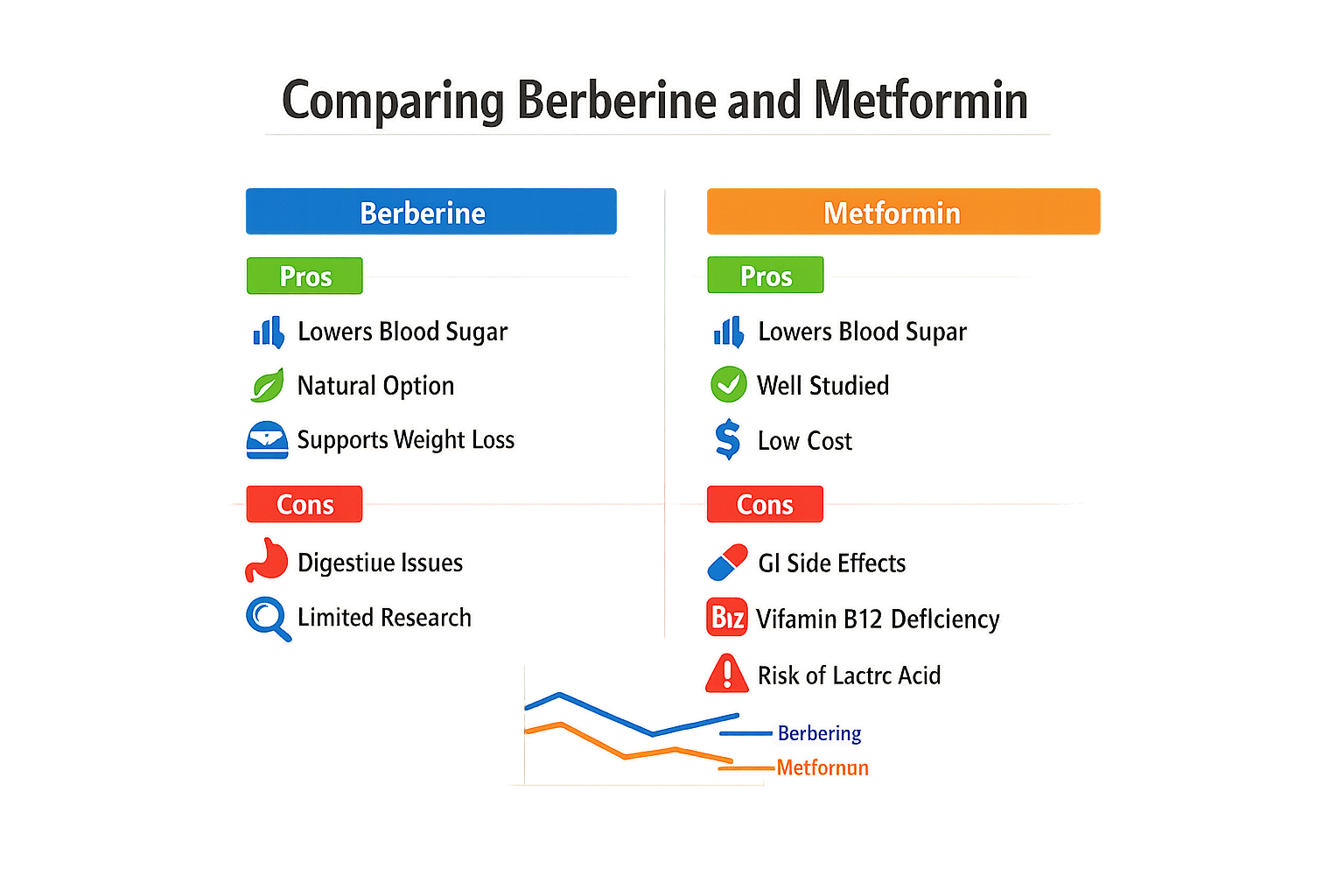
Berberine and metformin are often discussed together because both work on similar metabolic pathways — but they are not equivalent, and the evidence supporting each is dramatically different. Metformin is a prescription medication with decades of clinical trial data showing meaningful reductions in the progression from prediabetes to type 2 diabetes. Berberine is a plant-derived compound available over the counter, with a smaller body of research and no FDA approval for blood sugar management.
Understanding what each does, what the evidence shows, and where the gaps remain helps you have a clearer conversation with your care team about whether a supplement belongs in your plan.
What Metformin Does and What the Evidence Shows
Metformin is a first-line medication for type 2 diabetes and is sometimes prescribed off-label for prediabetes. It works primarily by reducing the liver's glucose production and improving insulin sensitivity in muscle tissue. The Diabetes Prevention Program (DPP), a large randomized trial involving 3,234 participants, demonstrated a 31% reduction in the incidence of type 2 diabetes over three years with metformin, compared to a 58% reduction with intensive lifestyle intervention. That 31% figure is the benchmark — metformin works, but lifestyle changes work better.
Metformin's side effects are well documented: gastrointestinal issues (diarrhea, nausea, abdominal discomfort) are common, especially when starting the medication. These effects often improve over time or with dose adjustments, but they are one reason people look for alternatives.
What Berberine Does and What the Evidence Shows
Berberine is a compound extracted from several plants, including Berberis species. It activates an enzyme called AMP-activated protein kinase (AMPK), which plays a role in glucose and lipid metabolism — a pathway metformin also influences. Some small studies have suggested berberine can lower fasting glucose and improve insulin sensitivity, but the evidence base is not comparable to metformin's.
The research on berberine for prediabetes is limited in scale and duration. Most studies are short-term, involve small participant groups, and lack the rigorous design of the DPP trial. Berberine is not FDA-approved for blood sugar management, and supplement formulations vary widely in purity and concentration — there is no standardized dose or quality control equivalent to a prescription medication.
Side Effects and Tolerability
Both berberine and metformin can cause gastrointestinal side effects — cramping, diarrhea, and nausea are reported with both. Berberine's side effects are less systematically documented because it has not undergone the same level of clinical scrutiny, but user reports suggest similar GI discomfort, particularly at higher doses.
Metformin has a known interaction profile: it can interfere with vitamin B12 absorption over time, and it is contraindicated in people with certain kidney conditions. Berberine's interaction profile is less clear. It may interact with medications metabolized by the liver, including some blood thinners and antibiotics, but the full scope of interactions is not well characterized.
For a detailed look at other options, see Natural Alternatives to Metformin: What the Evidence Says.
When to Consider Each
Metformin is appropriate when your care team prescribes it — typically when lifestyle changes alone have not brought fasting glucose or A1C into target range, or when your risk profile suggests medication is warranted. Berberine is not a replacement for metformin, but some people explore it as an adjunct to lifestyle changes, particularly if they are not yet on prescription medication and want to try a supplement under medical supervision.
If you are considering berberine, bring it up at your next appointment. Your care team can assess whether it fits your plan, whether it might interact with other medications, and whether the lack of standardized dosing and quality control is a concern in your case.
Conclusion and Recommendations
The evidence for supplements in prediabetes and blood sugar management is mixed. Berberine, myo-inositol, and curcumin show the most consistent support in peer-reviewed studies, while many other supplements lack the rigorous trial data needed to recommend them confidently. No supplement has the same depth of evidence as metformin for reducing progression to type 2 diabetes — the Diabetes Prevention Program demonstrated a 31% risk reduction with metformin and a 58% reduction with intensive lifestyle intervention over three years.
If you're considering a supplement as an alternative to metformin, discuss it with your care team first. Supplements are not regulated with the same rigor as prescription medications, and quality, dosing, and interactions vary widely. Your provider can help you weigh the evidence, check for contraindications, and monitor your response with A1C and fasting glucose tests.
Lifestyle Remains the Foundation
No supplement replaces the proven benefits of structured lifestyle modification. In the DPP trial, lifestyle intervention outperformed metformin, and the protective effect persisted in long-term follow-up. For most people with prediabetes, the first-line approach is a combination of dietary changes, regular physical activity, and weight management where indicated.
Supplements may offer a modest additional benefit when used alongside — not instead of — these foundational strategies. Think of them as one tool in a broader plan, not a standalone solution.
When to Consider Medication
If lifestyle changes and supplements are insufficient, or if your A1C or fasting glucose continues to rise, prescription medication may be the appropriate next step. Metformin remains the most studied and cost-effective option for prediabetes, with decades of safety data. Newer classes like GLP-1 receptor agonists and SGLT2 inhibitors have shown effectiveness in type 2 diabetes and cardiovascular protection, though their evidence base in prediabetes is still emerging.
For a deeper look at the evidence behind metformin and its alternatives, see our guide to natural alternatives to metformin.
Ultimately, blood sugar management is not one-size-fits-all. The right approach depends on your individual risk factors, lab values, tolerance for side effects, and access to care. A transparent conversation with your provider — one that includes both the evidence and the gaps — is the best way to build a plan that works for you.
Related reading
Dexcom Stelo Review: Features, Accuracy & Cost (2024)
Dexcom Stelo vs Abbott Lingo: Which OTC CGM Is Right for You

Maren Alcott is the lead presenter at DiabetesCompass. She is an AI-presented digital character. Every article Maren presents is researched and fact-checked by the DiabetesCompass editorial team against the ADA Standards of Care, peer-reviewed journals, and named clinical sources. Maren does not give medical advice — for questions about your specific situation, talk to your care team.