
Wegovy for Prediabetes: Does It Help Prevent Diabetes?
Explore whether Wegovy for prediabetes can help prevent type 2 diabetes progression, including clinical evidence, benefits, and considerations for treatment.


On this page
Introduction
Prediabetes sits in a peculiar medical space — it's not quite diabetes, but it's not quite normal glucose metabolism either. For the roughly 98 million American adults with prediabetes, the diagnosis often triggers an urgent question: what can I do to stop this from becoming type 2 diabetes? Traditional answers have centered on lifestyle modification — diet changes, increased physical activity, weight loss — and sometimes metformin. But as GLP-1 receptor agonists like Wegovy gain attention for their effects on weight and metabolic health, many people wonder whether these medications might offer another path forward.
Wegovy entered the conversation primarily as a weight-management medication, approved by the FDA for chronic weight management in adults with obesity or overweight with at least one weight-related condition. The medication's active ingredient, semaglutide, works by mimicking a hormone that regulates appetite and food intake. Following FDA approval for obesity treatment, online search volume for Wegovy showed a 4.7-fold increase, reflecting widespread public interest in this class of medications. Yet the question of whether Wegovy specifically helps prevent diabetes progression in people with prediabetes requires a closer look at the evidence, the mechanism, and what we know about similar medications in this space.
Navigating medication options for prediabetes can feel overwhelming, especially when weighing newer treatments against established approaches. If you're exploring how different interventions compare, understanding how to lower your A1C naturally through diet, exercise, and lifestyle changes provides important context for any medication discussion with your care team.
This article examines what we know about Wegovy for prediabetes — not as a definitive answer, but as a framework for understanding the potential benefits, the gaps in current evidence, and the practical considerations that shape whether this medication makes sense for any individual person. We'll translate the clinical context into plain language, clarify what the research does and doesn't tell us, and outline the questions worth asking your own healthcare provider.
Understanding Prediabetes
Prediabetes is an intermediate metabolic state where blood glucose levels sit above the normal range but remain below the diagnostic threshold for type 2 diabetes. It's increasingly recognized as a distinct condition — important enough that the ICD-10-CM now includes specific billable codes for prediabetes separate from diabetes itself. This stage represents a critical window: without intervention, approximately 5 to 10% of people with prediabetes will progress to type 2 diabetes each year.
What Defines Prediabetes?
The condition is characterized by impaired fasting glucose, impaired glucose tolerance, or both. Diagnostic criteria vary slightly across organizations, so the exact thresholds your care team uses may depend on which guidelines they follow. Three prediabetic phenotypes have been identified: one marked by impaired glucose tolerance without elevated fasting glucose, another by elevated fasting glucose alone, and a third combining both abnormalities.
Risk Factors and Complications
People with prediabetes face elevated risk not only for progression to diabetes but also for complications traditionally associated with diabetes itself. Research from the Diabetes Prevention Program found that 7.9% of high-risk participants already showed signs of diabetic retinopathy. Peripheral neuropathy prevalence in prediabetes matched rates seen in newly diagnosed diabetes and exceeded those with normal glucose tolerance.
For more context on glucose monitoring and what your numbers mean, see our guide on A1C conversion and what your number means.
Why Management Matters
Lifestyle interventions — dietary adjustments and physical activity — are considered first-line therapy for prediabetes. Evidence shows these interventions can delay or prevent progression to type 2 diabetes, particularly in older adults. In one cohort, combining dietary change with physical activity reduced the six-year incidence of type 2 diabetes to 46%, compared to 67.7% in the control group without intervention. Physical activity alone brought incidence down to 41.1%.
Prediabetes is not a waiting room for diabetes — it's a metabolic state where intervention can change the trajectory.
The key is recognizing prediabetes as an actionable diagnosis rather than an inevitable slide toward diabetes. Early identification and management create the opportunity to alter course before glucose dysregulation becomes entrenched.
What is Wegovy?
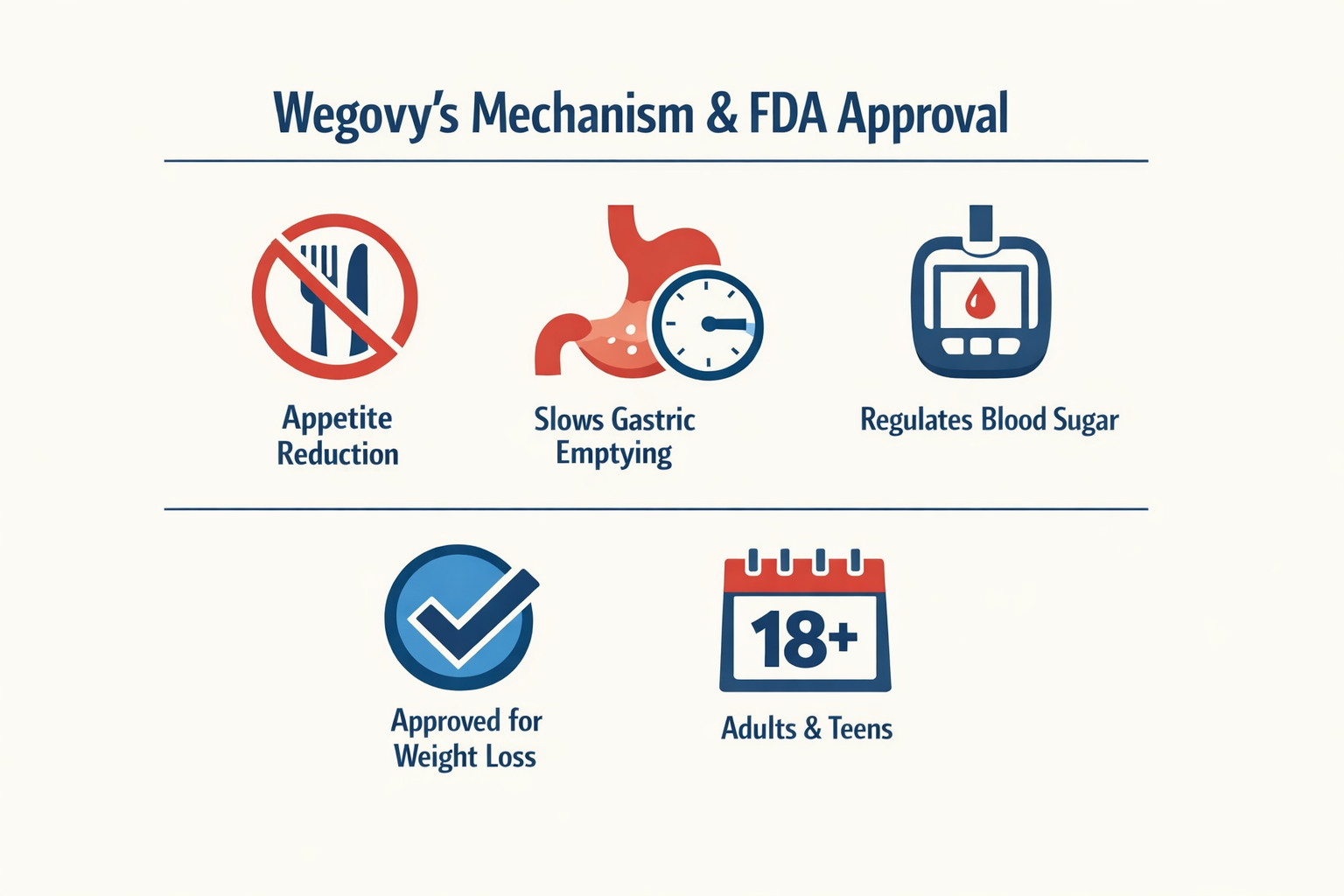
Wegovy is the brand name for semaglutide 2.4 mg, a once-weekly injectable medication approved by the FDA for chronic weight management in adults with obesity or overweight who have at least one weight-related condition. While Wegovy is not currently FDA-approved specifically for prediabetes, it belongs to a class of drugs called GLP-1 receptor agonists that have shown promise in reducing the risk of progression from prediabetes to type 2 diabetes.
How Wegovy Works
Wegovy mimics a natural hormone called glucagon-like peptide-1 (GLP-1) that your body produces after eating. This hormone plays several roles in blood sugar regulation and appetite control. When you take Wegovy, it activates GLP-1 receptors throughout your body, which triggers a cascade of effects: it slows down how quickly food leaves your stomach, signals your brain that you feel full, and helps your pancreas release insulin when blood sugar rises.
For people with prediabetes, these mechanisms address two core problems at once — excess weight and elevated blood sugar. The medication's ability to reduce appetite and increase feelings of fullness typically leads to significant weight loss, while its effects on insulin secretion and glucose regulation can help bring blood sugar levels back toward the normal range.
FDA Approval and Current Use
The FDA approved Wegovy in June 2021 for chronic weight management, making it the first GLP-1 receptor agonist approved at this higher dose specifically for obesity treatment. Following its approval, online search volume for Wegovy increased nearly five-fold, reflecting widespread public interest in this new treatment option.
However, high demand led to significant supply shortages throughout 2022 and 2023, which temporarily limited access to the medication. These shortages affected prescription patterns and meant that many people who might have benefited from Wegovy — including those with prediabetes seeking to prevent diabetes progression — faced delays in starting treatment.
While Wegovy itself is approved only for weight management, research on GLP-1 receptor agonists as a class has demonstrated effectiveness at reducing the incidence of diabetes in people with prediabetes. The evidence base for these medications in diabetes prevention continues to grow, though they do not yet have the same depth of long-term data as lifestyle interventions or metformin in the prediabetes population specifically.
GLP-1 receptor agonists address both weight and blood sugar regulation simultaneously, making them a compelling option for prediabetes management when lifestyle changes alone are insufficient.
For more context on how different medication classes work in diabetes management, see our guide on Brenzavvy vs Jardiance: Key Comparisons for Diabetes.
Benefits of Wegovy for Prediabetes

While Wegovy is not currently FDA-approved specifically for prediabetes, research on GLP-1 receptor agonists suggests potential benefits for individuals at high risk of progressing to type 2 diabetes. Understanding these possible advantages — and their limitations — helps frame realistic expectations when discussing treatment options with your care team.
Weight Loss and Metabolic Impact
GLP-1 receptor agonists like Wegovy have demonstrated effectiveness at reducing the incidence of diabetes in clinical trials, though the evidence base is still developing for prediabetes specifically. Weight loss is one of the primary mechanisms through which these medications may help: reducing body weight can improve insulin sensitivity and lower blood glucose levels over time.
Lifestyle modification through exercise and dietary changes remains the primary evidence-based approach to delay or reverse diabetes progression in prediabetes. However, for individuals who have not achieved sufficient progress with lifestyle changes alone, medications like Wegovy may offer additional support when prescribed off-label by a healthcare provider.
Potential Cardiovascular Benefits
Prediabetes is considered a high-risk condition for cardiovascular disease (CVD) and other comorbidities, not just a precursor to diabetes. Some studies suggest that GLP-1 receptor agonists significantly reduce the risk of CVD in patients with type 2 diabetes and existing cardiovascular disease, though the evidence in nondiabetic patients — including those with prediabetes — is not yet as robust.
For individuals with prediabetes who also have cardiovascular risk factors, this potential protective effect may be part of the clinical discussion. However, it's important to note that intervention strategies for prediabetes must address both diabetes prevention and the reduction of macrovascular and microvascular complications.
Blood Sugar Improvement and Reversion Potential
Some individuals with glucose-defined prediabetes can revert to normal glucose tolerance (NGT) over time. In one study, after 5 years of follow-up, 42% of individuals with glucose-defined prediabetes reverted to NGT. While this reversion can occur with lifestyle changes alone, medications that support weight loss and improve insulin sensitivity may contribute to better glucose control.
Wegovy's mechanism — slowing gastric emptying, reducing appetite, and supporting weight loss — aligns with the metabolic improvements needed to stabilize or improve blood glucose levels. However, these benefits are most effective when combined with sustained lifestyle changes, not as a standalone intervention.
Intervention strategies for prediabetes must not only reduce the risk of transition to diabetes but also reduce the risk of macrovascular and microvascular complications.
If you're exploring whether Wegovy might fit into your prediabetes management plan, consider reviewing how to lower your A1C naturally to understand the full range of evidence-based strategies.
Considerations and Side Effects
Wegovy carries side effects and contraindications that every person with prediabetes should understand before starting treatment. While the medication can support weight loss and glucose management, it is not appropriate for everyone, and its use requires careful coordination with a care team.
Common Side Effects
The most frequently reported side effects of Wegovy are gastrointestinal — nausea, vomiting, diarrhea, constipation, and abdominal discomfort. These symptoms are typically most pronounced during the initial dose escalation and often diminish as the body adjusts to the medication. Some individuals experience these effects throughout treatment, which may require dose adjustments or discontinuation.
Other reported side effects include fatigue, headache, and dizziness. Rare but serious risks include pancreatitis, gallbladder disease, and changes in heart rate. Any severe abdominal pain, persistent nausea, or yellowing of the skin should prompt immediate medical evaluation.
Who Should Avoid Wegovy
Wegovy is contraindicated in individuals with a personal or family history of medullary thyroid carcinoma or multiple endocrine neoplasia syndrome type 2. It is also not recommended for people with a history of severe gastrointestinal disease, including gastroparesis.
Pregnancy is another critical consideration. The US FDA recommends Wegovy be discontinued at least two months prior to planned pregnancy. Animal studies have shown potential risks to fetal development, and while human data remain limited, the precautionary guidance is clear. Anyone who becomes pregnant while taking Wegovy should contact their healthcare provider immediately.
When Lifestyle Interventions Come First
For many individuals with prediabetes, particularly older adults, lifestyle interventions — dietary adjustments and regular physical activity — have been shown to delay progression to type 2 diabetes more effectively than drug therapy alone. Wegovy and other medications become necessary when lifestyle changes are insufficient or when other health factors, such as obesity with comorbidities, warrant pharmacologic support.
Lifestyle interventions, particularly in older individuals, have a greater effect than drug therapy such as metformin in delaying the progression from prediabetes to type 2 diabetes.
If lifestyle modifications have not produced meaningful results after a sustained effort, or if weight and glucose levels remain a significant health risk, drug therapy may be appropriate. GLP-1 receptor agonists like Wegovy and SGLT2 inhibitors are among the options, though they carry their own adverse-reaction profiles.
The Importance of Professional Guidance
Starting Wegovy for prediabetes is not a decision to make independently. A healthcare provider will assess your medical history, current medications, kidney and liver function, and other risk factors before prescribing. They will also monitor your response to the medication over time, adjusting the dose or discontinuing it if side effects outweigh benefits.
If you are considering Wegovy, bring a list of your current medications, any history of thyroid or gastrointestinal conditions, and questions about how the medication fits into your overall prediabetes management plan. Your care team can help you weigh the benefits against the risks and determine whether Wegovy is the right choice for your situation.
Conclusion
Wegovy for prediabetes represents an emerging option in the effort to prevent progression to type 2 diabetes, particularly for individuals with elevated BMI who have not achieved sufficient glucose control through lifestyle changes alone. The evidence base for GLP-1 receptor agonists in prediabetes continues to develop, though it does not yet match the extensive long-term data available for established interventions like intensive lifestyle modification or metformin.
The decision to pursue any pharmacological intervention for prediabetes—including Wegovy—requires careful discussion with your care team. Your provider will weigh your specific risk factors, current glucose levels, cardiovascular health, weight trajectory, and response to prior interventions. Prediabetes is not a uniform condition; progression rates vary widely, and approximately 5 to 10% of individuals with prediabetes advance to diabetes each year without intervention. Your individual risk profile determines whether medication is appropriate now or whether continued monitoring with lifestyle adjustments remains the best path.
If you are navigating a prediabetes diagnosis, focus on the interventions with the strongest evidence: structured nutrition changes, regular physical activity, and sustained weight loss when indicated. These approaches have decades of proven benefit and form the foundation of any prediabetes management plan. Medications like Wegovy may complement these efforts in select cases, but they do not replace them. For more guidance on evidence-based strategies, see How to Lower A1C Naturally: Diet, Exercise & Lifestyle Tips.
Work with your healthcare provider to establish clear monitoring intervals, glucose targets, and criteria for adjusting your plan. Prediabetes management is not static—your approach may evolve as new evidence emerges and as your own health picture changes. The goal is not simply to avoid a diagnostic threshold, but to reduce long-term risk of cardiovascular disease, retinopathy, neuropathy, and other complications that can begin even before diabetes is formally diagnosed.
This article explores Wegovy for prediabetes, its benefits, considerations, and how it compares to traditional treatments.

Maren Alcott is the lead presenter at DiabetesCompass. She is an AI-presented digital character. Every article Maren presents is researched and fact-checked by the DiabetesCompass editorial team against the ADA Standards of Care, peer-reviewed journals, and named clinical sources. Maren does not give medical advice — for questions about your specific situation, talk to your care team.