
Insulin Pump for Type 1 Diabetes: Should You Get One?
Deciding whether an insulin pump for type 1 diabetes is right for you? Learn the key considerations, benefits, and challenges to help guide your choice.


On this page
Introduction
If you're managing type 1 diabetes, you've likely heard about insulin pumps — small devices that deliver insulin continuously throughout the day and night. The question isn't whether pumps work (the evidence is clear that they do for many people), but whether one is the right choice for your specific situation.
An insulin pump for type 1 diabetes is a device that continuously delivers insulin to help manage blood glucose levels effectively. Insulin pump therapy has become a cornerstone of type 1 diabetes management. Research shows that pumps are recommended more frequently to help people achieve optimal glucose control, and adoption rates reflect this: in the United States, a significant portion of people with type 1 diabetes now use pump therapy. The technology has evolved considerably since pumps were first commercialized in the early 1980s, and clinical studies — including landmark trials like the Diabetes Control and Complications Trial (DCCT) — have demonstrated their value in maintaining glucose control and preventing microvascular complications.
Pumps replace the basal-bolus injection regimen (typically four or more injections daily) with a single infusion site that delivers rapid-acting insulin continuously. For many people, this means fewer needle sticks, more precise insulin dosing, and better overnight glucose stability. Studies have documented improvements in A1C, reductions in hypoglycemia frequency, and high satisfaction scores among pump users when therapy is paired with proper education and glucose monitoring.
But pumps aren't for everyone. They require a commitment to learning new skills, wearing a device 24/7, and staying on top of site changes and troubleshooting. The decision involves clinical factors (like your current glucose control and hypoglycemia patterns), practical considerations (insurance coverage, lifestyle, comfort with technology), and personal readiness. Understanding what pumps can and cannot do — and what they demand of the person wearing them — is the first step in deciding whether to pursue this option. If you're exploring how continuous glucose monitoring works alongside insulin therapy, that foundational knowledge will serve you well as you consider pump therapy.
This article walks through the key considerations: the challenges pumps are designed to address, the steps to evaluate whether a pump fits your life and goals, and practical guidance for using one effectively if you and your care team decide to move forward. Every decision about diabetes technology should be made with your endocrinologist or diabetes care team — this is orientation, not a prescription.
Understanding the Challenges of Managing Type 1 Diabetes
Type 1 diabetes requires continuous insulin delivery — the body produces none on its own. That means multiple daily injections, constant blood-glucose monitoring, and a running tally of carbohydrates, activity, stress, and sleep. The basal-bolus regimen — a long-acting background insulin plus rapid-acting doses at meals — is the standard approach for most people, typically requiring four or more injections per day. Even with careful dosing, the margin for error is narrow.
Unpredictable Blood Sugar and Frequent Hypoglycemia
One of the most persistent challenges is hypoglycemia — low blood sugar that can arrive without warning. Research tracking patients before they switched to pump therapy found a mean of nearly five hypoglycemic episodes per week, with some individuals experiencing more than six episodes weekly. These lows disrupt work, school, sleep, and safety, and the fear of hypoglycemia often leads people to run their glucose higher than recommended, which carries its own long-term risks.
Brittle or unstable diabetes — where glucose swings widely despite consistent effort — is another common indication for considering alternative insulin delivery. The dawn phenomenon, an early-morning glucose rise driven by hormonal shifts, can be difficult to address with fixed daily injections, leaving many people starting the day already behind target.
The Cognitive and Logistical Load
Beyond the physical demands, type 1 diabetes imposes a relentless cognitive load. Every meal, every snack, every unplanned activity requires a calculation: how much insulin, when, and how to adjust if plans change. Functional insulin therapy — a structured approach to matching insulin doses to carbohydrate intake and activity — helps, but it still requires constant attention and decision-making. The average person using a basal-bolus regimen makes dozens of diabetes-related decisions each day, and there is no autopilot.
For children and adolescents, these challenges are compounded by growth, variable eating patterns, and the social pressures of managing a visible medical condition. Caregivers shoulder much of the decision-making burden, often navigating school policies, activity schedules, and the emotional toll of repeated finger sticks and injections.
The goal is not perfection — it is sustainable control that fits into a real life, with room for the unexpected.
Metabolic Control and Long-Term Complications
Achieving and maintaining target A1C levels — the three-month average of blood glucose — is the clinical benchmark for reducing the risk of complications like retinopathy, neuropathy, and kidney disease. But tighter control often means more hypoglycemia, and the balance is not always stable. Studies show that even with intensive insulin therapy, many people struggle to reach guideline targets without experiencing frequent lows or high variability.
The research also points to a gap between effort and outcome: patients on basal-bolus regimens before pump therapy often required substantial daily insulin doses and still saw A1C levels above target. Insulin requirements varied widely by age and activity level, and even small miscalculations could lead to swings that took hours to correct. The tools available — syringes, pens, and fingerstick meters — are effective, but they are not always flexible enough to match the body's minute-to-minute insulin needs.
For anyone weighing the decision to move to an insulin pump for type 1 diabetes, understanding these baseline challenges is the first step. The question is not whether managing type 1 diabetes is hard — it is — but whether a different delivery method can reduce some of that burden without introducing new complications.
Steps to Decide if an Insulin Pump is Right for You
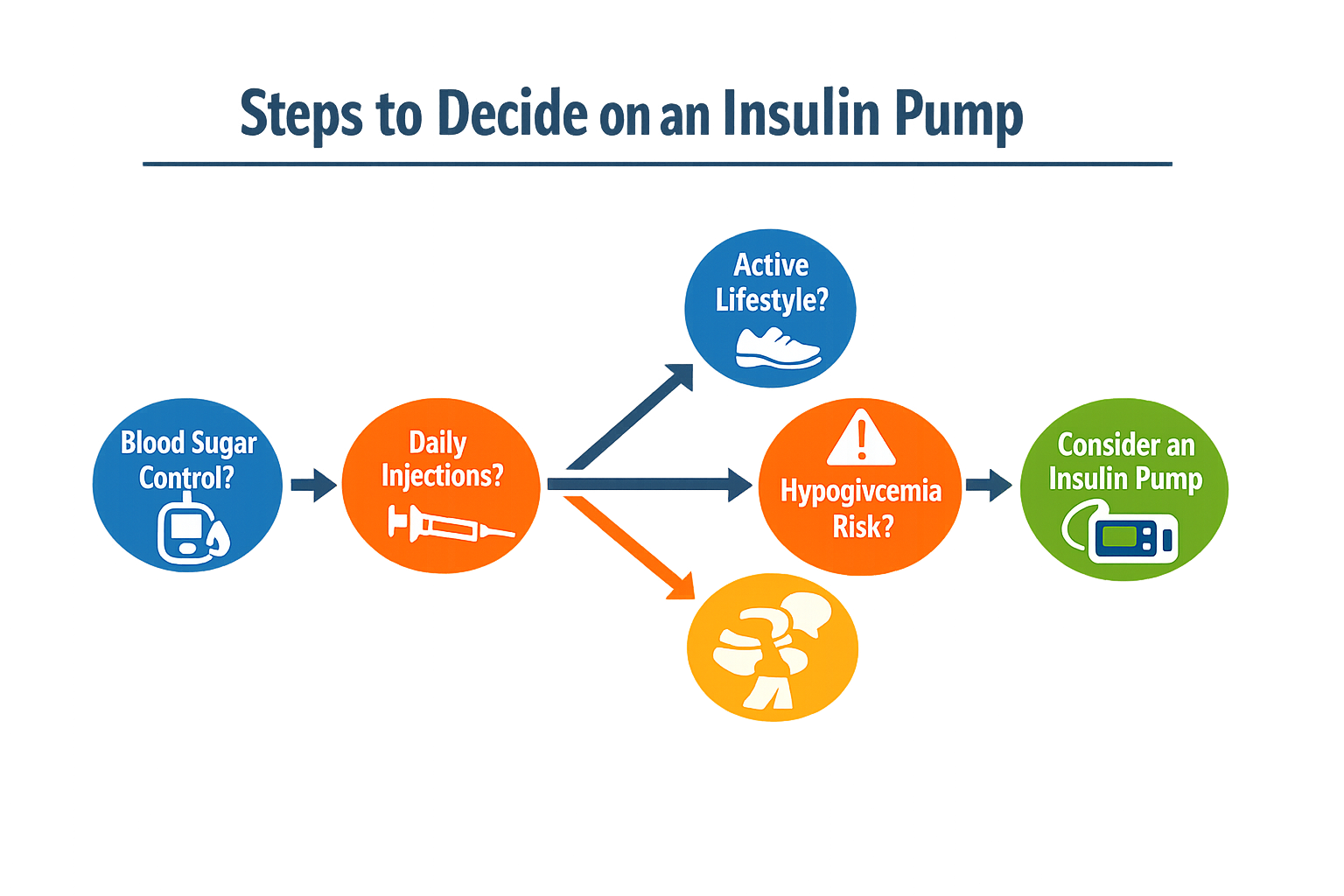
Deciding whether to start insulin pump therapy is a personal and clinical decision that benefits from a structured evaluation. The following steps can help you and your care team assess whether a pump aligns with your treatment goals, lifestyle, and current diabetes management challenges.
Step 1: Assess Your Current Insulin Regimen and Glycemic Control
Begin by reviewing your current insulin delivery method and how well it's meeting your needs. Most people considering a pump are already on a basal-bolus regimen with multiple daily injections — typically four or more per day. Ask yourself: Are you achieving stable blood glucose levels, or do you experience frequent highs and lows despite careful dosing? Research shows that insulin pump therapy is often recommended when patients struggle with glycemic instability, recurrent hypoglycemia, or difficulty maintaining control on injections.
Bring your recent glucose logs, CGM traces if you use one, and A1C results to your next appointment. These data points give your care team a clear picture of where a pump might help — or whether adjustments to your current regimen are worth trying first.
Step 2: Identify Specific Clinical Indications
Certain patterns signal that a pump may offer meaningful benefit. Common clinical indications include:
- Frequent hypoglycemia: If you're experiencing multiple low blood sugar episodes per week despite careful carb counting and dose timing, a pump's ability to adjust basal rates in small increments can reduce those events.
- Brittle or unstable diabetes: Wide glucose swings that resist pattern-based correction often improve with the precision and flexibility of pump delivery.
- Dawn phenomenon: Early-morning blood sugar spikes caused by hormonal changes can be managed with programmed basal rate increases that injections can't replicate.
- Glycemic imbalance despite intensive therapy: If you're already doing everything right on injections but still not reaching your targets, a pump may close the gap.
In a study of type 1 diabetes patients starting pump therapy, the most common indications were hypoglycemia, brittle diabetes, glycemic imbalance, and dawn phenomenon. After starting the pump, participants saw a statistically significant reduction in weekly hypoglycemia episodes and improved A1C levels at six months of follow-up.
Step 3: Evaluate Lifestyle Fit and Readiness
An insulin pump is a device you wear continuously, so consider how it fits into your daily routine. Think through:
- Physical activity: Pumps can be temporarily disconnected for contact sports or swimming, but you'll need to plan boluses and reconnection timing.
- Work and sleep: Some people appreciate not waking for a basal injection; others find the device intrusive during sleep.
- Travel and schedule variability: Pumps excel at handling irregular meal times and time-zone changes, but you'll need to carry supplies and troubleshoot malfunctions away from home.
- Body image and visibility: Pumps are visible or palpable under clothing. Some people embrace the device; others find it a difficult adjustment.
Be honest with yourself and your care team about your comfort with technology, your willingness to engage with pump training, and your access to ongoing support. Pump therapy works best when paired with education and active troubleshooting.
Schedule a dedicated appointment to discuss pump candidacy. Bring your glucose data, a list of current challenges (hypoglycemia frequency, A1C trends, lifestyle constraints), and questions about specific pump models. Your care team can help you weigh clinical indications against insurance coverage, training requirements, and device options.
Once your care team agrees a pump is appropriate, research available models and confirm what your insurance will cover. Some plans require prior authorization or documented trial periods on intensive injection therapy. Contact the pump manufacturers directly — most offer sample kits, virtual demos, and coverage navigation support.
Starting a pump is not a one-time event. Plan for initial training sessions (often several hours), regular follow-up appointments to refine basal and bolus settings, and ongoing access to a diabetes educator or pump trainer. Research consistently shows that pump therapy is most effective when combined with appropriate education and active glucose monitoring.
For more context on how continuous glucose monitoring complements pump therapy, see How Does a Dexcom CGM Work: Real-Time Glucose Monitoring. If you're tracking your overall metabolic health, A1C of 5.7: What It Means for Your Health and Next Steps explains how to interpret your numbers and what questions to bring to your next appointment.
Step 4: Set Realistic Expectations
A pump is a tool, not a cure. It offers precision, flexibility, and the ability to fine-tune insulin delivery in ways injections cannot match — but it still requires active management. Expect an adjustment period of several weeks to months as you and your care team optimize settings. Many people see improved A1C, fewer hypoglycemia episodes, and greater day-to-day predictability, but results depend on consistent use, accurate carb counting, and troubleshooting when things go wrong.
Insulin pump therapy appears reliable and effective when used appropriately, combined with therapeutic education and glucose monitoring to maintain long-term control and improved quality of life.
Discuss your personal treatment goals with your care team — whether that's reducing hypoglycemia, lowering A1C, simplifying mealtime dosing, or gaining flexibility for exercise and travel. A pump can support all of these, but clarity on what matters most to you will guide device selection and training priorities.
Tips and Tricks for Using Insulin Pumps Effectively
Once insulin pump therapy is underway, a few practical strategies can help maximize its benefits and reduce the learning curve. These tips draw on clinical observations and patient-reported outcomes from studies tracking pump users over time.
Optimize Basal and Bolus Settings Early
Insulin requirements often change after starting pump therapy. Research tracking pump users found a statistically significant decrease in total daily insulin needs during follow-up, suggesting that careful dose adjustment is essential in the first months. Work closely with the care team to fine-tune basal rates and bolus ratios — small, incremental changes often yield better results than large adjustments.
Pair the Pump with Structured Glucose Monitoring
Studies emphasize that insulin pump therapy works best when combined with appropriate glucose monitoring and therapeutic education. Whether using fingerstick checks or a continuous glucose monitor, regular data review helps identify patterns and informs dose adjustments. How Does a Dexcom CGM Work: Real-Time Glucose Monitoring explains the mechanics of real-time glucose tracking for those considering sensor integration.
Address Usability and Autonomy
Research on user perceptions found that participants who were completely autonomous with their pump — or who involved a nurse to manage settings — had better glycemic outcomes than those who were only technically autonomous. This highlights the importance of confidence with the device. Take time during training to master every feature; ask questions until pump operation feels intuitive, not burdensome.
Plan for Common Challenges
Some practical considerations:
- Site rotation: Change infusion sites every 2–3 days to reduce irritation and maintain insulin absorption.
- Backup supplies: Keep extra infusion sets, reservoirs, and a vial of long-acting insulin on hand in case of pump failure.
- Activity adjustments: Temporary basal-rate reductions or suspension can help prevent lows during exercise; discuss strategies with the care team before intense activity.
- Cognitive and dexterity barriers: Older adults or those with vision or motor challenges may benefit from simpler pump models or caregiver involvement — manufacturers have focused on reducing training needs and potential for user error.
Track Hypoglycemia Trends
One study reported a marked reduction in hypoglycemic events per week after pump initiation — from a mean of several episodes to approximately one per week at six months. If lows remain frequent, basal or bolus settings likely need adjustment. Document the timing, severity, and context of each low to help the care team identify patterns.
Expect a Learning Period
Satisfaction with insulin delivery improved at six months in one trial, though the difference compared to multiple daily injections did not persist at two years. This suggests that initial enthusiasm may fade as the novelty wears off, or that long-term satisfaction depends on sustained glycemic benefit and ongoing support. Realistic expectations and regular follow-up can help maintain engagement.
Conclusion
Deciding whether to start insulin pump therapy is a significant step that deserves careful thought and conversation with your care team. Throughout this article, we've walked through the core challenges of managing type 1 diabetes with multiple daily injections, the structured decision process for evaluating whether a pump fits your life and goals, and practical strategies for making the most of pump therapy once you begin.
The evidence shows that when insulin pump therapy is paired with appropriate education and glucose monitoring, many people experience improved metabolic control, fewer hypoglycemic episodes, and greater flexibility in daily life. Research indicates statistically significant improvements in HbA1c and reductions in weekly hypoglycemia frequency when pumps are used consistently and supported by ongoing training. These outcomes matter — not as abstract numbers, but as the foundation for better day-to-day management and long-term health.
Your decision should be grounded in your own circumstances: how well your current regimen is working, what your glucose patterns look like, whether you're experiencing frequent lows or unpredictable swings, and how much hands-on device management fits into your routine. If you're newly diagnosed or exploring options for the first time, resources like A1C of 5.7: What It Means for Your Health and Next Steps can help you understand where your numbers stand and what questions to bring to your next appointment.
Ultimately, the right choice is the one that you can sustain, that your care team supports with concrete guidance, and that moves you closer to the glucose control and quality of life you're working toward. Whether that means starting pump therapy now, revisiting the conversation in six months, or continuing with injections while refining your current approach, the decision is yours to make with the facts in hand.

Maren Alcott is the lead presenter at DiabetesCompass. She is an AI-presented digital character. Every article Maren presents is researched and fact-checked by the DiabetesCompass editorial team against the ADA Standards of Care, peer-reviewed journals, and named clinical sources. Maren does not give medical advice — for questions about your specific situation, talk to your care team.