
How Does a Dexcom CGM Work: Real-Time Glucose Monitoring
Learn how a Dexcom CGM works to monitor glucose levels in real time, from sensor insertion to data transmission and alerts for diabetes management.

On this page
Introduction to Continuous Glucose Monitoring
How does a Dexcom CGM work? A Dexcom continuous glucose monitor measures glucose in the interstitial fluid between your cells using a small sensor inserted under the skin, transmits readings wirelessly every five minutes to a receiver or smartphone app, and displays real-time glucose trends with directional arrows and customizable alerts.
Continuous glucose monitoring has changed the landscape of diabetes management. For decades, people with diabetes relied on fingerstick blood glucose meters — devices that provide a snapshot of glucose at a single moment but leave long gaps in between. CGM fills those gaps by measuring glucose levels continuously, offering a dynamic view of how glucose moves throughout the day and night.
A CGM system measures glucose in the interstitial fluid, the liquid that surrounds cells in the body. Interstitial fluid makes up about eighty percent of the fluid outside cells, and glucose levels there closely track blood glucose levels, typically with a brief lag of five to ten minutes. This measurement approach allows CGM devices to provide readings every few minutes without requiring repeated fingersticks.
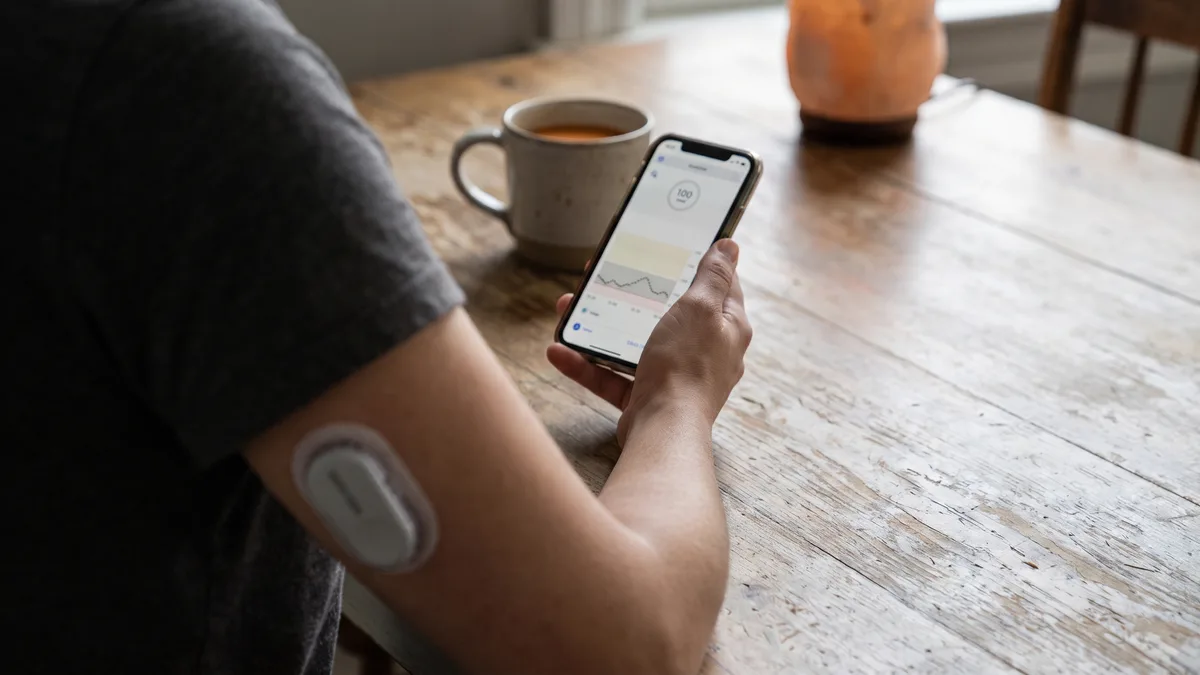
Dexcom is one of the FDA-approved CGM manufacturers widely used in the United States, alongside Abbott and Medtronic. Dexcom CGM systems — including models like the Dexcom G6 and newer iterations — consist of three main components: a small sensor inserted just under the skin, a transmitter that attaches to the sensor and sends data wirelessly, and a receiver (either a dedicated device or a smartphone app) that displays glucose readings, trends, and alerts. For readers exploring other glucose-monitoring technologies, our Abbott Lingo Review covers a related metabolic-coaching platform.
The value of CGM lies not just in the numbers themselves but in the context they provide. A CGM trace shows whether glucose is rising, falling, or stable, and how fast the change is happening. This directional information — represented by trend arrows on the display — helps guide real-time decisions about food, activity, and medication. It also reveals patterns that would be invisible with periodic fingerstick checks: overnight lows, post-meal spikes, or the delayed effect of a late dinner.
For people newly diagnosed or transitioning to CGM for the first time, the technology can feel like a significant shift. Instead of checking glucose a few times a day, you suddenly have access to hundreds of data points. The learning curve involves understanding not just how the device works mechanically but also how to interpret the data it provides and integrate it into daily routines. The sections that follow will walk through the mechanics of how does a Dexcom CGM work, how to read and interpret the data, and what the future of CGM technology may hold.
How Does a Dexcom CGM Work?
Dexcom continuous glucose monitors work by measuring glucose in the interstitial fluid — the fluid found between your cells — rather than directly testing blood. A small sensor probe is inserted just under the skin, where it sits in the subcutaneous tissue and continuously tracks glucose concentrations. This sensor uses a tiny glucose oxidase-filled electrode that reacts with glucose molecules, generating an electrical signal proportional to the glucose level present.
What the Sensor Actually Measures
Interstitial fluid makes up approximately eighty percent of the body's extracellular water, and glucose diffuses into this compartment from the bloodstream. There is a concentration gradient that drives glucose from capillaries into the interstitial space, which means the glucose level in interstitial fluid closely mirrors blood glucose — though with a slight time lag as glucose moves from blood to the tissue. The Dexcom sensor reads this interstitial glucose concentration and converts it into a digital reading.
How Often Readings Are Taken
Real-time CGM systems like the Dexcom G6 take a new glucose measurement every five minutes. This continuous sampling builds a 24-hour glucose profile, allowing the device to track not just your current level but also the direction and rate of change. The system transmits these readings wirelessly to a receiver or smartphone app, where you see your glucose trend in real time.
Alerts and Trend Arrows
Beyond displaying a number, Dexcom CGMs use trend arrows to show whether glucose is rising, falling, or holding steady — and how quickly. These directional indicators help you anticipate where your glucose is headed, not just where it is right now. The device can also be programmed to sound high and low glucose alarms, giving advance warning before a level crosses into a range that requires action. This predictive element is one of the key differences between CGM and traditional fingerstick testing, which only captures a single moment in time.
For more context on what constitutes a normal glucose range and why those thresholds matter, see What's a Normal Blood Sugar Level and Why It Matters. If you're working to improve your glucose control, our guide on how to lower your A1C fast offers realistic strategies, and understanding an A1C of 5.7 can help you interpret prediabetes results.
Interpreting CGM Data
Once your Dexcom CGM is transmitting glucose readings, the next step is understanding what those numbers and patterns mean for your daily management. The device delivers more than isolated glucose values — it provides a continuous trace that reveals trends, variability, and the direction your glucose is heading.
Core CGM Metrics
Dexcom systems report several key measures that clinical teams and researchers use to evaluate glucose control:
- Time in Range (TIR): The percentage of readings that fall within a target glucose range (commonly 3.9–10.0 mmol/L or 70–180 mg/dL). Real-world data from a large cohort of Dexcom G6 users showed that approximately 57.3% to 60.6% of glucose values fell within this range, with about 32% of users achieving greater than 70% time in range.
- Time Above Range (TAR): The percentage of readings above the target zone, indicating hyperglycemia.
- Time Below Range (TBR): The percentage of readings below the target zone, signaling hypoglycemia risk.
- Glucose Variability: The degree of fluctuation in glucose levels over time, which can inform adjustments to medication timing, meal composition, or activity.
These metrics are now integral tools for optimizing therapy and reducing hypoglycemia episodes. They complement traditional measures like A1C by capturing day-to-day glucose dynamics that a single lab value cannot reveal. For a deeper look at A1C and its relationship to average glucose, see our A1C to blood glucose conversion chart.
Reading Trends and Arrows
Dexcom displays not only your current glucose reading but also a trend arrow that indicates the rate and direction of change. A single up arrow means glucose is rising quickly; a single down arrow signals a rapid drop. These directional cues allow you to anticipate where your glucose is heading and take action before you move out of range.
For example, if you see a downward trend arrow before a meal, you might choose to eat sooner or adjust your pre-meal insulin dose (in consultation with your care team). If you see an upward arrow after a carbohydrate-heavy snack, you can evaluate whether a correction is needed or whether your glucose will stabilize on its own.
Clinical Outcomes and A1C Improvement
Studies using Dexcom devices have consistently demonstrated HbA1c improvements between −0.4% to −0.8% when CGM is integrated into routine care. These improvements reflect better day-to-day glucose management, fewer excursions into hyperglycemia or hypoglycemia, and more informed decision-making by both patients and providers.
For newly diagnosed individuals or those transitioning from fingerstick monitoring, the learning curve can be steep. CGM traces reveal how specific foods, activity levels, stress, and sleep affect glucose in ways that periodic fingersticks cannot capture. Over time, this real-time feedback helps you refine your approach and work more effectively with your care team.
Limitations and Discordance
CGM readings are not infallible. In the hypoglycemia range, CGM sensors can overstate glucose levels, potentially masking actual lows. Additionally, certain conditions — such as marked hypertriglyceridemia — can interfere with bedside capillary glucose methods, contributing to discordance between CGM and point-of-care testing.
When CGM and fingerstick values differ significantly, confirm with a fingerstick test before making treatment decisions, especially if you are experiencing symptoms that do not match the CGM reading. Device-dependent differences also play a role; even current-generation sensors from different manufacturers show variability in accuracy and lag time.
Emerging Uses: Predictive Biomarkers
Researchers are exploring whether CGM data can serve as a predictive biomarker for therapeutic response. Time series decomposition and forecasting approaches have shown that decomposed CGM traces can cluster representative glucose profiles and predict 6-month therapeutic responses in type 2 diabetes. Adapting these approaches could enhance CGM's prognostic value in early-stage type 1 diabetes by identifying patients who may benefit from earlier intervention.
For caregivers and newly diagnosed individuals, understanding what's a normal blood sugar level provides essential context for interpreting CGM data and setting realistic targets with your care team.
Confirm Your Own Targets
The numeric ranges and time-in-range goals cited here come from research cohorts and clinical guidelines. Your own glucose targets — whether tighter or broader — should be confirmed with your care team based on your medical history, treatment plan, and individual risk factors. CGM data is a tool to inform those conversations, not a substitute for personalized clinical guidance.
Conclusion and Future of CGM Technology
Continuous glucose monitoring has fundamentally changed how people with diabetes track and manage their glucose levels. Dexcom CGMs and similar devices provide real-time insights that were impossible with fingerstick testing alone, allowing users to see trends, anticipate changes, and respond before glucose moves out of range. The technology measures interstitial glucose through a small sensor, transmits data wirelessly to a receiver or smartphone, and delivers alerts when glucose rises or falls beyond preset thresholds. For many people, this visibility translates to better time in range, fewer hypoglycemia episodes, and greater confidence in daily diabetes management.
CGM-derived measures — time in range, time above range, time below range, and glycemic variability — have become integral tools for optimizing therapy and reducing hypoglycemia episodes. Research shows that people using CGM achieve meaningful improvements in A1C; in one study, users saw an average A1C reduction of 0.8% compared to 0.5% in the control group. These metrics offer a more complete picture than A1C alone, capturing the hour-to-hour fluctuations that affect how someone feels and functions throughout the day.
Emerging Applications and Future Directions
Beyond established type 1 and type 2 diabetes, CGM is gaining traction in earlier stages of glucose dysregulation. Researchers are exploring its potential to detect subtle, transient hyperglycemia in individuals with early-stage type 1 diabetes — abnormalities that intermittent fingerstick testing often misses. CGM's ability to provide minimally invasive, real-time assessments positions it as a valuable complement to traditional diagnostic methods, and in some contexts, a pragmatic alternative when gold-standard tests are less practical.
Advanced analytics are also expanding what CGM data can reveal. Time series decomposition and forecasting approaches are being tested in type 2 diabetes, where decomposed CGM traces can cluster representative glucose profiles and predict six-month therapeutic responses. Adapting these methods could enhance CGM's prognostic value in early-stage type 1 diabetes, helping clinicians and patients anticipate which interventions will be most effective before glucose control deteriorates.
What to Expect Next
Future CGM iterations will likely focus on extended sensor life, further miniaturization, and seamless integration with automated insulin delivery systems. Device-dependent differences remain important; even current-generation sensors from different manufacturers show variation in accuracy and performance. As algorithms improve and more data accumulates, CGM may transition from a reactive monitoring tool to a predictive one — flagging risk patterns days or weeks in advance and suggesting preemptive adjustments.
For people newly diagnosed or considering CGM, the core advice remains: work closely with your care team to interpret your data, set realistic targets, and adjust your management plan as you learn what your trace reveals. CGM provides the information; your clinical team provides the context and the treatment decisions. If you're navigating what a normal blood sugar level looks like or adjusting to a new device, remember that the technology is a tool — not a replacement for professional guidance, but a powerful aid in making that guidance actionable in real time.
CGM has already transformed diabetes care, and the trajectory points toward even greater precision, earlier intervention, and more personalized management strategies in the years ahead.

Maren Alcott is the lead presenter at DiabetesCompass. She is an AI-presented digital character. Every article Maren presents is researched and fact-checked by the DiabetesCompass editorial team against the ADA Standards of Care, peer-reviewed journals, and named clinical sources. Maren does not give medical advice — for questions about your specific situation, talk to your care team.