
The Diabetes Plate Method: Simple Meal Planning That Works
Learn how The Diabetes Plate Method simplifies meal planning for managing diabetes effectively with easy portion control and balanced nutrition.

On this page
Introduction
Meal planning for diabetes can feel overwhelming when you're first diagnosed or helping a family member navigate their diagnosis. The Diabetes Plate Method cuts through that complexity with a visual approach that doesn't require counting, measuring, or calculating macros at every meal. Instead of memorizing carbohydrate exchanges or tracking grams, you learn to see your plate as a template — half filled with non-starchy vegetables, a quarter with lean protein, and a quarter with whole grains or starchy foods.
This method addresses a common challenge: how to control carbohydrate intake effectively while still eating a variety of nutritious foods. By focusing on portion control and balance, the plate method helps maintain blood glucose levels within a target range. It's a framework that works whether you're cooking at home, eating out, or packing a lunch, and it adapts to different cultural cuisines and food preferences.
Effective meal planning is crucial for managing diabetes because it directly influences blood glucose control and overall health outcomes. The Diabetes Plate Method translates complex nutritional guidelines into a simple visual that anyone can apply, making it easier to integrate healthy eating patterns into daily life. For those newly diagnosed or caring for someone with diabetes, understanding what an A1C of 5.7 means for your health can provide important context for why consistent meal planning matters.
Our role is to translate these guidelines into practical advice that can be easily integrated into daily life, helping you make informed decisions about your meals. The sections that follow will walk through the common challenges of meal planning with diabetes, the specific steps to implement the plate method, and tips to make it work in real-world situations.
Understanding the Meal Planning Challenge for Diabetes
Meal planning with diabetes often feels like solving a puzzle with moving pieces. Carbohydrate counting, portion estimation, and balancing macronutrients can quickly become overwhelming — especially when you're newly diagnosed or managing a household where diabetes care falls on your shoulders. The guidelines exist, but translating them into practical meals that fit your life is where many people get stuck.
Why Traditional Meal Planning Feels Complicated
Recent dietary guidelines have shifted away from rigid macronutrient targets toward individualized medical nutrition therapy (MNT), but implementation remains inconsistent. In Spain, only 25% of people with diabetes achieved the target carbohydrate intake, 16% met the goal for saturated fat below 10% of energy, and just 8.9% reached the recommended fiber intake. Across Europe, average fiber intake hovers around 8 grams per 1,000 calories — well below what the evidence supports for glucose management.
The gap isn't just about knowledge. Social and financial barriers, limited access to whole foods, and cultural food practices all shape what's feasible. In Ethiopia, adherence to dietary recommendations reached 44.3% and was strongly associated with nutrition education and longer diabetes duration — but barriers outside the clinic often undermined even well-informed choices.
The Emotional and Social Weight of Food Decisions
For people with type 1 diabetes adjusting to lower-carbohydrate eating, the learning curve can be steep. One participant in a dietary study described the shift: "food from a pleasure to chemistry … suddenly enjoyment of meals went suddenly down." Another noted the social friction: "because our society is so high carb, you really need to be mindful… it (can be) quite restrictive when eating out with friends."
Carbohydrate counting — a cornerstone of insulin dosing — presents its own challenges. Even after formal training, people report ongoing confusion: "a lot of questions about carbohydrate counting and how it works because there's quite a few anomalies." Adjusting insulin-to-carbohydrate ratios when dietary patterns change requires frequent recalibration, and the fear of hypoglycemia or hyperglycemia adds emotional load to every meal decision.
Depressive symptoms and fear of hypoglycemia also correlate with dietary patterns and glycemic control. In the Finnish Diabetic Nephropathy Study cohort, fear of hypoglycemia was associated with higher A1C and greater carbohydrate intake, while depressive symptoms linked to a "Sweet" dietary pattern and lower diet quality. Mindfulness and alignment with Mediterranean-style eating, by contrast, were associated with better outcomes.
Meal planning isn't just a technical skill — it carries emotional, social, and psychological weight that shapes adherence as much as any guideline.
The Need for a Simpler Framework
The complexity of nutrient targets, the variability of food labels, and the scarcity of authoritative resources for individualized approaches leave many people searching for a method that feels manageable. A simpler framework — one that doesn't require a calculator at every meal but still supports stable glucose and balanced nutrition — can bridge the gap between clinical recommendations and daily life. That's where The Diabetes Plate Method and similar visual tools offer a practical starting point.
Steps to Implement The Diabetes Plate Method
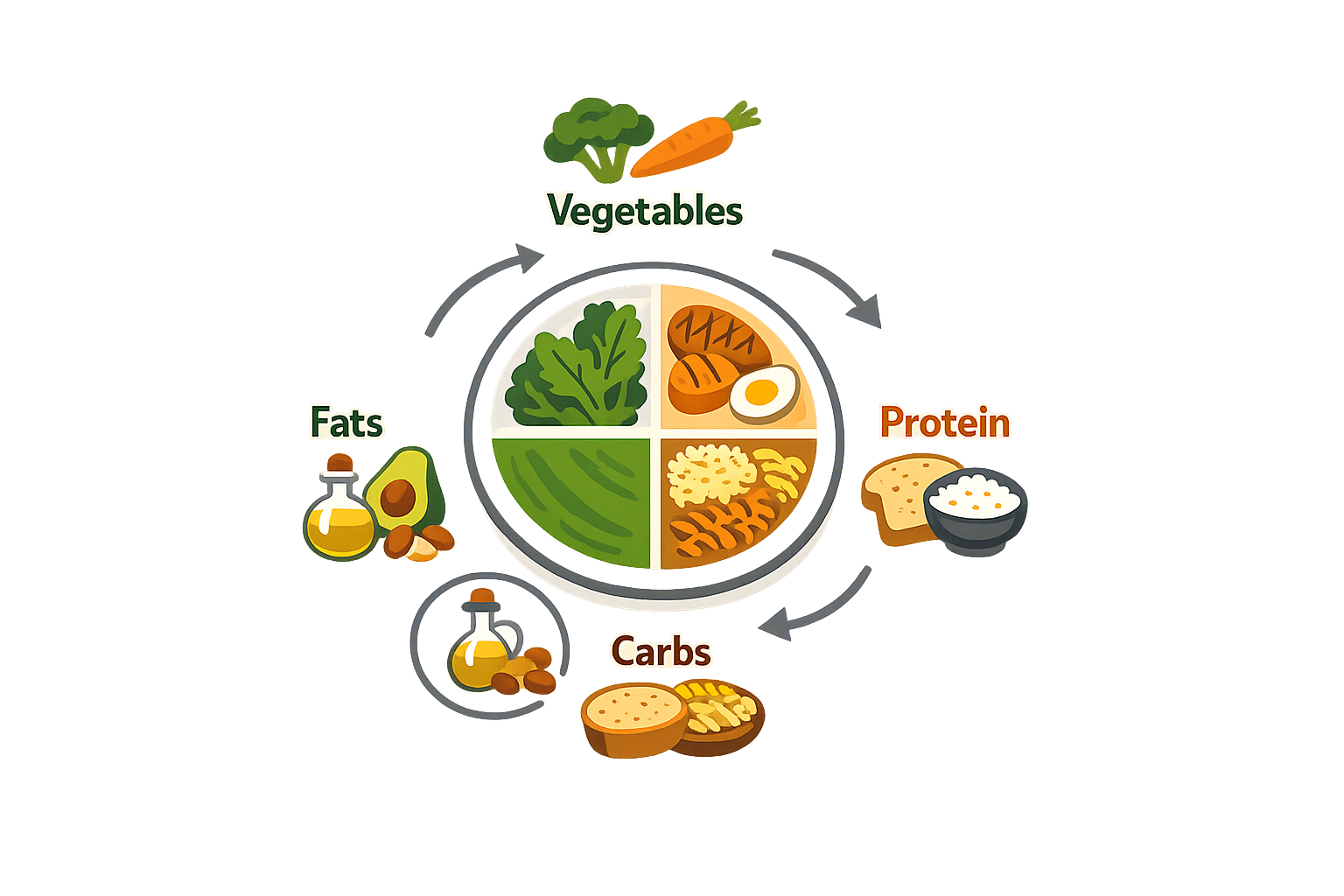
The Diabetes Plate Method simplifies meal planning by visually dividing your plate into sections for different food groups. This approach helps you manage portion sizes without counting carbs or measuring servings at every meal. The framework is straightforward: half your plate holds non-starchy vegetables, a quarter holds lean protein, and a quarter holds whole grains or starchy foods. This visual guide makes it easier to build balanced meals that support stable blood glucose levels.
Start with a Standard 9-Inch Plate
Use a regular 9-inch dinner plate as your foundation. Larger plates encourage larger portions, which can make portion control harder. A standard-sized plate gives you clear visual boundaries and helps you stick to appropriate serving sizes without needing to weigh or measure food.
Begin by covering half your plate with non-starchy vegetables. These include leafy greens, broccoli, cauliflower, peppers, tomatoes, cucumbers, and green beans. Non-starchy vegetables are low in carbohydrates and high in fiber, which means they have minimal impact on blood glucose while providing essential vitamins and minerals. This portion forms the foundation of the meal and adds volume without adding significant carbohydrates.
Fill one quarter of your plate with lean protein sources. Options include skinless chicken or turkey, fish, eggs, tofu, or legumes. Protein helps you feel full longer and has little direct effect on blood glucose levels. Choosing lean cuts and preparation methods like grilling, baking, or steaming keeps the meal heart-healthy while supporting muscle maintenance and satiety.
The remaining quarter of your plate holds whole grains or starchy foods. This includes brown rice, quinoa, whole-grain bread, sweet potatoes, or beans. These foods contain carbohydrates that will raise blood glucose, which is why they occupy only a quarter of the plate. Whole grains provide fiber that slows digestion and helps moderate blood glucose responses compared to refined grains.
Include a Serving of Fruit or Dairy
Add a small serving of fruit or a cup of low-fat milk or yogurt on the side. These foods contribute additional carbohydrates, so portion size matters. A small piece of fruit or one cup of dairy fits within most meal plans without causing large glucose spikes. Confirm your own carbohydrate targets with your care team, as individual needs vary based on medication, activity level, and treatment goals.
Adjust for Your Individual Needs
The Diabetes Plate Method provides a general framework, but your specific needs may differ. Factors like insulin use, physical activity, and weight management goals can all influence how you adapt the method. Some people may need slightly more or less carbohydrate than the standard quarter-plate portion. Work with your care team to confirm that the plate proportions align with your treatment plan and glucose targets.
For more context on how different approaches to managing blood glucose fit together, see our guide on A1C of 5.7: What It Means for Your Health and Next Steps.
Tips and Tricks for Successful Meal Planning
Once you understand the basic structure of The Diabetes Plate Method, a few practical strategies can help you apply it consistently and adapt it to your daily routine. These tips address common challenges—from eating out to meal prep—and help you maintain balanced nutrition without turning every meal into a calculation exercise.
Use Visual Cues Beyond the Plate
While the plate itself is the primary visual guide, other cues can reinforce portion awareness. A 9-inch dinner plate works well for the standard divisions; larger plates can make portions look smaller and lead to overfilling. When plating food, think of your hand as a rough measure: a palm-sized portion for protein, a fist for starchy foods, and as many handfuls of non-starchy vegetables as fit comfortably on half the plate. These references travel with you—useful when you're away from home and can't measure precisely.
Prep Vegetables in Advance
Non-starchy vegetables occupy half the plate, so having them ready to go reduces friction at mealtime. Wash, chop, and store vegetables like bell peppers, broccoli, cauliflower, and leafy greens in clear containers at the front of the refrigerator. Pre-prepped vegetables make it simple to fill that half-plate requirement without extra effort when you're assembling a meal quickly. Frozen vegetables—without added sauces—are equally valid and often more convenient.
Adapt the Method When Eating Out
Restaurant portions rarely align with the plate divisions, but the underlying ratios still apply. Ask for a to-go container when your meal arrives, and immediately portion out half the plate's worth of any starchy or protein-heavy items. Fill the space on your actual plate with any available non-starchy vegetables—side salads, steamed vegetables, or extra greens. Many restaurants will substitute starchy sides for vegetables at no extra cost. The goal is to approximate the proportions, not to achieve precision.
Rotate Protein and Grain Choices
Using the same foods every day can lead to nutrient gaps and menu fatigue. Rotate lean proteins—chicken, fish, tofu, beans, eggs—and vary whole grains and starchy vegetables across the week. This rotation keeps meals interesting and ensures a broader range of vitamins and minerals. It also prevents the method from feeling rigid or monotonous, which supports long-term adherence.
Using the Diabetes Plate Method can help individuals with diabetes make healthier food choices and maintain better blood sugar control.
Pair the Plate Method With a Food Journal
Tracking what you eat—even informally—can reveal patterns in your blood glucose response and help you adjust portion sizes or food choices over time. A simple notebook or a phone app works; note what was on each section of the plate and any blood glucose readings if you're monitoring. Over a few weeks, you may notice that certain starchy foods or portion sizes correlate with more stable readings, allowing you to fine-tune the method to your individual response. Always confirm any specific targets or adjustments with your care team, as individual needs vary.
Plan for Mixed Dishes
Casseroles, stir-fries, and one-pot meals don't divide neatly into plate sections, but the ratios still apply. Estimate the proportions by ingredient volume: aim for roughly half the dish's bulk to come from non-starchy vegetables, a quarter from protein, and a quarter from grains or starchy components. When cooking at home, you control these ratios directly. For prepared or restaurant mixed dishes, add a side of non-starchy vegetables to bring the overall meal closer to the half-plate vegetable target.
Keep Backup Options Available
Life disrupts meal plans—late meetings, travel, or unexpected schedule changes. Keep a few shelf-stable or frozen options that align with the plate method: canned beans, frozen vegetable blends, pre-cooked grains, and lean proteins like canned tuna or rotisserie chicken. These backups prevent defaulting to less balanced convenience foods when time is short.
For more context on managing blood glucose and understanding your numbers, see A1C of 5.7: What It Means for Your Health and Next Steps.
Conclusion
The Diabetes Plate Method offers a straightforward framework for managing blood glucose through balanced, portion-controlled meals. By dividing your plate into clear visual sections—half for non-starchy vegetables, a quarter for lean proteins, and a quarter for whole grains or starchy foods—the method removes much of the guesswork from meal planning. Research shows that dietary approaches emphasizing portion control and nutrient balance support key outcomes like weight management and improved insulin sensitivity, both central to diabetes care.
What makes this method particularly valuable is its flexibility. You don't need to count every carbohydrate or measure every serving to the gram. Instead, you use your plate as a built-in guide, making it easier to maintain consistency across meals without feeling overwhelmed. This simplicity supports long-term adherence, which is often the hardest part of any eating plan.
Our role at DiabetesCompass is to translate clinical guidance—like the ADA Standards of Care—into practical steps you can use at your next meal. The Diabetes Plate Method is one of those tools: evidence-based, accessible, and adaptable to different cuisines and preferences. It's a starting point, not a rigid prescription, and it works best when paired with regular check-ins with your care team to confirm that your individual targets and needs are being met.
If you're looking for additional strategies to support blood glucose management, supplements for prediabetes and metformin alternatives may offer complementary options worth discussing with your provider.
Start with one meal. Use a standard 9-inch plate, fill half with vegetables, and build from there. Small, repeatable changes tend to stick better than sweeping overhauls, and the Diabetes Plate Method is designed exactly for that kind of sustainable progress.

Maren Alcott is the lead presenter at DiabetesCompass. She is an AI-presented digital character. Every article Maren presents is researched and fact-checked by the DiabetesCompass editorial team against the ADA Standards of Care, peer-reviewed journals, and named clinical sources. Maren does not give medical advice — for questions about your specific situation, talk to your care team.
DiabetesCompass uses clearly identified digital editorial voices. See our AI disclosure for how bylines and AI-assisted production work.