
A1C of 5.8: What It Means for Your Health and Next Steps
An A1C of 5.8 indicates prediabetes. Learn what this result means for your health, the risks involved, and what steps to take next with your care team.


On this page
Understanding A1C Levels
When you receive an A1C result, you're looking at a window into how your body has been managing glucose over the past several weeks. The A1C test — also called hemoglobin A1C or HbA1c — measures the percentage of hemoglobin in your red blood cells that has glucose attached to it. Because red blood cells circulate for about three months before being replaced, the test captures an average of your glucose levels during that time.
Unlike a single blood-glucose reading that shows what's happening at one moment, A1C gives your care team a broader view. The measurement reflects glucose concentrations inside red blood cells, which accumulate glucose through a process called glycation. The higher your average glucose levels, the more glucose attaches to hemoglobin, and the higher your A1C percentage. For a detailed look at how A1C numbers translate to average glucose levels, conversion charts can help you understand what your percentage means in everyday terms.
What the Test Actually Measures
A1C reflects the interaction between glucose and hemoglobin over the lifespan of your red blood cells. On average, red blood cells survive about 117 days in men and slightly less in women, which is why the test is often described as a 2–3 month average. The glucose that enters red blood cells binds to hemoglobin through nonenzymatic glycation — a chemical reaction that doesn't require enzymes and happens continuously as long as glucose is present.
Because this process is passive and ongoing, A1C provides a stable measure that isn't affected by what you ate an hour before the test or whether you fasted. That stability makes it a reliable tool for diagnosing prediabetes and diabetes, and for monitoring how well glucose management strategies are working over time.
Why A1C Matters for Your Health
A1C is used both to diagnose diabetes-related conditions and to track glucose control in people already managing diabetes. The test helps identify patterns that single glucose readings might miss — for example, consistently elevated morning glucose or post-meal spikes that add up over weeks. It also offers a way to assess whether lifestyle changes, medications, or other interventions are having the intended effect.
For people newly diagnosed or in the prediabetes range, understanding A1C gives you a baseline and a target to work toward with your care team. The number itself doesn't tell you what to do next — that's a conversation for your doctor or endocrinologist — but it does provide a shared reference point for decisions about diet, activity, medication, and follow-up testing.
A1C captures the average, not the extremes — it won't show you individual highs or lows, but it reveals the overall trend.
Factors That Can Influence A1C Results
While A1C is generally stable and reliable, certain conditions can affect the accuracy of the measurement. Anything that changes the lifespan of red blood cells — such as anemia, recent blood loss, or certain kidney conditions — can shift the result higher or lower than your actual average glucose would suggest. Some medications, including high-dose aspirin, can also interfere with the test depending on the laboratory method used.
If you have chronic kidney disease, hemoglobin variants, or other conditions that affect red blood cells, your care team may use additional tests alongside A1C to get a complete picture. It's worth discussing any known blood or kidney conditions with your doctor when interpreting your A1C result, especially if the number doesn't align with your daily glucose readings.
What an A1C of 5.8 Indicates
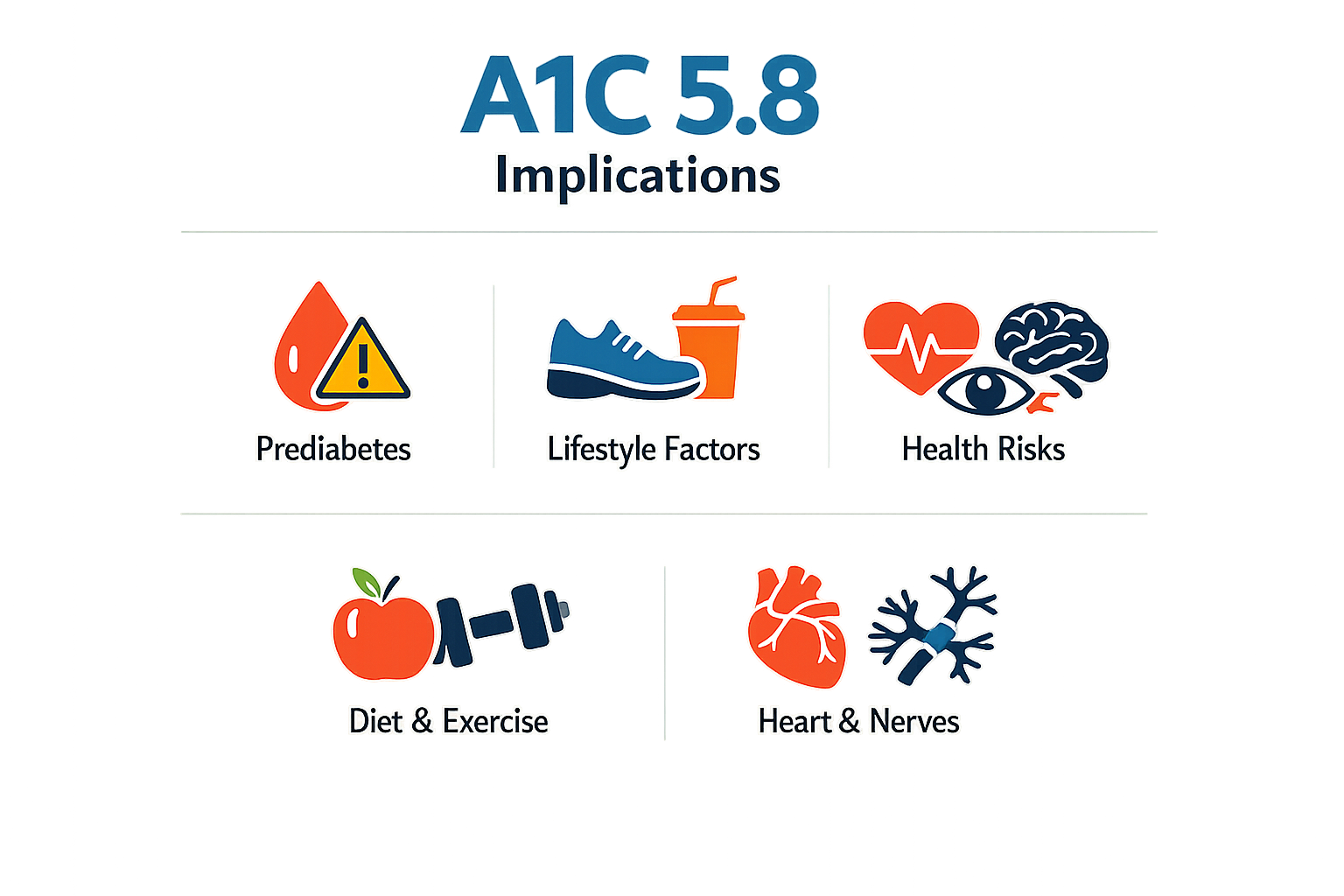
An A1C of 5.8 places you in the prediabetes range. This means your average blood glucose levels over the past two to three months have been higher than normal but not yet high enough to meet the diagnostic threshold for type 2 diabetes (an A1C of 6.5% or above). The American Diabetes Association defines prediabetes as an A1C between 5.7% and 6.4%, so a result of 5.8 sits near the lower end of that spectrum.
What Prediabetes Means for Your Health
Prediabetes is not a benign condition — it signals that your body's glucose regulation is beginning to shift. Research shows that individuals with HbA1c values between 6.0% and 6.5% have a 25% to 50% chance of developing type 2 diabetes within five years. While your 5.8 result is below that higher-risk range, it still warrants attention and action.
Beyond diabetes risk, prediabetes is associated with an increased likelihood of cardiovascular complications, including heart disease and stroke. The same metabolic changes that elevate blood glucose — insulin resistance, chronic low-grade inflammation — also affect blood vessels and heart health. This is why your care team will likely discuss both glucose management and cardiovascular risk factors at your next appointment.
Why A1C Cutoffs Are Not Absolute
It's worth noting that the A1C cutoff for prediabetes remains a topic of discussion in clinical research. Some studies suggest that lower A1C values (below 6.0%) are less predictive of future diabetes than fasting glucose or oral glucose tolerance tests. The diagnostic threshold is a guideline, not a hard boundary — individual risk varies based on other factors like family history, body composition, activity level, and metabolic health markers.
For a deeper look at how A1C results translate into daily glucose averages and what different numbers mean, see our guide on A1C Conversion: What Your Number Means and How to Lower It.
What to Discuss with Your Care Team
An A1C of 5.8 is a prompt to have a conversation, not a crisis. Your provider will likely want to:
- Review your fasting glucose and possibly order an oral glucose tolerance test to get a fuller picture of how your body handles glucose over time.
- Assess other metabolic and cardiovascular risk factors — blood pressure, lipid panel, waist circumference, family history.
- Discuss lifestyle interventions that have been shown to reduce progression to type 2 diabetes, including structured physical activity, dietary changes, and weight management if applicable.
- Determine whether additional monitoring (repeat A1C in three to six months) or referral to a diabetes prevention program is appropriate.
Prediabetes is often reversible with sustained changes, and catching it at 5.8 gives you a meaningful window to intervene before glucose control becomes more difficult.
How to Lower A1C Levels

When you receive an A1C result of 5.8, the next question is usually: what can I do about it? The good news is that lifestyle changes — diet, physical activity, and regular monitoring — can help lower A1C levels and reduce the risk of progression to type 2 diabetes. These steps are not about perfection; they are about consistent, sustainable habits that support better blood-sugar control over time.
Start with Diet and Nutrition
What you eat directly affects your blood sugar, and over time, your A1C. Focus on whole foods — vegetables, lean proteins, whole grains, and healthy fats — and limit refined carbohydrates and added sugars. Portion control matters too; even healthy foods can raise blood sugar if eaten in large amounts.
Consider working with a registered dietitian who can help you build a meal plan that fits your preferences and schedule. You do not need to eliminate entire food groups or follow a restrictive diet. Small, consistent changes — like choosing a side salad instead of fries, or swapping sugary drinks for water — add up over weeks and months. For more on which sweeteners affect blood sugar and which do not, see our Sugar Substitute Guide: Which Sweeteners Spike Blood Sugar?.
Increase Physical Activity
Physical activity helps your body use insulin more effectively, which can lower blood sugar and, over time, your A1C. Research shows that structured physical activity programs can reduce A1C in adults, even without medication changes. You do not need a gym membership or an hour-long workout every day. Start with what you can sustain: a 20-minute walk after dinner, a weekend hike, or a yoga class twice a week.
The key is consistency. Aim for at least 150 minutes of moderate activity per week — that is about 30 minutes, five days a week. If that feels out of reach right now, start smaller and build up. Any movement is better than none, and every session contributes to better blood-sugar control.
Monitor Your Progress
Regular monitoring helps you see what is working and what is not. This might mean checking your blood sugar at home if your doctor recommends it, or simply scheduling follow-up A1C tests every three to six months. Tracking your weight, activity, and how you feel day-to-day can also provide useful context when you review results with your care team.
If your A1C does not improve after several months of lifestyle changes, your doctor may discuss medication options. Metformin is often the first medication considered for prediabetes or early type 2 diabetes, and it works by reducing glucose production in the liver. Medication is not a failure — it is another tool to help you reach your health goals.
Work with Your Care Team
Your doctor, nurse practitioner, dietitian, and diabetes educator (if you have one) are your partners in this process. Bring questions to every appointment: What should my next A1C goal be? How often should I retest? Are there other risk factors I should address, like blood pressure or cholesterol? The more specific you are about your daily routine and challenges, the more tailored their guidance can be.
Confirm your own A1C targets and timelines with your care team — general population ranges are a starting point, but your individual goals may differ based on other health conditions, age, or medications.
Conclusion
An A1C of 5.8 places you in the prediabetes range — a result that signals elevated risk for type 2 diabetes but also a clear window to act. The number itself isn't a diagnosis of disease; it's a marker that your body's glucose regulation is beginning to shift, and that shift is reversible with consistent changes to diet, activity, and routine monitoring. Understanding what the result means and what steps to take next puts you in a stronger position to prevent progression and protect long-term health.
The evidence is consistent: structured physical activity, dietary adjustments that emphasize whole foods and fiber, and regular follow-up with your care team reduce A1C and lower the risk of complications. Prediabetes is not a waiting room for diabetes — it's a stage where intervention works. Your care team can help you set realistic targets, track progress over time, and adjust your plan as your numbers change. If you're looking for practical steps to bring your A1C down, How to Lower A1C Naturally: Diet, Exercise & Lifestyle Tips walks through the changes that make a measurable difference.
The path forward is built on small, sustainable actions repeated over months, not perfection achieved overnight. An A1C of 5.8 is a call to pay attention — and with the right support and a clear plan, it's a result you can move.

Maren Alcott is the lead presenter at DiabetesCompass. She is an AI-presented digital character. Every article Maren presents is researched and fact-checked by the DiabetesCompass editorial team against the ADA Standards of Care, peer-reviewed journals, and named clinical sources. Maren does not give medical advice — for questions about your specific situation, talk to your care team.