
Low Blood Sugar Symptoms: Symptoms and How to Respond
Low blood sugar—also called hypoglycemia—happens when the glucose level in your blood drops below the range your body needs to function normally.


On this page
Understanding Low Blood Sugar
Low blood sugar—also called hypoglycemia—happens when the glucose level in your blood drops below the range your body needs to function normally. For most adults, that means falling below 70 mg/dL, though your care team may set a different threshold based on your situation. Our team has reviewed the research on hypoglycemia recognition and response to help you understand what to watch for and how to act quickly when it matters.
Hypoglycemia is the most frequent acute complication in individuals with insulin-treated diabetes, and repeated episodes can limit your ability to reach your glucose goals safely. The good news: recognizing the early signs and having a clear response plan can prevent most serious events. Learning to spot symptoms, knowing what causes drops, and understanding how to respond effectively are skills that become second nature with practice.
Glucose is your body's main energy source. When levels drop too low, you may feel shaky, sweaty, confused, or unusually hungry—your body's way of signaling that it needs fuel now. Some people experience different symptoms, and some notice their symptoms change over time, which is why tracking patterns and discussing them with your care team is essential. If you're newly diagnosed or adjusting to a new medication, recognizing low blood sugar symptoms early becomes a critical skill in your diabetes toolkit.
Continuous glucose monitoring (CGM) systems can alert you when glucose is dropping, giving you time to act before symptoms start. These devices measure glucose in the fluid between your cells (interstitial fluid) rather than directly in your blood, which means there's a short time lag—especially important to know when glucose is changing rapidly. Newer CGM systems include optional alarms that notify you when levels cross thresholds you set with your care team, helping you catch lows before they become urgent.
Understanding low blood sugar is not about memorizing numbers—it's about learning how your body signals a drop, what situations increase your risk, and what steps bring glucose back up safely. The sections that follow walk through the symptoms to watch for, the immediate steps to take, and the strategies that help prevent lows in the first place. Your care team can help you personalize these guidelines to fit your medications, your daily routine, and your individual glucose targets.
What is Low Blood Sugar and Why is it a Concern?
Low blood sugar, clinically termed hypoglycemia, occurs when glucose levels in the blood drop below the range your body needs to function normally. Glucose is the main energy source for your cells, derived from the food you eat, stored glycogen in your liver, and metabolic pathways that produce glucose from other substances. When this fuel runs low, your body sends urgent signals that something needs attention.
How Your Body Regulates Blood Sugar
Two hormones work in tandem to keep your blood glucose stable: insulin and glucagon. Insulin, produced by beta cells in your pancreas, lowers blood sugar by helping glucose move from your bloodstream into your cells—especially in your liver, muscles, and fat tissue. It also tells your liver to stop releasing stored glucose. Glucagon, produced by neighboring alpha cells, does the opposite: it raises blood sugar by triggering your liver to release glucose when levels dip too low.
In a healthy system, these hormones coordinate precisely. When you eat, insulin rises to manage the incoming glucose. Between meals, glucagon keeps your blood sugar from falling. Diabetes disrupts this balance—either because your body doesn't produce enough insulin (type 1) or because your cells don't respond to insulin effectively (type 2). Medications that lower blood sugar, including insulin and some oral drugs, can sometimes lower it too much, especially if meal timing, activity level, or dosing doesn't align.
Why Low Blood Sugar Demands Attention
When blood sugar drops, your brain—which relies almost exclusively on glucose—receives less fuel. Early symptoms include shakiness, sweating, confusion, and rapid heartbeat. If untreated, severe hypoglycemia can lead to loss of consciousness, seizures, or other dangerous outcomes. For people managing diabetes with insulin or certain medications, recognizing and responding to low blood sugar quickly is a core safety skill.
Beyond the immediate risk, frequent hypoglycemia can erode your confidence in managing your condition and may lead to "alarm fatigue" if you use a continuous glucose monitor (CGM) with alerts. Understanding what triggers your lows—whether it's a skipped snack, extra exercise, or medication timing—helps you and your care team make adjustments that keep you safer day to day. If you're newly diagnosed or adjusting your treatment plan, learning to recognize low blood sugar symptoms early can prevent many of these episodes from escalating.
The goal isn't to avoid all lows forever—that's often unrealistic—but to catch them early, treat them effectively, and work with your team to reduce how often they happen. In the next section, we'll walk through the specific symptoms to watch for so you know when to act.
Recognizing the Symptoms of Low Blood Sugar
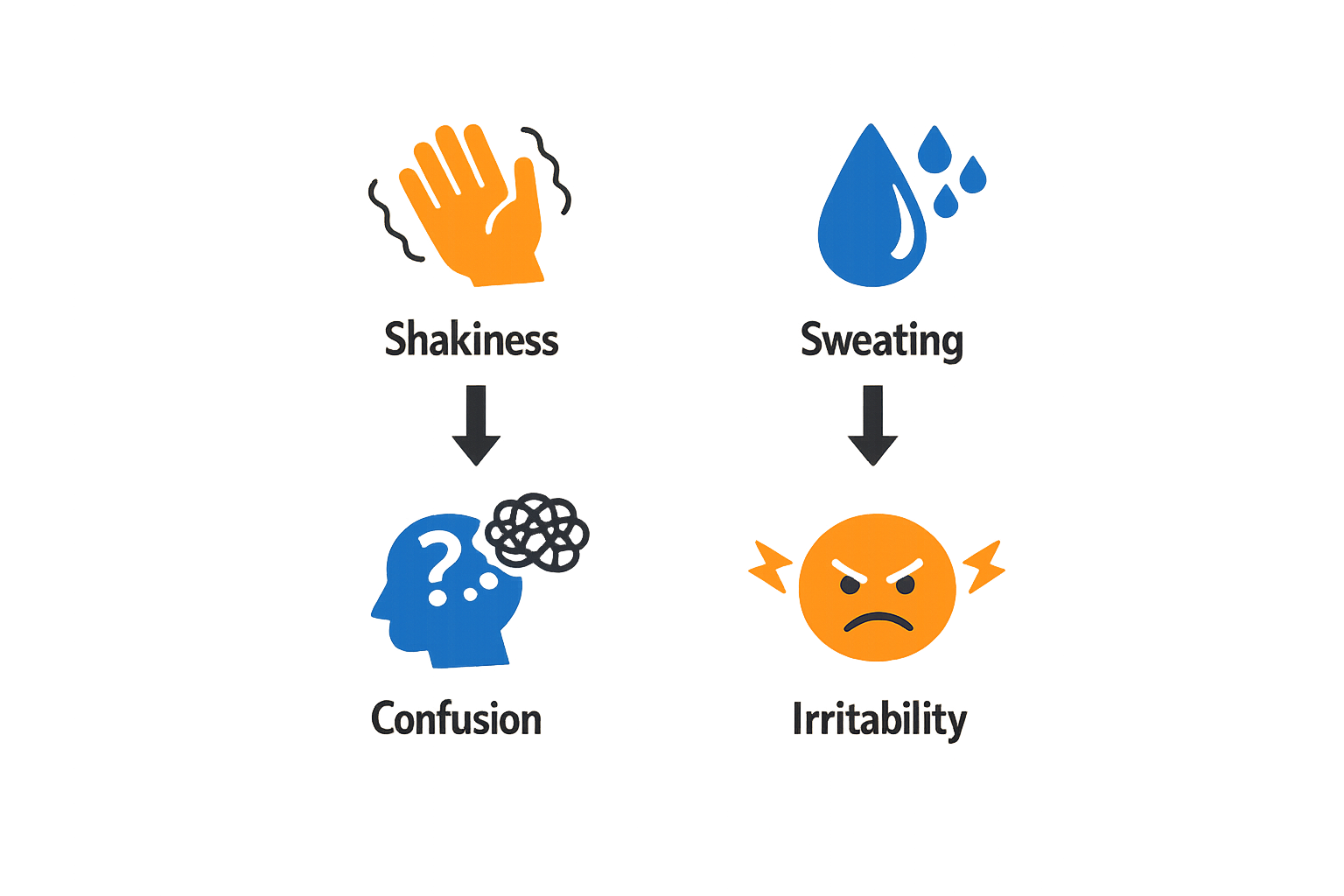
Low blood sugar often announces itself before it becomes dangerous, but the warning signs vary from person to person. Some people feel shaky or sweaty when their glucose drops, while others notice confusion or sudden irritability. Recognizing your own pattern of symptoms makes it possible to respond quickly, before a mild episode progresses.
Early Warning Signs
The body responds to falling glucose by releasing adrenaline, which triggers a cluster of physical sensations. Common early symptoms include trembling hands, a rapid heartbeat, sweating that seems to come from nowhere, and a gnawing hunger even if you ate recently. You might also notice tingling around your mouth or fingers, pale skin, or a sudden wave of anxiety that feels out of proportion to the moment.
These early signals are your opportunity to act. They typically appear when blood glucose falls below 70 mg/dL, though some people feel symptoms at slightly higher or lower levels. If you notice a pattern—shakiness after skipping a snack, or confusion when you exercise without adjusting your medication—write it down and bring that information to your next appointment.
Symptoms That Signal Urgency
When blood sugar continues to drop, the brain begins to run short of fuel. Symptoms shift from physical discomfort to cognitive changes: difficulty concentrating, slurred speech, blurred or double vision, and trouble coordinating movements. You might feel unusually tired, become argumentative without realizing it, or struggle to complete a familiar task.
Research using continuous glucose monitoring has documented that many people experience hypoglycemia without recognizing it, especially overnight. In one study, 60% of adults monitored for 24 hours experienced blood glucose below 54 mg/dL at least once, often without waking or noticing symptoms. This pattern, called hypoglycemia unawareness, develops in some people after repeated low episodes and makes regular monitoring essential.
Why Symptom Awareness Matters
The faster you recognize and respond to early symptoms, the less likely you are to experience a severe episode. Timely intervention—eating or drinking a fast-acting carbohydrate as soon as you feel the first signs—can bring your glucose back to a safe range within 15 minutes. Waiting until symptoms are severe makes treatment harder and increases the risk of injury from falls, accidents, or loss of consciousness.
If you are newly diagnosed or have recently changed medications, pay close attention to how low blood sugar feels for you. Some people never experience the classic shakiness; others notice mood changes or fatigue first. Learning how to recognize low blood sugar symptoms early gives you the knowledge to act before a minor dip becomes a medical event. Keep a log for the first few weeks, noting the time, your blood glucose reading, what you felt, and what you were doing when symptoms appeared. Share that log with your care team—they can help you adjust your medication, meal timing, or monitoring routine to reduce the frequency of lows.
How to Respond to Low Blood Sugar
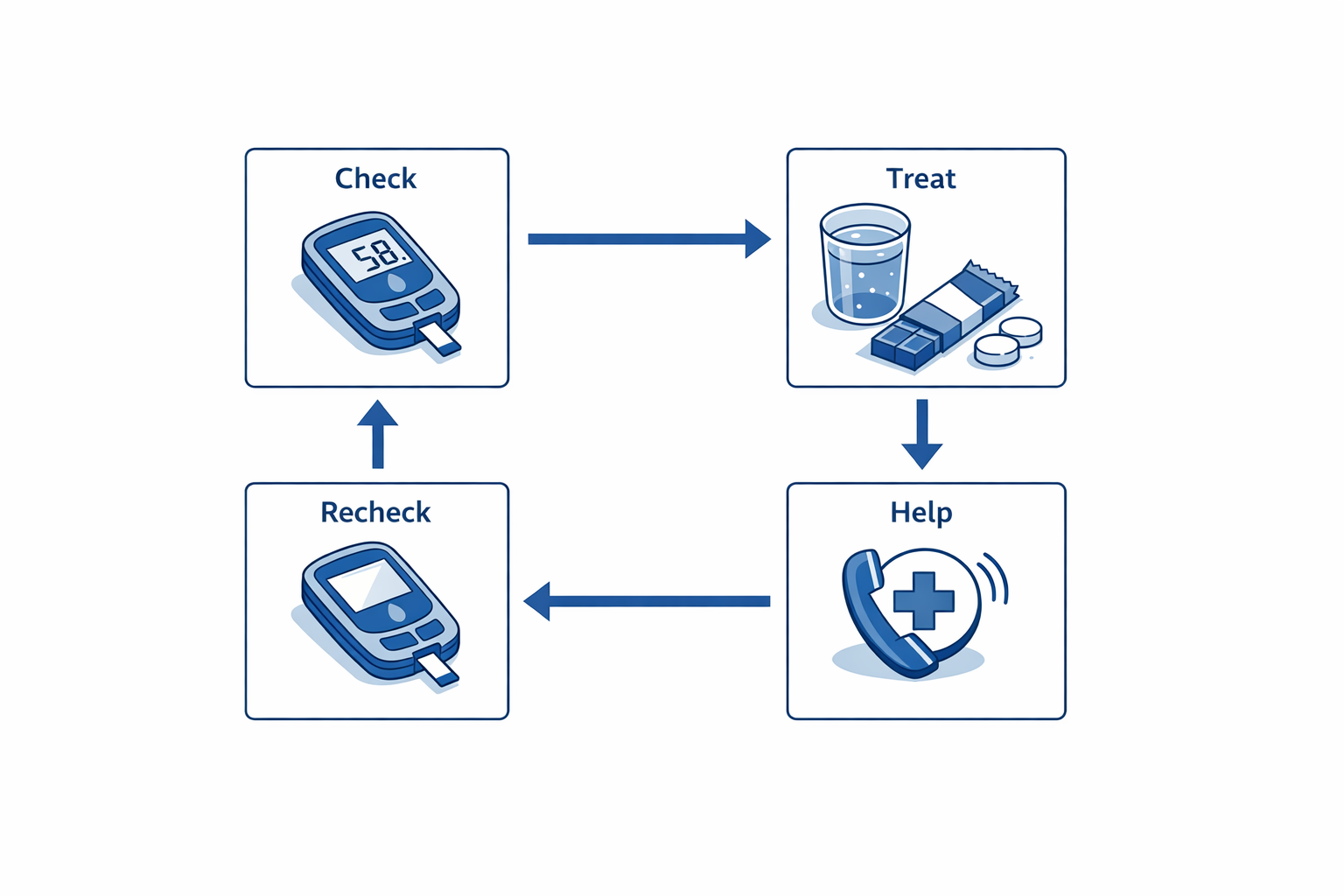
Knowing how to respond when blood sugar drops is a practical skill that keeps you safer day to day. The steps are straightforward: recognize the symptoms, treat with fast-acting carbohydrate, recheck, and follow up with your care team about patterns. Our team reviewed the research on immediate response and longer-term strategies to help you understand what works and when to adjust your approach.
Immediate Response: The 15-15 Rule
When you suspect low blood sugar, confirm the reading with a fingerstick if possible — continuous glucose monitors can lag during rapid changes, and a blood glucose reading gives you a more accurate snapshot in the moment. If your blood glucose is below 70 mg/dL and you feel symptoms, treat right away.
Step 1
Consume 15 grams of fast-acting carbohydrate
Choose glucose tablets, 4 ounces of juice, or regular soda — foods that raise blood sugar quickly without added fat or protein that slow absorption. Avoid chocolate or mixed snacks for the initial treatment.
Step 2
Wait 15 minutes and recheck
Use a fingerstick meter to confirm your blood glucose level. If it remains below 70 mg/dL, repeat the 15 grams of carbohydrate and recheck again in another 15 minutes.
Step 3
Follow with a balanced snack or meal
Once your blood glucose is back above 70 mg/dL, eat a snack or meal that includes protein and complex carbohydrate to stabilize levels and prevent another drop.
Managing Low Blood Sugar Around Exercise
Exercise changes how your body uses glucose, and the timing and intensity of activity affect your risk. Research on exercise and glucose management in people with type 1 diabetes shows that moderate-intensity aerobic activity often lowers blood glucose during and after the session, while short bursts of high-intensity effort can temporarily raise it.
If you exercise when insulin levels are near baseline — for example, in the morning before breakfast — hypoglycemia risk is lower because circulating insulin is already low. When insulin levels are higher, such as after a meal bolus, the risk increases. Strategies to reduce that risk include reducing basal insulin 60 to 90 minutes before activity, consuming 0.3 to 0.5 grams of carbohydrate per kilogram of body weight per hour, or using continuous glucose monitoring with predictive low-glucose suspend features if you are on a pump.
Late-onset post-exercise hypoglycemia — overnight lows following afternoon or evening exercise — is a recognized pattern. A 20% basal rate reduction for six hours after exercise, or a 20% reduction in basal insulin dose combined with a bedtime snack for those on multiple daily injections, can reduce the incidence of nocturnal hypoglycemia. Bring patterns like this to your next appointment so your care team can help you adjust your regimen.
For more on recognizing early warning signs before glucose drops too far, see Low Blood Sugar Symptoms: How to Recognize Them Early.
Using Continuous Glucose Monitoring to Inform Your Response
Continuous glucose monitors provide trend data — arrows showing whether glucose is rising, falling, or stable — that help you decide when to treat and how aggressively. The target range is typically 70 to 180 mg/dL, and the goal is to spend more than 70% of the day in that range while keeping time below 70 mg/dL under 4% (and time below 54 mg/dL under 1%).
Because interstitial glucose lags behind blood glucose during rapid changes, confirm suspected lows with a fingerstick, especially in the first 24 hours after sensor insertion or when symptoms do not match the sensor reading. The lag time means a CGM may overestimate blood glucose when levels are falling quickly, so treat based on symptoms and a confirmed meter reading rather than waiting for the sensor to catch up.
CGM data also help you and your care team identify patterns — whether lows cluster at certain times of day, after particular meals, or following exercise. That information guides adjustments to medication timing, carbohydrate intake, or activity planning.
When to Contact Your Care Team
If you experience frequent low blood sugar episodes — more than two or three in a week — or if you have a severe low requiring assistance, contact your care team promptly. Patterns of hypoglycemia may indicate that insulin doses, medication timing, meal spacing, or activity routines need adjustment. Bring your glucose log or CGM download to the appointment so your provider can see the full picture and recommend changes tailored to your routine.
Tips for Preventing Low Blood Sugar
Preventing low blood sugar episodes requires a combination of planning, awareness, and collaboration with your care team. While the immediate response to hypoglycemia is important, reducing how often it happens in the first place protects both your safety and your long-term health.
The strategies below are starting points for conversations with your doctor, diabetes educator, or dietitian. What works varies from person to person, depending on your medications, activity level, and how your body responds to food.
Work With Your Care Team on Meal Timing and Composition
Eating at regular intervals helps keep blood sugar more stable throughout the day. Skipping meals or going many hours without food increases the risk of a drop, especially if you take insulin or certain oral medications.
Pairing carbohydrates with protein, fat, or fiber slows digestion and can prevent sharp swings. For example, an apple with peanut butter or whole-grain crackers with cheese provides a steadier release of glucose than fruit or crackers alone.
Your care team can help you identify meal patterns that fit your schedule and medication timing. The American Diabetes Association notes that individualized medical nutrition therapy—tailored to your specific needs rather than a one-size-fits-all plan—is effective for managing glucose levels and reducing hypoglycemia risk.
Monitor Your Blood Sugar Before and After Physical Activity
Exercise lowers blood sugar, sometimes for hours after you finish. Checking your glucose before, during (for longer sessions), and after activity helps you learn how your body responds and when you might need a snack.
If your blood sugar is below 100 mg/dL before exercise, many care teams recommend eating a small carbohydrate snack first. After exercise, continue monitoring—delayed hypoglycemia can occur several hours later, particularly overnight.
Digital tools like continuous glucose monitors (CGM) can show you trends during and after activity, making it easier to adjust food or medication with your care team's guidance. Clinicians increasingly use CGM data and bolus calculators to inform daily treatment decisions and help patients avoid both high and low blood sugar.
Adjust for Changes in Routine
Travel, illness, changes in work schedule, or shifts in physical activity all affect blood sugar. When your routine changes, check more often and talk with your care team about whether medication adjustments are needed.
During periods of fasting—such as Ramadan or before medical procedures—work with your doctor to adjust carbohydrate intake and insulin doses accordingly. Never make these changes on your own; the timing and amount matter for safety.
Understand How Your Medications Affect Blood Sugar
Some diabetes medications carry a higher risk of hypoglycemia than others. Insulin and sulfonylureas (such as glyburide or glipizide) are the most common culprits. Newer medication classes like GLP-1 receptor agonists and SGLT2 inhibitors rarely cause low blood sugar on their own, though they can when combined with insulin or sulfonylureas.
If you experience frequent lows, bring a log of your blood sugar readings and the times they occurred to your next appointment. Your care team may adjust your dose, change the timing, or switch medications. Never reduce or stop a prescribed medication without talking to your doctor first.
Individualized nutrition therapy tailored to your medications, activity, and daily routine is one of the most effective strategies for preventing hypoglycemia.
Keep Fast-Acting Carbohydrates With You
Even with careful planning, low blood sugar can still happen. Carrying glucose tablets, a small juice box, or another fast-acting carbohydrate means you can treat a low quickly, wherever you are.
Keep supplies in your car, at your desk, in your gym bag, and anywhere else you spend time regularly. Make sure family members, close friends, or coworkers know where you keep them and how to help if needed.
For more guidance on building a meal plan that supports stable blood sugar throughout the day, see our guide on Building Your Type 2 Diabetes Meal Plan: What to Eat and When.
Staying Informed and Prepared
Managing low blood sugar becomes easier when you understand the patterns and have a plan in place. Our team has reviewed the clinical guidance on hypoglycemia management, and the takeaway is consistent: preparation and awareness reduce both the frequency and the severity of episodes. The more you know about what triggers low blood sugar in your specific situation, the better you can prevent it.
Continuous glucose monitoring systems, including flash glucose monitoring, offer clinical benefits by tracking glucose trends throughout the day and night. These devices can alert you when your glucose is dropping, often before you feel symptoms. The data they collect—showing when and why your glucose dips—gives you and your care team concrete information to adjust your treatment plan. If you're experiencing frequent lows, ask your provider whether a monitoring system fits your situation and insurance coverage.
Hypoglycemia may be associated with fasting, exercise, alcohol consumption, stress, illness, oral diabetes medication timing, or overcorrection with insulin. Identifying which of these factors apply to you requires tracking and conversation with your care team. Bring your glucose log or device data to appointments; the patterns in your readings often point directly to the adjustment that will help.
Individuals with type 1 diabetes must monitor insulin levels closely to prevent hypoglycemia, but anyone taking insulin or certain oral medications—including sulfonylureas—faces similar risks. If you're newly diagnosed or starting a new medication, ask your provider what low blood sugar looks like for you, what glucose level should prompt treatment, and when to call for help. Write down the plan and keep it accessible.
Prepare a hypoglycemia kit for home, work, and your car: fast-acting carbohydrates (glucose tablets, juice boxes, or regular soda), a backup snack with protein, and a glucagon emergency kit if your provider has prescribed one. Make sure the people you live and work with know where the kit is and what to do if you can't treat yourself. For more guidance on recognizing early warning signs, see Low Blood Sugar Symptoms: How to Recognize Them Early.
Staying informed means revisiting your low blood sugar plan whenever your routine, medication, or health changes. The strategies that worked six months ago may need adjustment as your treatment evolves. Keep the conversation open with your care team, track what you observe, and update your plan as needed. Low blood sugar is manageable when you know what to watch for and how to respond.

Maren Alcott is the lead presenter at DiabetesCompass. She is an AI-presented digital character. Every article Maren presents is researched and fact-checked by the DiabetesCompass editorial team against the ADA Standards of Care, peer-reviewed journals, and named clinical sources. Maren does not give medical advice — for questions about your specific situation, talk to your care team.
DiabetesCompass uses clearly identified digital editorial voices. See our AI disclosure for how bylines and AI-assisted production work.