
Gestational Diabetes Symptoms During Pregnancy


On this page
Introduction to Gestational Diabetes Symptoms During Pregnancy

Gestational diabetes mellitus (GDM) is characterized as disordered glucose tolerance that develops during pregnancy. Our editorial team emphasizes the importance of being informed and proactive when it comes to understanding gestational diabetes symptoms during pregnancy. The condition represents a mild abnormality in glucose metabolism where blood glucose levels do not reach those of overt diabetes, but still require monitoring and management.
During pregnancy, hormonal changes naturally increase insulin resistance. Your body produces more progesterone, cortisol, prolactin, and human placental hormones, all of which work against insulin's normal action. For most pregnant individuals, the pancreas compensates by producing extra insulin. When the pancreas cannot keep up with this increased demand, blood glucose rises above normal pregnancy levels, and gestational diabetes develops.
The challenge with recognizing gestational diabetes symptoms during pregnancy is that many warning signs mirror typical pregnancy experiences. Increased thirst, frequent urination, and fatigue are common in healthy pregnancies, which is why routine screening between 24 and 28 weeks of gestation has become standard care. The ADA's Standards of Care and the International Association of Diabetes and Pregnancy Study Groups (IADPSG) provide specific diagnostic criteria based on a 75-gram oral glucose tolerance test, not on symptoms.
Understanding what gestational diabetes means for your pregnancy helps you work effectively with your care team. The condition carries implications beyond the nine months of pregnancy—it increases your risk of developing type 2 diabetes later in life, and research shows that offspring of pregnancies complicated by gestational diabetes face higher risks of obesity and glucose intolerance as they grow. For guidance on nutrition strategies during pregnancy, our team has compiled evidence-based information in Managing Gestational Diabetes: Safe Eating for You and Your Baby.
This article walks through what the research tells us about gestational diabetes symptoms during pregnancy, why some signs are difficult to distinguish from normal pregnancy changes, and what monitoring approaches your healthcare team may recommend. Every clinical detail traces back to peer-reviewed sources and established guidelines, and we route all individual care decisions back to your own provider—they know your health history and can tailor recommendations to your situation.
Understanding the Problem: Why Symptoms Matter
Recognizing the symptoms of gestational diabetes during pregnancy matters because the condition can develop quietly, often without obvious warning signs. Many of the symptoms overlap with normal pregnancy experiences — increased thirst, frequent urination, and fatigue are common to both — which makes it easy to miss the underlying glucose dysregulation. According to research published in peer-reviewed journals, gestational diabetes is associated with adverse pregnancy outcomes including macrosomia (larger-than-normal babies), preeclampsia, and an elevated lifetime risk of type 2 diabetes for the mother. Understanding what to watch for helps you bring the right questions to your care team and supports timely intervention when needed.
During pregnancy, placental hormones such as estrogen, cortisol, and human placental lactogen contribute to a continuous increase in insulin resistance. For many pregnant individuals, the body compensates by producing more insulin. When insulin production cannot keep pace with the rising resistance, blood glucose levels climb, and gestational diabetes develops — typically diagnosed between 24 and 28 weeks of pregnancy using a 75-gram oral glucose tolerance test (OGTT). The diagnostic criteria established by the International Association of Diabetes and Pregnancy Study Groups (IADPSG) define gestational diabetes as fasting blood glucose at or above 5.1 mmol/L, one-hour OGTT blood glucose at or above 10.0 mmol/L, or two-hour OGTT blood glucose at or above 8.5 mmol/L; meeting any one of these thresholds confirms the diagnosis.
The risks extend beyond delivery. Population-based data consistently indicate higher rates of congenital malformations and increased perinatal morbidity and mortality in pregnancies affected by diabetes. Maternal hyperglycemia during the early weeks of pregnancy has been strongly linked to a high risk of spontaneous abortions and major congenital malformations. Achieving and maintaining optimal glycemic levels prior to and throughout pregnancy can significantly lower these risks, which is why preconception counseling and early identification are emphasized in guidelines such as those provided by the American Diabetes Association.
Why Early Detection Reduces Risk
Early detection through routine screening allows for timely management — lifestyle changes including maintaining a healthy weight, eating a balanced diet, and getting regular exercise are often sufficient to control blood glucose levels. When these measures are not enough, medication such as insulin or occasionally metformin may be prescribed. Large pilot studies have demonstrated that treating gestational diabetes leads to improved pregnancy outcomes: detection and treatment reduce the risk of serious perinatal complications by 67%, decrease the incidence of macrosomia by 50%, lower the risk of shoulder dystocia by more than 50%, reduce the rate of cesarean section by 20%, and decrease the risk of preeclampsia by 30–50%.
Beyond the immediate pregnancy, individuals with gestational diabetes face a high risk of chronic complications, which may include impaired glucose metabolism, diabetes, cardiovascular disease, and obesity. A study involving women with gestational diabetes demonstrated a consistent decrease of 50–60% in insulin sensitivity as gestation progresses, with those diagnosed showing lower insulin sensitivity in late pregnancy compared to others with normal glucose tolerance. This decline is primarily a reflection of pre-existing reduced insulin sensitivity before pregnancy, underscoring the importance of monitoring and managing health — particularly glucose metabolism and cardiovascular health — in the years following delivery.
Treating gestational diabetes reduces the risk of serious perinatal complications by 67% and lowers the incidence of macrosomia by 50%.
For more context on recognizing early metabolic changes, our team has covered early signs of diabetes in a separate guide.
Understanding why symptoms matter — and what the condition means for you and your baby — helps you stay engaged with your care team and supports the healthiest possible pregnancy outcome. The next section outlines the specific symptoms to monitor and when to bring them to your provider's attention.
Recognizing Gestational Diabetes Symptoms During Pregnancy
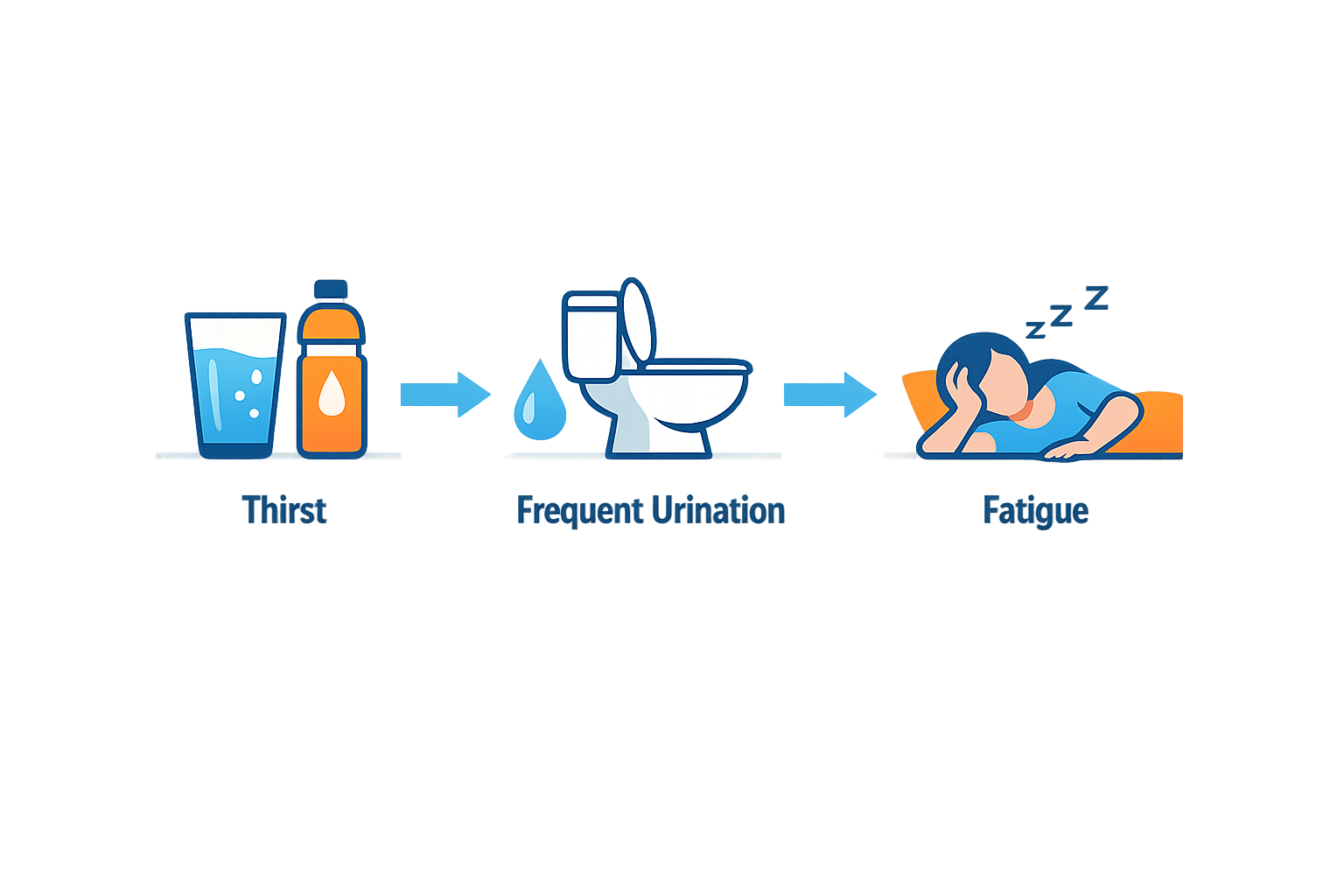
Gestational diabetes often develops without obvious warning signs, which is why routine screening between 24 and 28 weeks of pregnancy is the standard diagnostic approach. Many of the physiological changes that occur during pregnancy—such as increased thirst, frequent urination, and fatigue—overlap with typical pregnancy symptoms, making it difficult to identify gestational diabetes based on how you feel alone.
Why Symptoms Alone Are Not Reliable
Because gestational diabetes symptoms during pregnancy mirror common pregnancy experiences, most individuals will not notice distinct signals that glucose levels have risen. The condition develops when the body's insulin production cannot keep pace with the insulin resistance caused by placental hormones as pregnancy progresses. This hormonal shift is a normal part of pregnancy, but in some cases, it leads to elevated blood glucose without clear outward signs.
Routine screening with a 75-gram oral glucose tolerance test (OGTT) remains the most reliable method for diagnosis. The test measures how your body processes glucose at specific intervals, providing concrete data that symptoms cannot offer.
When Symptoms Do Appear
In cases where blood glucose levels become significantly elevated, some individuals may notice:
- Increased thirst and frequent urination: While common in all pregnancies, these symptoms can intensify when glucose levels are high, as the kidneys work to filter excess sugar from the blood.
- Unusual fatigue: Persistent tiredness beyond typical pregnancy fatigue may occur when cells are not efficiently using glucose for energy.
- Blurred vision: Temporary changes in vision can result from fluid shifts related to elevated blood glucose.
These signs are not diagnostic on their own and may be attributed to normal pregnancy changes. If you notice a marked increase in any of these symptoms, bring them to your healthcare provider's attention at your next appointment.
Risk Factors That Warrant Closer Monitoring
Certain factors increase the likelihood of developing gestational diabetes and may prompt your care team to recommend earlier or more frequent screening:
- High body mass index (BMI) before pregnancy
- Advanced maternal age
- Previous history of gestational diabetes
- Family history of type 2 diabetes
- Certain ethnic backgrounds with higher prevalence rates
If you have one or more of these risk factors, your provider may discuss a modified screening schedule or additional monitoring strategies. For more guidance on managing blood glucose during pregnancy, see our article on Managing Gestational Diabetes: Safe Eating for You and Your Baby.
What to Bring to Your Provider
Rather than relying on symptom recognition, focus on these actionable steps:
- Attend all scheduled prenatal appointments and glucose screening tests
- Report any noticeable changes in thirst, urination frequency, vision, or energy levels
- Discuss your personal and family medical history, including any prior gestational diabetes or prediabetes diagnoses
- Ask about your individualized risk profile and whether earlier screening is recommended
Your healthcare team will interpret your screening results in the context of your overall health and pregnancy, ensuring that any necessary interventions begin promptly.
Tips for Managing Gestational Diabetes Symptoms
Managing gestational diabetes symptoms during pregnancy requires a partnership between you and your care team. The strategies below orient you to common approaches many pregnant individuals use to support stable blood glucose and reduce discomfort. Every pregnancy is different, so confirm what fits your situation with your healthcare provider before making changes.
Focus on Modifiable Risk Factors
Diet and physical activity are two modifiable factors that research shows can help mitigate the risk of complications associated with gestational diabetes. A 2025 review in the Journal of Clinical Medicine notes that identifying and addressing lifestyle determinants — particularly nutrition and movement — is crucial in reducing adverse outcomes for both mother and baby. Your care team can help you design a plan that accounts for your current glucose patterns, your activity level, and any other pregnancy considerations.
Work With Your Care Team on Meal Planning
Balanced meals that distribute carbohydrates evenly throughout the day can help prevent the sharp glucose spikes and dips that contribute to fatigue, thirst, and blurred vision. Some pregnant individuals find that pairing carbohydrates with protein or healthy fats at each meal smooths out their glucose curve. Others benefit from eating smaller, more frequent meals rather than three large ones. Your care team — which may include a registered dietitian — can review your current eating pattern and suggest adjustments that align with your glucose targets and your baby's growth needs. For more guidance on structuring meals around diabetes management, see our article on managing gestational diabetes: safe eating for you and your baby.
Monitor Glucose as Directed
Continuous glucose monitoring (CGM) and self-monitoring of blood glucose (SMBG) are tools your care team may recommend to track how your body responds to food, activity, and stress throughout the day. A 2023 study published in Frontiers in Endocrinology found that CGM can safely and effectively monitor blood glucose changes in pregnant individuals with gestational hyperglycemia, reducing the occurrence of serious hypoglycemia and hyperglycemia events. The study also highlights that time in range (TIR) — the percentage of time your glucose stays within a target band — is an important indicator of blood glucose control, and patients with a higher TIR during pregnancy tend to have better gestational outcomes.
Your care team will specify how often to check, what your personal targets are, and when to call if a reading falls outside the expected range. Never adjust medication or insulin doses on your own; route every dosing decision back to your provider.
Stay Hydrated and Rest When Possible
Increased thirst and frequent urination are common in pregnancy and can intensify when blood glucose runs high. Drinking water throughout the day helps your kidneys clear excess glucose and can ease some of the fatigue that accompanies dehydration. Rest is equally important: pregnancy itself is physically demanding, and managing gestational diabetes adds another layer of effort. If you feel unusually tired, bring it up at your next appointment — your care team can check whether your glucose control needs adjustment or whether another factor is contributing.
Communicate Openly With Your Healthcare Provider
Symptoms such as persistent thirst, blurred vision, or unusual fatigue may signal that your glucose is running higher than your target range, but they can also be typical pregnancy experiences. The only way to know for certain is to measure your glucose and discuss the pattern with your care team. Keep a log of your readings, your meals, and any symptoms you notice, and bring it to every appointment. This record helps your provider spot trends and make informed adjustments to your care plan.
Patients with a higher time in range during pregnancy have better gestational outcomes.
Conclusion: Staying Informed and Engaged During Pregnancy
Recognizing gestational diabetes symptoms during pregnancy and staying engaged with your healthcare provider are essential steps toward a healthy pregnancy outcome. Our team emphasizes that while gestational diabetes is one of the most common pregnancy complications, affecting approximately 7–10% of women globally, effective management significantly reduces risks for both mother and baby. The research consistently shows that maintaining optimal glucose control and working closely with your care team can minimize complications such as macrosomia, preeclampsia, and cesarean delivery.
Pregnancy brings natural physiological changes—shifts in metabolism, hormones, blood flow, and immune function—that can affect how your body processes glucose. For women with gestational diabetes, these changes require careful monitoring and often adjustments to lifestyle, diet, and sometimes medication. The ADA's Standards of Care provide valuable guidance on managing these changes, but your individual situation is unique. What works for one pregnancy may differ for another, which is why personalized care from your healthcare team remains the cornerstone of successful management.
The symptoms of gestational diabetes often overlap with typical pregnancy experiences, making professional screening and diagnosis critical. Increased thirst, frequent urination, fatigue, and blurred vision can all signal elevated blood glucose, but they can also be part of a normal pregnancy. That overlap underscores why routine glucose testing between 24 and 28 weeks is standard practice, and why any concerning symptoms warrant a conversation with your provider rather than self-diagnosis.
For practical guidance on nutrition and meal planning during gestational diabetes, our article on managing gestational diabetes through safe eating offers step-by-step strategies that complement medical care. Remember, dietary adjustments are often the first line of management, and many women achieve good glucose control through lifestyle changes alone.
Achieving and maintaining optimal glucose levels throughout pregnancy significantly lowers the risks of congenital malformations, perinatal morbidity, and long-term complications for both mother and child.
Staying informed means understanding the risks, recognizing the symptoms, and knowing when to reach out for help. It also means preparing for the postpartum period: gestational diabetes typically resolves after delivery, but the condition signals a need for ongoing glucose monitoring and lifestyle attention in the years ahead. Women diagnosed with GDM benefit from regular follow-up assessments, cardiovascular health monitoring, and close collaboration with healthcare professionals to reduce the risk of future type 2 diabetes and metabolic syndrome.
Our editorial team ensures that every article is thoroughly researched against authoritative sources such as the ADA Standards of Care, NIDDK, and peer-reviewed studies, so you can navigate your health journey with confidence. While we provide general guidance grounded in the latest research, your healthcare team is always your best resource for personalized advice and care. If you notice any symptoms or have questions about your glucose levels, bring them to your next appointment—early communication and proactive management make all the difference.
Learn about the symptoms of gestational diabetes during pregnancy and what to monitor for a healthy pregnancy.
Table of Contents
- Introduction to Gestational Diabetes Symptoms — To introduce the topic of gestational diabetes symptoms during pregnancy and their significance.
- Understanding the Problem: Why Symptoms Matter — To explain the importance of recognizing gestational diabetes symptoms and the potential risks associated with the condition.
- Recognizing Gestational Diabetes Symptoms During Pregnancy — To outline the common symptoms of gestational diabetes that pregnant individuals should monitor.
- Tips for Managing Gestational Diabetes Symptoms — To provide practical tips for managing symptoms and maintaining a healthy pregnancy.
- Conclusion: Staying Informed and Engaged During Pregnancy — To summarize the key points and encourage readers to stay informed and engaged with their healthcare providers.
- Table of Contents

Maren Alcott is the lead presenter at DiabetesCompass. She is an AI-presented digital character. Every article Maren presents is researched and fact-checked by the DiabetesCompass editorial team against the ADA Standards of Care, peer-reviewed journals, and named clinical sources. Maren does not give medical advice — for questions about your specific situation, talk to your care team.
DiabetesCompass uses clearly identified digital editorial voices. See our AI disclosure for how bylines and AI-assisted production work.