
Signs of High Blood Sugar: What Your Doctor Needs to Know About High
Learn what your doctor needs to know about signs of high blood sugar and how to effectively communicate your health concerns during appointments.


On this page
Introduction
Signs of high blood sugar don't always announce themselves with obvious symptoms, and when they do, the signs can be easy to dismiss as stress, fatigue, or something unrelated to glucose. That gap between what's happening in your body and what you notice day-to-day is exactly why your doctor needs accurate, organized information from you. The numbers on your meter or continuous glucose monitor tell part of the story, but the context around those numbers—what you ate, how you felt, what changed in your routine—completes it.
Many people arrive at appointments unsure what to share or worried they'll waste time on details that don't matter. The reality is that your doctor is working with incomplete information unless you bring the patterns, the outliers, and the questions that have been building between visits. This isn't about proving you've been compliant or apologizing for high readings. It's about giving your care team the clearest possible picture so they can help you manage your glucose effectively.
Understanding what an A1C of 5.7 means for your health is one piece of the puzzle, but ongoing glucose patterns between lab tests matter just as much. This article walks through what your doctor actually needs to know about signs of high blood sugar, how to organize that information before your appointment, and how to communicate in a way that leads to actionable next steps rather than vague reassurances.
Your doctor can't adjust your treatment plan based on a single high reading or a general sense that things aren't going well. They need specifics: how often you're seeing highs, what time of day they occur, what you've tried, and what hasn't worked. The sections ahead break down exactly what to track, what to ask, and how to make the most of limited appointment time.
Understanding High Blood Sugar
High blood sugar — also called hyperglycemia — occurs when glucose builds up in the bloodstream faster than your body can use or store it. For people with diabetes, this happens when insulin production is insufficient, insulin isn't working effectively, or both. While occasional elevated readings are common, persistent high blood sugar signals a need for treatment adjustment and warrants a conversation with your care team.
What Causes High Blood Sugar
Several factors can push glucose levels above target range. Missed medication doses or insulin injections are a frequent culprit — when treatment lapses, glucose has no pathway out of the bloodstream. Meals larger than planned, or those high in fat and protein, can also drive glucose higher and keep it elevated longer than carbohydrates alone. Stress, illness, and certain medications (like corticosteroids) raise glucose even when diet and medication adherence are consistent.
Sometimes high blood sugar follows a low — when someone over-corrects hypoglycemia with too much fast-acting carbohydrate, glucose can swing well above target. This pattern, visible on continuous glucose monitor (CGM) traces, is worth discussing with your doctor because it may indicate a need to adjust correction strategies rather than baseline medication.
Why Persistent High Blood Sugar Matters
When glucose stays elevated over weeks and months, it damages blood vessels and nerves throughout the body. The kidneys, eyes, and cardiovascular system are particularly vulnerable. High blood sugar also increases the risk of infections and slows wound healing. For people with chronic kidney disease, maintaining glucose control becomes even more critical — though target ranges may be individualized to reduce hypoglycemia risk in this population.
CGM data has made it easier to see patterns that fingerstick testing misses. If 25% or more of your sensor readings fall above 180 mg/dL, or if 5% exceed 250 mg/dL, your doctor will want to understand what's driving those peaks. The ambulatory glucose profile (AGP) report — a summary of CGM data — shows whether high readings cluster at predictable times (like after breakfast) or vary unpredictably across days. Each pattern suggests different adjustments.
Consistent high glucose at the same time each day usually points to a medication or meal-timing issue; unpredictable spikes often trace back to variable routines or unplanned eating.
Understanding the why behind your high blood sugar is the first step toward effective treatment changes. Your doctor can't adjust what they don't know about — which is why the information you bring to the appointment (covered in the next section) shapes the conversation and the plan that follows.
What to Share with Your Doctor
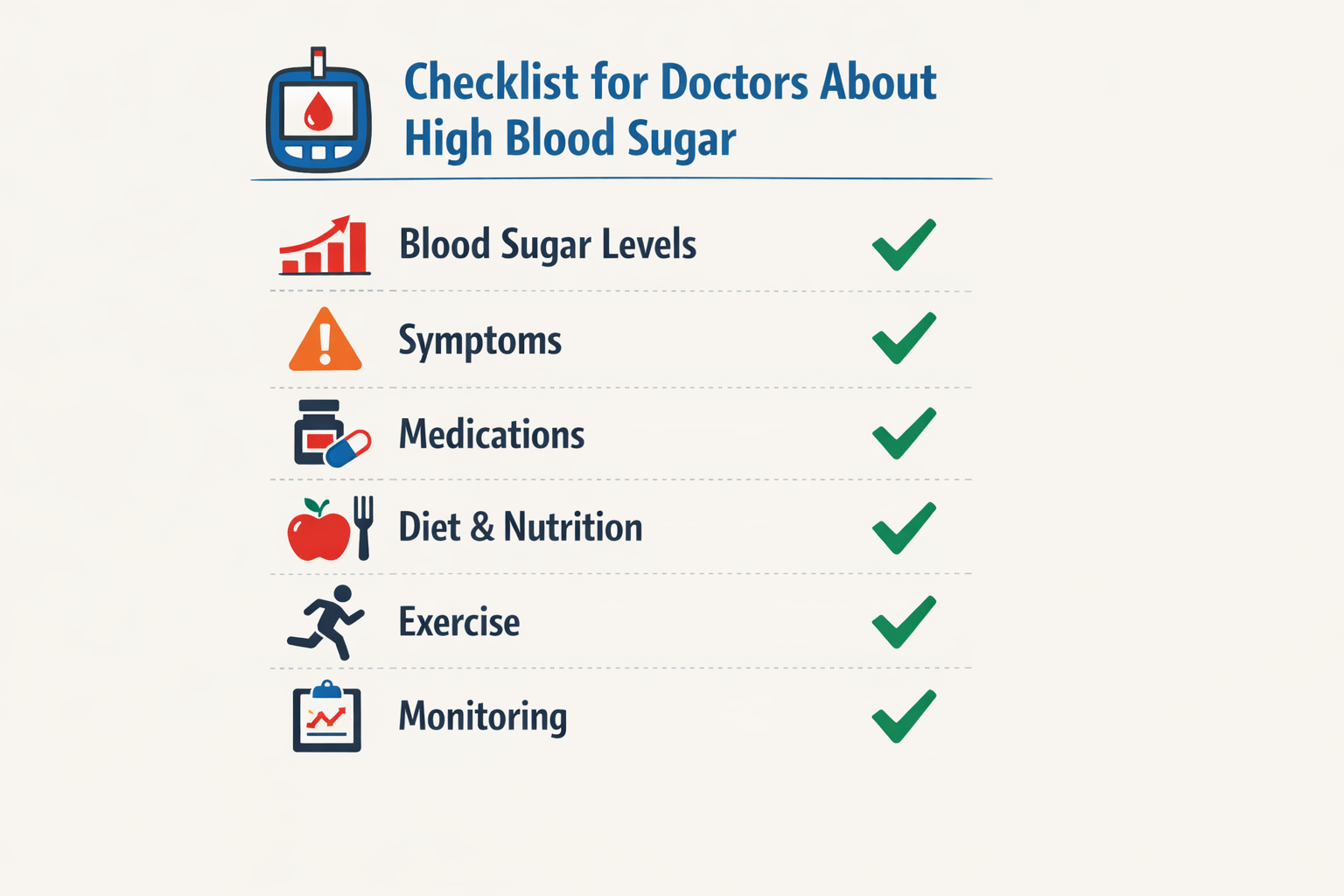
When you're preparing for an appointment about signs of high blood sugar, the information you bring shapes what your care team can do next. Doctors rely on patterns, not isolated readings, to make adjustments to medication or recommend changes to your routine. The more complete the picture you provide, the more targeted the response.
Your Glucose Log and Patterns
If you're checking blood sugar at home or wearing a continuous glucose monitor (CGM), bring those records. CGM users should share their ambulatory glucose profile (AGP) report if available — it shows your glucose patterns over 14 days in a format clinicians are trained to interpret. The report highlights time in range, time above range, and time below range, along with glucose variability.
If you're logging manually, note the time of day for each reading and what you were doing: fasting, after a meal, before bed, after exercise. Patterns matter more than individual numbers. For example, consistent high readings in the morning suggest a different issue than spikes after dinner.
Medication and Supplement List
Bring a current list of everything you take: prescription medications, over-the-counter drugs, vitamins, and supplements. Include doses and timing. Some medications — corticosteroids, certain blood pressure drugs, and even some antidepressants — can raise blood sugar. Your doctor needs to see the full list to identify potential contributors.
If you've missed doses or changed how you take a medication, mention it. Missed insulin or oral diabetes medication doses are common reasons for high blood sugar, and your care team can help troubleshoot barriers to adherence rather than assume the medication isn't working.
Recent Diet and Activity Changes
Describe any shifts in your eating pattern or physical activity over the past few weeks. Larger portions, meals higher in fat and protein, or changes in carbohydrate intake can all affect glucose levels. If your routine differs significantly between weekdays and weekends, say so — those patterns often show up in CGM data as wider variability.
Similarly, if you've reduced exercise, started a new workout routine, or experienced unusual stress or illness, those details provide context for glucose changes. High blood sugar immediately after treating a low can indicate overcorrection, and your doctor can help you adjust your approach.
Step 1
Prepare a symptom timeline
Write down when you first noticed high readings, how often they occur, and any symptoms you've felt — increased thirst, frequent urination, fatigue, blurred vision. Include whether symptoms are constant or tied to certain times of day.
Step 2
Document your current routine
Note your typical meal times, medication schedule, and exercise habits. If your routine is inconsistent, describe the variation. This helps your doctor identify whether timing adjustments might improve control.
Step 3
List your questions and concerns
Write down what you want to understand or change. Do you need help with medication side effects? Are you confused about target ranges? Do you want to discuss a CGM or adjustments to your current plan? Prioritize your top two or three questions so the appointment stays focused.
Glucose Variability and Target Ranges
If your CGM report includes a coefficient of variation (CV), note whether it's above 36% — that threshold indicates higher glucose variability and an increased risk of low blood sugar events. Wide day-to-day swings in glucose can signal a need to adjust medication timing, refine carbohydrate counting, or address factors like inconsistent meal schedules.
Your doctor will interpret these metrics in the context of your individual targets. The numbers that define "high" vary by person, treatment plan, and health history. Bring your current understanding of your target range so your care team can confirm or adjust it based on recent patterns.
For more context on what different glucose metrics mean and how to track them, see our guide on A1C of 5.7: What It Means for Your Health and Next Steps.
Tips for Effective Communication
Walking into a doctor's appointment with clear information and a plan for how to share it makes the conversation more productive. When you're discussing signs of high blood sugar, bringing the right details—and knowing how to present them—helps your care team make informed decisions about your treatment.
Bring a Glucose Log or CGM Report
If you use a continuous glucose monitor (CGM), print or email your ambulatory glucose profile (AGP) report before the appointment. The AGP shows your glucose patterns over the reporting period as if they happened in a single day, making it easier for your doctor to spot trends in highs, lows, and variability. If you check with a meter, bring a written log with dates, times, and readings—especially around meals, bedtime, and any symptoms you noticed.
Daily glucose profiles can reveal why high blood sugar happens at certain times. For example, diet and activity levels often differ between weekdays and weekends, and seeing those differences on a day-by-day trace helps your doctor ask the right follow-up questions.
Write Down Your Questions Ahead of Time
It's easy to forget what you wanted to ask once the appointment starts. Before you go, write a short list: what you're worried about, what's changed since the last visit, and what you want to understand better. Prioritize the top two or three questions so you cover the most important ground even if time runs short.
For example:
- "Your glucose is high most afternoons—what should I try first?"
- "I've been more tired than usual. Could that be connected to these readings?"
- "Should I adjust my medication, or is this something diet and exercise can address?"
Describe Patterns, Not Just Single Readings
A single high reading tells your doctor less than a pattern does. Instead of saying "the blood sugar was 240 yesterday," describe when and how often it happens: "I've been seeing readings above 200 most afternoons this week, especially after lunch." That gives your care team a clearer picture of what's driving the highs and whether a treatment adjustment is needed.
If you notice your glucose spikes at predictable times—after certain meals, during stress, or following missed medication doses—say so. Consistent trends of high glucose are more actionable than isolated events.
Patterns tell your doctor what's happening day after day; single readings only show what happened once.
Be Honest About Medication and Lifestyle
If you've missed doses, skipped meals, or changed your routine, tell your doctor. They can't adjust your treatment plan accurately if they're working from incomplete information. Common contributors to high glucose include missed doses of oral medication or insulin, larger-than-planned meals, high-fat or high-protein foods, and corrections that overshoot after a low.
Your care team isn't there to judge—they're there to help you find a plan that fits your real life, not an idealized version of it.
Ask What the Next Step Is
Before the appointment ends, confirm what you're supposed to do next. Is your doctor adjusting your medication? Should you check your glucose more often? Are you scheduling a follow-up, or is this something you'll monitor on your own for a few weeks?
Knowing the plan—and when to expect results—makes it easier to stay on track and recognize when something isn't working.
For more context on what glucose numbers mean and when to act, see our guide on A1C of 5.7: What It Means for Your Health and Next Steps.
Conclusion
Sharing complete, accurate information about signs of high blood sugar with your doctor is one of the most effective ways to improve your diabetes management. The conversation doesn't end with a single appointment — it's an ongoing partnership where your observations, questions, and honest reporting shape the care plan that works for your life.
When you walk into your next appointment prepared with your glucose patterns, symptom notes, and a short list of questions, you give your care team the context they need to make informed decisions. You also make it easier for them to spot trends, adjust medications safely, and help you avoid complications down the road. The time you spend tracking and organizing your information pays off in more targeted care and fewer surprises.
If you're newly diagnosed or still learning what your numbers mean, remember that every appointment is a chance to ask for clarity. There's no such thing as a question that's too basic when it comes to understanding what an A1C of 5.7 means for your health or how a new medication might affect your routine. Your doctor's job is to guide you, and your job is to show up with the information that makes that guidance possible.
The better you communicate about signs of high blood sugar, the more confident you'll feel navigating the decisions ahead — and the more control you'll have over your long-term health.
Related reading
Diabetes Medications for Different Types: What Works Best
Wegovy for Prediabetes: Microdose GLP-1 for Type 2 & Prediabetes

Maren Alcott is the lead presenter at DiabetesCompass. She is an AI-presented digital character. Every article Maren presents is researched and fact-checked by the DiabetesCompass editorial team against the ADA Standards of Care, peer-reviewed journals, and named clinical sources. Maren does not give medical advice — for questions about your specific situation, talk to your care team.