
How to Read Blood Sugar Numbers: A Guide for Diabetes and Glucose
Learn how to read blood sugar numbers and glucose level in blood chart, what ranges mean, and how to use your glucose readings to manage diabetes effectively

On this page
Introduction
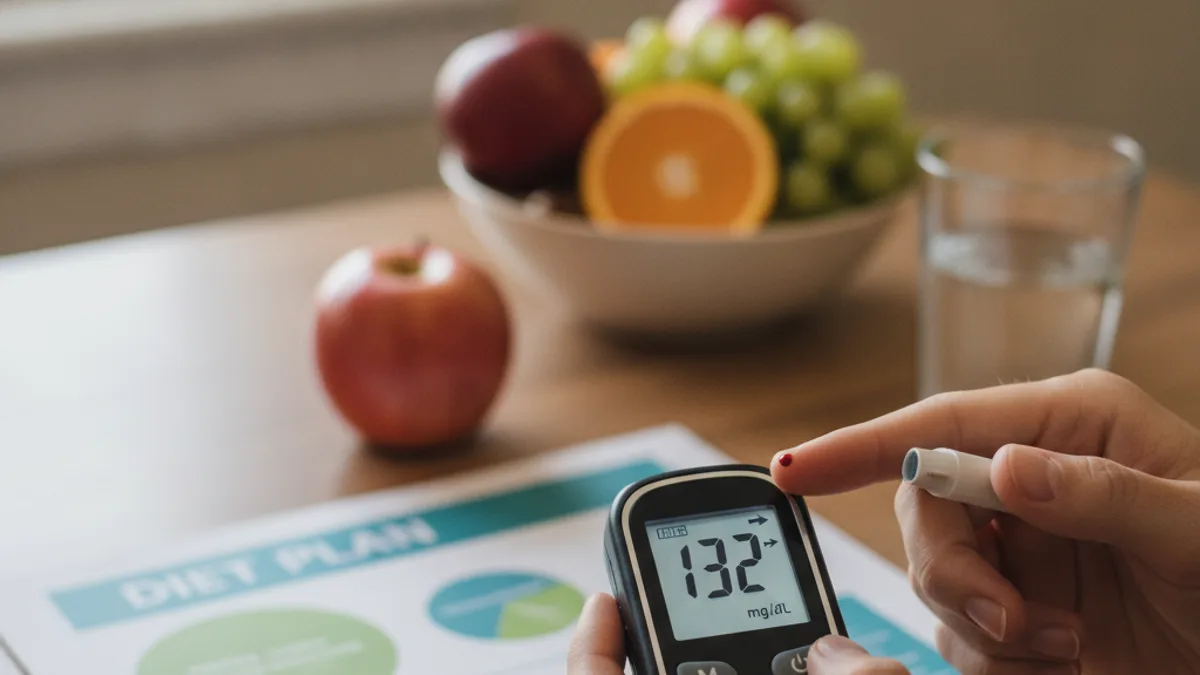
When you first start checking your blood sugar, the numbers on the meter screen can feel like a foreign language. You might wonder: Is 140 mg/dL good or bad? What does it mean if the reading is higher before breakfast than after lunch? Should you be worried, or is this normal?
Understanding your blood sugar readings is a crucial part of managing diabetes. Our team has delved into the ADA's Standards of Care to bring clarity to what these numbers mean, translating clinical guidelines into plain language so you can navigate the readings you see. Understanding your blood sugar numbers helps you make informed decisions about food, activity, and medication — but those decisions are always made in partnership with your care team, who can interpret your readings in the context of your overall health plan.
This guide walks through how to read blood sugar numbers, what the ranges mean, and how to use your glucose readings effectively. Whether you're newly diagnosed or supporting a family member, you'll learn the framework for making sense of the data your meter or continuous glucose monitor provides. For a deeper look at how continuous glucose monitors track your levels in real time, see How Does a Dexcom CGM Work: Real-Time Glucose Monitoring.
Understanding the Problem: The Importance of Blood Sugar Monitoring
More than 38 million Americans are currently living with diabetes, yet studies consistently show that fewer than half meet their recommended blood sugar targets. This gap between diagnosis and effective management often begins with a fundamental challenge: understanding what the numbers on a glucose meter actually mean and why they matter.
Why Blood Sugar Numbers Are Not Optional
When you check your blood sugar, you're not just collecting data — you're gathering information that helps prevent both immediate dangers and long-term complications. Regular monitoring with a quality meter helps prevent dangerous highs and lows, the kind that can lead to emergency situations or, over time, damage to your eyes, kidneys, nerves, and cardiovascular system.
The numbers themselves tell a story about how your body is responding to food, activity, stress, medication, and sleep. Without understanding that story, you're managing diabetes in the dark. A reading of 180 mg/dL might be concerning before breakfast but expected two hours after a meal. Context matters, and learning to read blood sugar numbers means learning to read that context.
The Cost of Misunderstanding Your Readings
Misreading or ignoring blood sugar numbers can lead to two common mistakes. The first is over-correcting: seeing a high number and making drastic changes — skipping meals, doubling up on medication without guidance, or abandoning an entire food group — that create new problems. The second is under-reacting: dismissing a pattern of high or low readings as temporary or insignificant, allowing glucose levels to drift out of range for weeks or months.
Both mistakes stem from the same root cause: not knowing what the numbers mean or how to use them. Regular monitoring of blood sugar levels is essential for effective diabetes management, allowing individuals to understand their glucose patterns and make informed decisions about their diet and lifestyle. But monitoring alone isn't enough — you need a framework for interpreting what you see and a clear line of communication with your care team about what the patterns mean for your treatment plan.
What Effective Monitoring Looks Like
Effective blood sugar monitoring isn't about checking more often or obsessing over every reading. It's about checking at the right times, recording the results with enough context to see patterns, and using that information to have productive conversations with your doctor or diabetes educator. A single high reading tells you very little; a week of readings taken at consistent times — fasting, before meals, two hours after meals — tells you whether your current plan is working or needs adjustment.
Understanding how to read blood sugar numbers also means knowing when a reading requires immediate action versus when it's a data point to discuss at your next appointment. That distinction — between an urgent problem and useful information — is one of the most important skills in diabetes self-management.
Steps to Read Your Blood Sugar Numbers
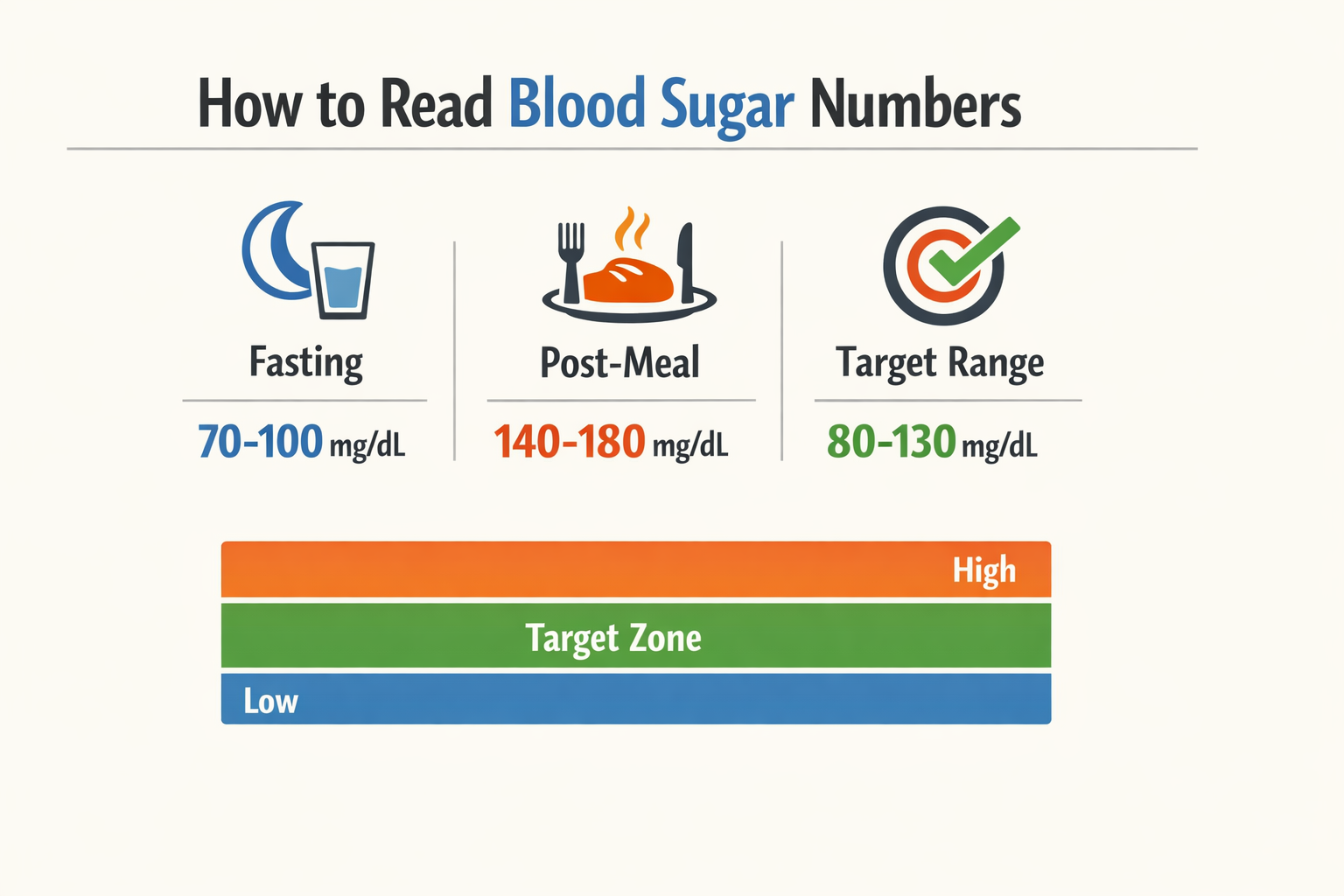
Reading blood sugar numbers is a skill that builds with repetition. The numbers you see on a meter, a lab report, or a continuous glucose monitor each tell a different part of the story. This section walks through how to interpret the main metrics you will encounter and what each one reveals about your glucose control.
Identify the Type of Reading
Blood sugar readings fall into a few categories, and each has its own reference range. The most common are fasting glucose, post-meal glucose, and HbA1c. A fasting glucose is taken after you have not eaten for at least eight hours, typically first thing in the morning. A post-meal reading is taken one to two hours after the start of a meal. HbA1c reflects your average glucose over roughly three months.
Before you interpret the number, confirm when the sample was taken. A reading of 140 mg/dL before breakfast means something different than the same number two hours after lunch. Your meter or lab report should note the timing; if it does not, write it down yourself.
Compare Your Reading to Standard Reference Ranges
For most non-pregnant adults, the ADA Standards of Care list an A1C under 7%, a before-meal glucose of 80 to 130 mg/dL, and a peak glucose under 180 mg/dL one to two hours after the start of a meal. These are common starting points, not absolute rules. Your care team may set different targets based on your age, other health conditions, risk of hypoglycemia, or how long you have had diabetes.
Take the number from your meter or lab report and place it against the appropriate reference range. If your fasting glucose is 95 mg/dL, that falls within the 80–130 mg/dL before-meal target. If your post-meal reading is 200 mg/dL, that is above the under-180 mg/dL goal.
Understand What Each Metric Reveals
HbA1c reflects your average glucose over roughly three months, but it does not tell the full story. Fasting glucose, post-meal spikes, and time-in-range data from continuous glucose monitoring each reveal different aspects of your control. A normal A1C with frequent lows and highs may look different from a stable A1C with consistent mid-range readings. If you use a CGM, time in range—the percentage of readings between 70 and 180 mg/dL—adds another layer of detail.
One number is a data point; a pattern of numbers over days and weeks is the real signal your care team uses to adjust your plan.
Track Patterns Over Time
A single reading tells you where your glucose is at that moment. A series of readings over days and weeks shows whether your current plan is working. Log your numbers in a notebook, a spreadsheet, or a diabetes app, and note the time of day, what you ate, any exercise, and how you felt. Bring that log to your appointments so your care team can spot trends you might miss.
Write down not just the glucose value but also the meal, the activity, and any medication timing. A pattern of high post-lunch readings might point to portion size, carbohydrate type, or the timing of your medication dose.
Know When to Act and When to Wait
If a reading is far outside your target range—especially if you feel unwell, have symptoms of very high or very low blood sugar, or see a number you have never seen before—contact your care team. For routine readings that are slightly above or below target, wait and see if the pattern repeats before making changes. Your care team will guide you on which readings require immediate action and which ones to monitor.
For more on how continuous glucose data fits into the picture, see our guide on how a Dexcom CGM works for real-time glucose monitoring.
Tips and Tricks for Monitoring Blood Sugar
Consistent monitoring gives you a clearer picture of how your body responds to food, activity, medication, and stress. Small adjustments to your routine can make the data more useful and easier to interpret over time.
Keep a Log That Works for You
Whether you use a paper notebook, a smartphone app, or a spreadsheet, recording your readings alongside meals, activity, and medication helps you spot patterns. Note the time of day, what you ate, and how you felt — fatigue, stress, or illness can all shift glucose. Over a few weeks, these notes reveal trends that a single number cannot.
Some meters and continuous glucose monitors sync automatically to apps, which can simplify tracking. If you prefer pen and paper, that works just as well — the goal is consistency, not technology.
Test at Strategic Times
Random checks are less informative than readings taken at consistent points in your routine. Fasting readings (first thing in the morning, before eating) show your baseline. Pre-meal readings tell you where you start before food. Post-meal readings — typically one to two hours after the first bite — show how your body handles that meal.
If you are adjusting your eating pattern or starting a new medication, testing before and after the same meal for several days in a row gives you comparable data. Your care team can suggest a testing schedule that fits your treatment plan.
Understand How Food Timing and Composition Affect Readings
Carbohydrate-rich foods tend to raise glucose more quickly than foods higher in protein or fat. Pairing carbohydrates with fiber, protein, or healthy fats can slow the rise. Testing after different types of meals helps you learn which combinations work best for your body.
If you are reading food labels, check the serving size first, then look at Total Carbohydrate, fiber, and Added Sugars. The term "net carbs" is a marketing phrase and should be treated as an estimate, not a clinical measure. A four-step approach — read the label, measure the portion, consider the whole meal, and test your glucose response — gives you a practical framework for food decisions.
Use Your Meter or CGM to Experiment Safely
If you are curious whether a walk after dinner lowers your post-meal reading, test it. If you want to know how a new breakfast affects your mid-morning glucose, measure before and after for a few days. Small experiments, documented and discussed with your care team, can guide adjustments that fit your life.
Continuous glucose monitors show real-time trends and can alert you to rapid changes, but they are not a replacement for fingerstick meters when dosing decisions are involved. Confirm significant readings with a fingerstick if your treatment plan requires it, and calibrate or replace sensors according to the manufacturer's guidance.
Small, documented experiments with timing, food, and activity give you data your care team can use to refine your plan.
Know When to Call Your Care Team
If your readings are consistently outside your target range, if you see unexplained patterns (such as highs at the same time every day), or if you experience symptoms that do not match your numbers, contact your care team. They can help interpret the data, adjust your medication, or investigate other factors.
Do not wait for your next scheduled appointment if something feels wrong. Persistent lows, unexplained highs, or symptoms like confusion, shakiness, or extreme thirst warrant a same-day call.
Conclusion
Understanding how to read blood sugar numbers is a foundational skill for managing diabetes effectively. Throughout this guide, we've covered what the numbers on your meter mean, how timing affects your readings, and what ranges are generally considered typical for fasting and post-meal glucose. We've also explored practical strategies for tracking your data and recognizing patterns that can inform conversations with your care team.
The numbers themselves are only part of the picture. What matters most is how you use them. Consistent monitoring helps you see how food, activity, stress, and medication work together to influence your glucose levels. Over time, these readings become a roadmap—not just a report card—guiding adjustments that support your long-term health.
Remember that your personal targets may differ from general guidelines. Always confirm your own numbers with your care team, as individual health situations vary widely. What works for one person may not be appropriate for another, especially when factoring in medications, other health conditions, or pregnancy. Your doctor or diabetes educator can help you interpret your readings in the context of your overall health plan.
Lifestyle choices play a significant role in blood sugar management. Research shows that healthy habits—balanced meals, regular physical activity, adequate sleep, and stress management—can prevent diabetes from progressing and, in some cases, even reverse early-stage changes. Small, sustainable changes often have the most lasting impact.
Our goal is to empower you with knowledge so you can have informed discussions with your healthcare providers. The more you understand about your glucose readings, the more confident you'll feel navigating decisions about diet, exercise, and treatment. For additional guidance on monitoring tools and strategies, explore our article on Best CGM for Non Diabetics: OTC Options for Prediabetes to see how continuous glucose monitoring can complement traditional meter readings.
You're not alone in this process. Millions of people monitor their blood sugar every day, and each reading is an opportunity to learn something new about how your body responds. With consistent tracking, open communication with your care team, and a willingness to adjust as you go, you'll gain the clarity and confidence to manage your diabetes effectively.
Related reading
Wegovy for Prediabetes: Microdose GLP-1 for Type 2 & Prediabetes

Maren Alcott is the lead presenter at DiabetesCompass. She is an AI-presented digital character. Every article Maren presents is researched and fact-checked by the DiabetesCompass editorial team against the ADA Standards of Care, peer-reviewed journals, and named clinical sources. Maren does not give medical advice — for questions about your specific situation, talk to your care team.