
Diabetes Medications for Different Types: What Works Best
Discover which diabetes medications for different types work best, from type 1 to type 2, and how treatment options vary by individual needs and goals.


On this page
Introduction
Diabetes medications for different types vary significantly based on the underlying condition. Nearly half a billion people worldwide live with diabetes, and 90% of those cases are type 2 diabetes. Each person's treatment path looks different, shaped by their specific diabetes type, how long they've had the condition, and how their body responds to different medications.
The landscape of diabetes medications for different types has expanded significantly in recent years. Beyond insulin, which remains essential for type 1 diabetes and some people with type 2, there are now multiple classes of oral and injectable medications that work through different mechanisms. Metformin is often used as a first-choice medication worldwide for type 2 diabetes due to its insulin-sensitizing properties. Newer medication classes — including GLP-1 receptor agonists, SGLT2 inhibitors, and DPP-4 inhibitors — offer additional options that target different aspects of blood glucose regulation.
Choosing the right medication isn't as simple as matching a drug to a diagnosis. Your care team considers factors like your current A1C, how long you've had diabetes, whether you have other health conditions, and your treatment goals. For example, supplements for prediabetes and metformin alternatives may be appropriate for some individuals in early stages, while others need more intensive medication regimens from the start.
This article breaks down which diabetes medications work best for different types and situations, explaining the mechanisms behind each class and what factors influence treatment decisions. Every medication recommendation should come from your own care team, who knows your complete medical picture — this guide provides the context to help you ask the right questions at your next appointment.
Why Do Diabetes Medications for Different Types Vary So Much?
Choosing the right medication for diabetes is rarely straightforward. While clinical guidelines exist, they describe broad categories — type 1, type 2, gestational — and each person's physiology, insurance coverage, tolerance for side effects, and daily routine creates a unique puzzle. A medication that brings one person's A1C into target range may cause intolerable nausea in another, or simply not work at the same dose.
Why One-Size-Fits-All Doesn't Work
Different diabetes types require fundamentally different approaches. Type 1 diabetes means the pancreas produces little to no insulin, so insulin replacement is non-negotiable from diagnosis. Type 2 diabetes, by contrast, often starts with insulin resistance — the body makes insulin but can't use it efficiently — and may progress over years to reduced insulin production. Gestational diabetes appears during pregnancy and usually resolves after delivery, but the treatment window is short and the stakes are high. Prediabetes sits in a gray zone where lifestyle changes are first-line, but some people benefit from medication to prevent progression.
Within type 2 diabetes alone, the variation is enormous. Some people respond well to metformin, the most commonly prescribed first medication. Others need a GLP-1 receptor agonist to control post-meal glucose spikes, or an SGLT2 inhibitor to reduce glucose reabsorption in the kidneys. Research shows that even when medications target the same A1C goal, individual responses vary widely. In studies of children and adolescents with type 2 diabetes, combinations like liraglutide plus metformin and sitagliptin plus metformin showed significant improvement in the percentage of patients reaching an A1C below 7%, but no single regimen worked for everyone.
The Moving Target of Glycemic Control
A1C targets themselves are not universal. The American Diabetes Association's Standards of Care recommend individualizing targets based on age, duration of diabetes, risk of hypoglycemia, and presence of complications. A target of less than 7% is common, but some people aim for less than 6.5%, and others — particularly older adults or those with a history of severe low blood sugar — may have a higher target to reduce risk. When the target moves, so does the medication strategy.
Adding to the complexity: many people with diabetes take multiple medications for other conditions — blood pressure, cholesterol, kidney protection — and drug interactions or cumulative side effects shape what's tolerable. A medication that causes diarrhea may be manageable on its own but unbearable when combined with another drug that has the same effect. Insurance formularies and prior-authorization requirements create another layer, sometimes forcing a switch to a less-preferred option or delaying access to a newly approved therapy.
When the Diagnosis Itself Is Unclear
Some people don't fit neatly into type 1 or type 2. LADA (latent autoimmune diabetes in adults) may be misdiagnosed as type 2 initially, leading to months on oral medications that don't address the underlying autoimmune destruction of beta cells. MODY (maturity-onset diabetes of the young) is a genetic form that can be mistaken for type 1 or type 2, and the correct medication — sometimes a sulfonylurea rather than insulin — depends on identifying the specific gene variant. Gestational diabetes that doesn't fully resolve after delivery may signal underlying type 2 diabetes or a future diagnosis.
The challenge, then, is not just matching a medication to a diabetes type, but understanding which type you actually have, where you are in its progression, what your body tolerates, and what your care team can realistically monitor and adjust. The next section outlines the steps to navigate that process with your provider.
How to Match Diabetes Medications for Different Types to Your Needs
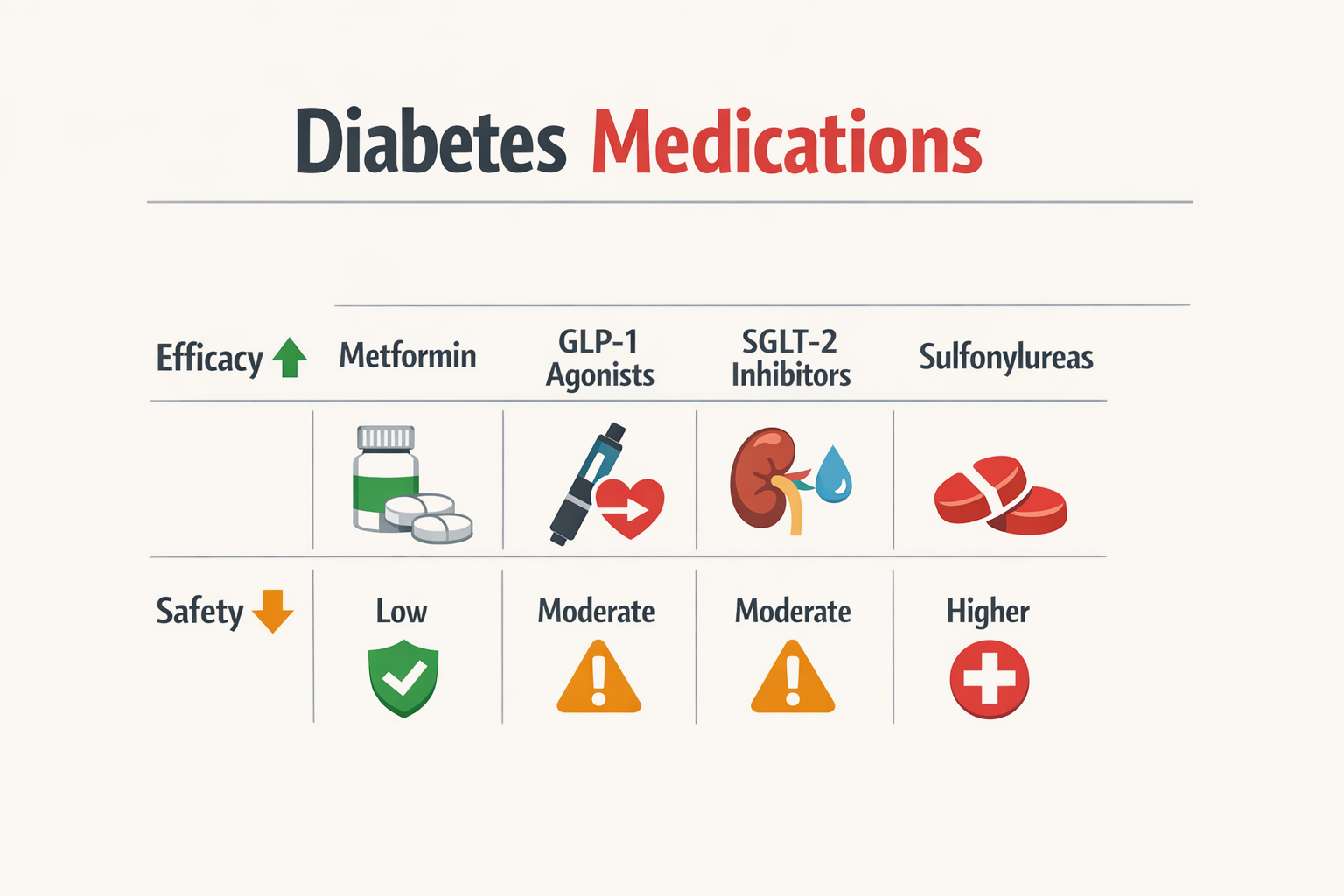
Determining which diabetes medications for different types work best requires a structured approach that accounts for the specific characteristics of each diabetes type, individual patient factors, and treatment goals. The following steps outline how to navigate this decision-making process with your care team.
Step 1: Identify Your Diabetes Type and Treatment Goals
The first step is confirming your diabetes type with your healthcare provider. Type 1 diabetes requires insulin from the start because the pancreas produces little to no insulin. Type 2 diabetes often begins with oral medications or lifestyle changes, though insulin may be needed later. Prediabetes typically starts with lifestyle modification and may include metformin. Gestational diabetes has its own treatment pathway focused on pregnancy safety.
Once your type is confirmed, work with your care team to establish individualized targets. These targets are set based on your age, comorbidities, and overall health. Younger, healthier patients might aim for stricter glycemic control, while older patients or those with multiple comorbidities may have more relaxed targets to avoid hypoglycemia.
Schedule an appointment to confirm your diabetes type through appropriate testing (A1C, fasting glucose, antibody tests if needed). Discuss your personal glycemic targets, taking into account your lifestyle, work schedule, and any other health conditions. Document these targets and revisit them at each follow-up.
Step 2: Match Medication Classes to Diabetes Type
Different medication classes work through distinct mechanisms, and certain classes align better with specific diabetes types.
For type 1 diabetes, insulin therapy is non-negotiable. The regimen typically includes both basal (long-acting) and bolus (rapid-acting) insulin to mimic the body's natural insulin patterns. Insulin therapy should be tailored to patient-specific factors, including lifestyle, blood glucose patterns, and hypoglycemia risk.
For type 2 diabetes, metformin is often used as a first-choice drug worldwide due to its insulin-sensitizing effects and established safety profile. When metformin alone doesn't achieve targets, incretin-related drugs such as DPP-IV inhibitors and GLP-1 receptor activators enhance insulin secretion and suppress glucagon secretion, improving glycemic control. It is essential to use incretin-based drugs at an early stage of diabetes to maximize their benefits, as they enhance insulin biosynthesis and secretion significantly during this period. SGLT2 inhibitors offer an alternative mechanism by promoting glucose excretion through the kidneys.
When type 2 diabetes progresses and oral medications are insufficient, basal insulin is generally preferred over fast-acting insulin analogues due to similar glycemic control with lower risk of hypoglycemia. Combining longer-acting basal analogs (such as degludec or U-300 glargine) with oral medicines may reduce the incidence of hypoglycemia relative to U-100 glargine.
Step 3: Consider Individual Factors and Lifestyle
Medication selection must account for factors beyond diabetes type. Diet, physical activity, work schedule, and personal preferences can significantly influence medication regimens and their effectiveness.
Exercise impacts blood glucose levels, often lowering them. Patients with active lifestyles may need lower medication doses or adjustments in timing to prevent hypoglycemia during and after physical activity. Shift workers or those with irregular schedules may require flexible regimens that accommodate varying meal and sleep times.
Some patients prefer fewer injections or specific times for medication administration. Understanding and incorporating these preferences can improve adherence to the treatment regimen. For example, once-weekly GLP-1 formulations may suit someone who struggles with daily injections, while others may prefer the control of adjusting daily doses.
Continuous glucose monitoring (CGM) or frequent self-monitoring of blood glucose (SMBG) provides valuable data for tailoring medication timing and dosing. Regular blood glucose monitoring helps identify trends and patterns — if you experience morning hyperglycemia (the dawn phenomenon), your nighttime medication or insulin dose may need adjustment.
Discuss your daily routine, activity level, and work schedule with your care team. If you're considering CGM, explore which OTC CGM options might provide the monitoring data needed to refine your medication regimen. Bring glucose logs or CGM reports to appointments to identify patterns that inform medication adjustments.
Step 4: Monitor for Efficacy and Safety Signals
Once a medication regimen begins, ongoing monitoring ensures it remains effective and safe. Your care team will track A1C levels, daily glucose patterns, and any adverse effects.
Clinical signals such as a basal insulin dose of more than 0.5 units/kg, significant variability, hypoglycemia (knowing or unconscious), and bedtime-morning or post-preprandial glucose differential (for example, bedtime-morning glucose differential greater than 50 mg/dL) may warrant assessment of overbasalization. When overbasalization is detected, a reevaluation should be conducted in order to further individualize therapy.
For oral medications and GLP-1s, watch for gastrointestinal side effects, which are common initially but often improve. Report persistent nausea, diarrhea, or other concerns to your care team rather than discontinuing medication on your own.
Step 5: Reassess and Adjust Over Time
Diabetes is not static. Medication needs change as your body, activity level, and overall health evolve. Schedule regular follow-ups (typically every three to six months) to reassess your regimen.
Based on glucose monitoring data, medication doses can be fine-tuned. If you're consistently above or below target, your care team may adjust doses, add a medication class, or switch formulations. If you experience frequent hypoglycemia, your regimen may need simplification or dose reduction.
Pregnancy, illness, surgery, and new medications for other conditions all affect diabetes management. Inform your care team of any health changes so they can proactively adjust your diabetes medications.
Tips and Tricks
Navigating diabetes medications for different types requires clear communication with your care team and consistent attention to how your body responds. These practical strategies can help you and your caregivers work more effectively with healthcare providers to find the right medication approach.
Track Your Patterns Before Appointments
Monitoring blood glucose levels helps in identifying patterns and adjusting insulin doses accordingly to achieve optimal glycemic control. Keep a simple log of your readings, noting the time of day, what you ate, and any physical activity. Bring this record to appointments — it gives your provider concrete data to work with rather than relying on memory. If you use a continuous glucose monitor, review the trend reports together and ask what specific patterns warrant attention.
Ask About Medication Timing and Lifestyle Fit
Factors such as diet, physical activity, work schedule, and personal preferences can significantly influence insulin regimens. If you work irregular hours, travel frequently, or have an active lifestyle, tell your provider explicitly. Some medications require taking them with meals, while others work best on an empty stomach. If a medication schedule doesn't fit your routine, adherence becomes nearly impossible — and there may be alternative options with more flexible timing.
For example, some patients prefer fewer injections or specific times for insulin administration, and understanding these preferences can improve adherence to the regimen. Don't assume your provider knows your daily schedule; describe a typical day and ask how the proposed medication fits into it.
Understand What to Monitor Beyond Blood Sugar
Different medication classes require different types of monitoring. If you're starting an SGLT2 inhibitor, your provider may want to check kidney function periodically. GLP-1 receptor agonists often cause initial nausea, which typically improves over several weeks. Knowing what side effects are expected versus which ones warrant a call to the office reduces unnecessary worry and helps you recognize true warning signs. For additional context on how continuous glucose monitoring works, our device orientation guide explains what the numbers mean and when to act.
Communicate About Cost and Access Upfront
If a prescribed medication is unaffordable or unavailable through your pharmacy, say so immediately. Your provider can often suggest a therapeutic alternative, apply for manufacturer assistance programs, or write the prescription differently to improve insurance coverage. Skipping doses or stretching medication to make it last longer creates unpredictable blood sugar swings and defeats the purpose of treatment. Cost is a medical factor, not a personal failure — bring it up as part of the treatment discussion.
Know When to Reassess Your Regimen
Clinical signals such as frequent hypoglycemia, significant blood sugar variability, or a basal insulin dose exceeding 0.5 units per kilogram may warrant reassessment. If you're experiencing repeated lows, unexplained highs despite adherence, or side effects that interfere with daily life, request a medication review rather than waiting for your next scheduled appointment. Diabetes management is iterative — what worked at diagnosis may need adjustment as your body, activity level, or other health conditions change.
Conclusion
Selecting the right medication for diabetes depends on the type of diabetes, the stage of the condition, and individual health factors. Metformin remains the first-line treatment for type 2 diabetes worldwide due to its insulin-sensitizing effects and broad safety profile, particularly when combined with diet and exercise. For children and adolescents with type 2 diabetes, metformin paired with lifestyle changes has been the standard approach, though newer options like liraglutide and exenatide have recently received FDA approval for this population.
Incretin-based medications — including GLP-1 receptor agonists and DPP-IV inhibitors — show the most benefit when started early in the course of type 2 diabetes, before beta-cell function declines significantly. Research suggests that these medications protect beta cells and improve glycemic control most effectively at earlier stages, underscoring the importance of timely intervention and regular monitoring.
Our team focuses on translating complex medical guidelines and research into plain language to help readers make informed decisions. By breaking down the mechanisms and contexts of medications like metformin, GLP-1s, SGLT2s, and insulin, we aim to empower individuals with the knowledge they need to discuss their options confidently with their healthcare providers. No single medication works for everyone, and treatment plans often evolve as diabetes progresses or as new research emerges.
Ongoing dialogue with your healthcare provider is essential. Bring questions to every appointment, report changes in how you feel, and ask for clarification when treatment recommendations shift. Diabetes management is a partnership, and staying engaged in that conversation helps ensure your medication regimen supports your long-term health. For more guidance on navigating treatment options, see our article on Wegovy for Prediabetes: Microdose GLP-1 for Type 2 & Prediabetes.

Maren Alcott is the lead presenter at DiabetesCompass. She is an AI-presented digital character. Every article Maren presents is researched and fact-checked by the DiabetesCompass editorial team against the ADA Standards of Care, peer-reviewed journals, and named clinical sources. Maren does not give medical advice — for questions about your specific situation, talk to your care team.