
Best At-Home A1C Test Kits, Compared (2025)
Compare the best at-home A1C test kits by accuracy, price, and ease of use. Find the right option for tracking your diabetes management at home.


On this page
Introduction
When our team set out to review the best at-home A1C test kits, we knew that accuracy and ease of use would be at the forefront of our evaluation. The A1C test — also called glycated hemoglobin — is the reference standard for monitoring glucose control in diabetes management. It estimates your average blood glucose levels over approximately two to three months, giving you and your care team a snapshot of how well your current treatment plan is working.
At-home A1C kits bring lab-style testing into your routine without the wait for an appointment. Some deliver results in minutes using a fingerstick sample; others require you to mail a blood sample to a lab and wait several days for results. The trade-offs between speed, cost, and clinical-grade accuracy shape which kit works best for your situation.
This roundup compares the leading at-home A1C test kits available in 2025, examining how each performs on accuracy, sample collection method, turnaround time, and price. We've also included guidance on what an A1C of 5.7 means for your health and when to follow up with your provider. Whether you're newly diagnosed, managing prediabetes, or simply looking for more frequent check-ins between lab visits, you'll find the context you need to choose the right kit and interpret the results with confidence.
Explore our top picks for a1c test kit options, comparing features, prices, and user experiences.
What to Look for in an A1C Test Kit
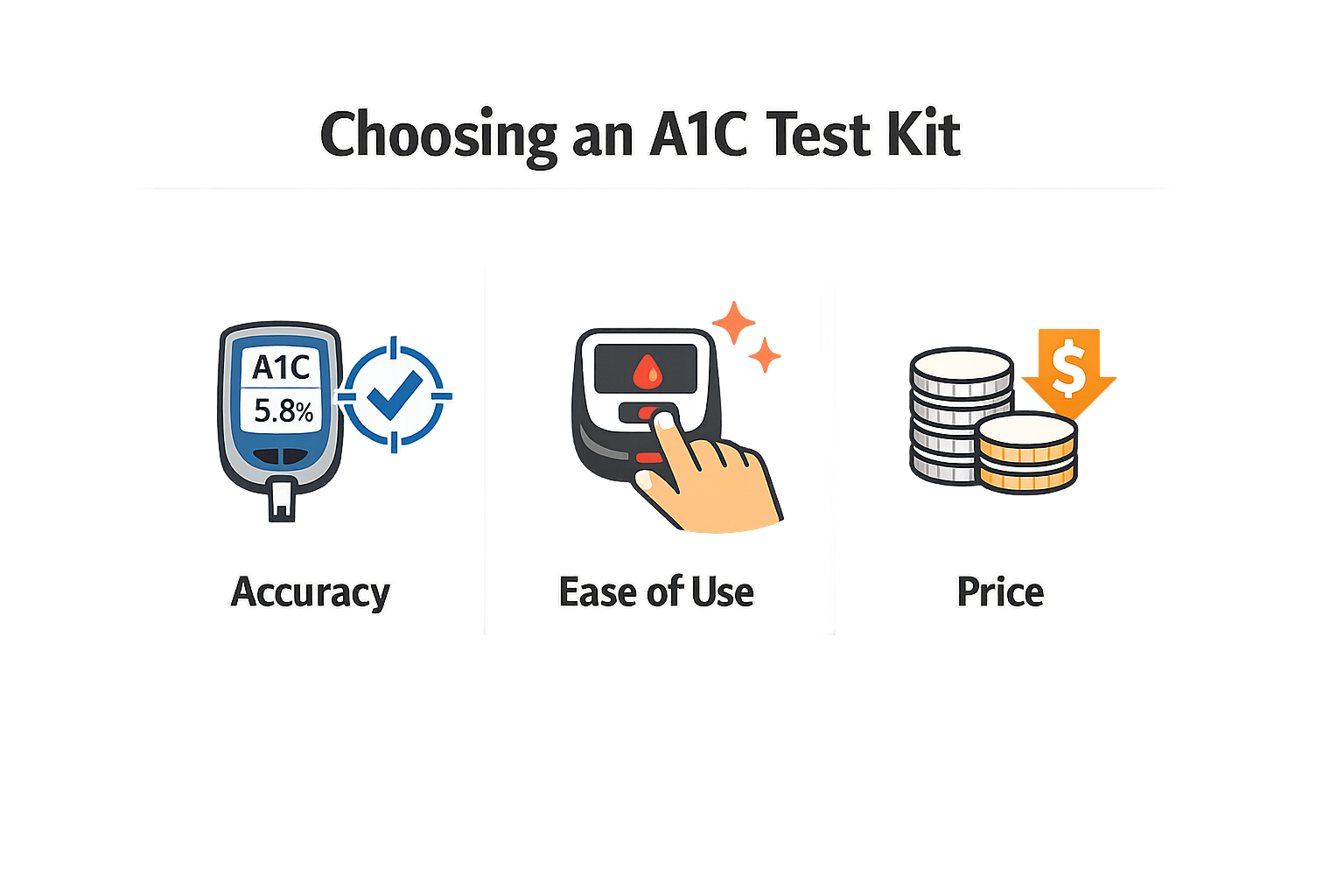
Choosing an at-home A1C test kit requires understanding what makes a kit reliable and suitable for your monitoring needs. Not all kits perform equally, and knowing which features matter most helps you make an informed decision that complements your diabetes care plan.
Accuracy and Clinical Validation
The most critical factor in any A1C test kit is accuracy. Look for kits that have undergone clinical validation and align with laboratory-standard methods. Keep in mind that certain conditions can affect HbA1c measurement accuracy — factors such as hemoglobin variants, chronic kidney disease, and differences in red blood cell lifespan can influence results. If you have any of these conditions, discuss with your care team whether at-home testing is appropriate for you, or whether lab-based testing offers more reliable tracking.
Ease of Use and Sample Collection
The testing process should be straightforward. Most at-home A1C kits use a finger-prick blood sample, but the volume required and the collection method vary. Some kits provide clear visual instructions and ergonomic lancets that make the process less intimidating, especially for those new to self-testing. Consider whether the kit includes all necessary materials — lancets, collection devices, and return packaging if the sample needs to be mailed to a lab.
Kits that provide results at home typically use a small reader device, while mail-in kits send your sample to a certified laboratory. Each approach has trade-offs: at-home readers offer faster results, while lab-based kits may provide results that align more closely with the testing your doctor uses.
Turnaround Time for Results
How quickly you receive your results depends on the kit type. At-home devices that analyze the sample on-site typically provide results within minutes. Mail-in kits require you to send the sample to a lab, with results usually available within a few days to a week. If you're using the test to inform a conversation with your care team or to track progress between appointments, factor in the turnaround time when planning your testing schedule.
Cost and Insurance Coverage
Pricing for at-home A1C test kits varies widely, from around $20 to over $50 per test. Some kits are sold individually, while others come in multi-test packs that reduce the per-test cost. Check whether your insurance plan or HSA/FSA account covers at-home A1C testing — coverage policies differ, and some plans reimburse only lab-based tests ordered by a physician.
Regulatory Clearance and Manufacturer Reputation
Choose kits that have received FDA clearance or approval, which indicates the manufacturer has demonstrated the device meets safety and performance standards. Research the manufacturer's reputation and read user reviews to understand real-world performance and customer support quality. Established brands with a track record in diabetes care often provide more reliable products and responsive customer service if issues arise.
For more context on what A1C numbers mean and how they fit into your overall diabetes management, see our guide on A1C to Blood Glucose Conversion Chart & Calculator.
Top A1C Test Kits Reviewed
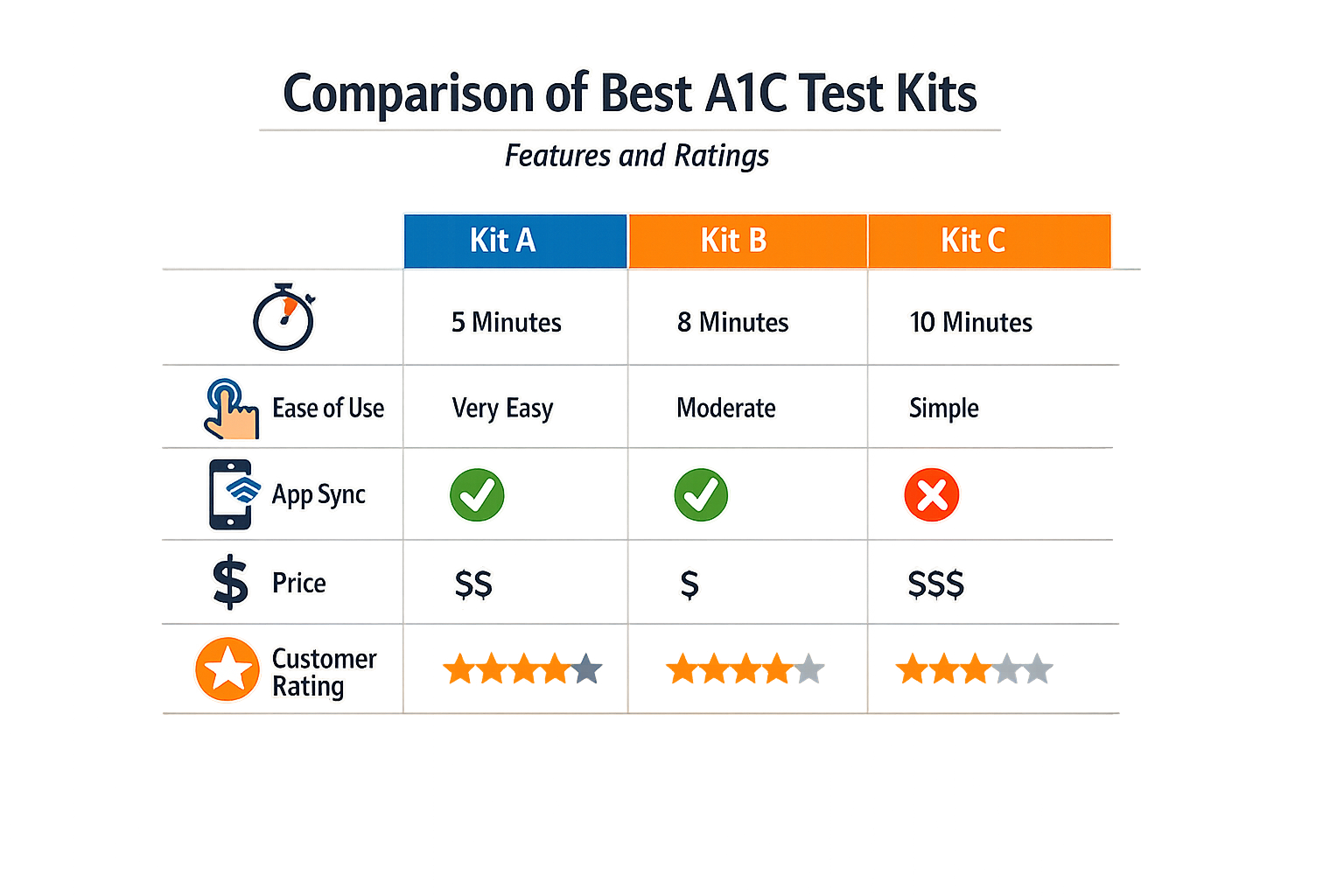
When evaluating at-home A1C test kits, it's important to understand that the landscape of glucose monitoring has evolved significantly. While traditional A1C testing remains the reference standard for tracking long-term glucose control, newer technologies offer different approaches to understanding your glucose patterns. Below, we review options that provide insight into your glucose management, highlighting their features and what makes each one distinct.
Continuous Glucose Monitoring Systems
Continuous glucose monitoring (CGM) systems represent a shift from periodic A1C snapshots to real-time glucose tracking. The FreeStyle Libre is a factory-calibrated 14-day flash glucose monitor that records interstitial glucose every minute. A small circular sensor with a thin fiber is inserted in the upper arm, storing eight hours of glucose values at a time. This requires a minimum of three scans per day to capture your full glucose profile.
The FreeStyle Libre automatically measures glucose every minute and stores values in 15-minute intervals, giving you a detailed view of how your glucose responds throughout the day and night. With a mean absolute relative difference (MARD) of 11.4%, the system demonstrates consistent accuracy over its 14-day wear period. This level of precision helps you and your care team identify patterns that a quarterly A1C test might miss.
Understanding What These Kits Measure
It's worth noting that while A1C testing measures your average blood glucose over two to three months, continuous monitoring provides a different kind of information: real-time glucose variability. Both approaches have value, but they serve different purposes in diabetes management. An A1C test gives you a single number that reflects long-term control, while CGM shows you the peaks, valleys, and trends that make up that average.
For context, glucose monitoring technology has come a long way since devices like the Beckman Glucose Analyzer in 1969, which first allowed doctors to obtain fast, in-house results instead of sending blood samples to a lab. Today's systems offer convenience and detail that were unimaginable decades ago.
Choosing the Right Monitoring Approach
When comparing options, consider what information you need most. If you're newly diagnosed or adjusting medications, real-time glucose data can help you understand how food, activity, and medication timing affect your levels. If you're looking for a periodic check-in on long-term control, a traditional A1C test may be more appropriate. For more guidance on interpreting your results, see our article on A1C to Blood Glucose Conversion Chart & Calculator.
The best monitoring tool is the one that gives you actionable information you can discuss with your care team at your next appointment.
Remember that any at-home monitoring—whether it's a traditional A1C kit or a continuous glucose monitor—is a tool for tracking, not a replacement for regular appointments with your healthcare provider. Confirm your results and any changes in your management plan with your care team.
Comparative Analysis
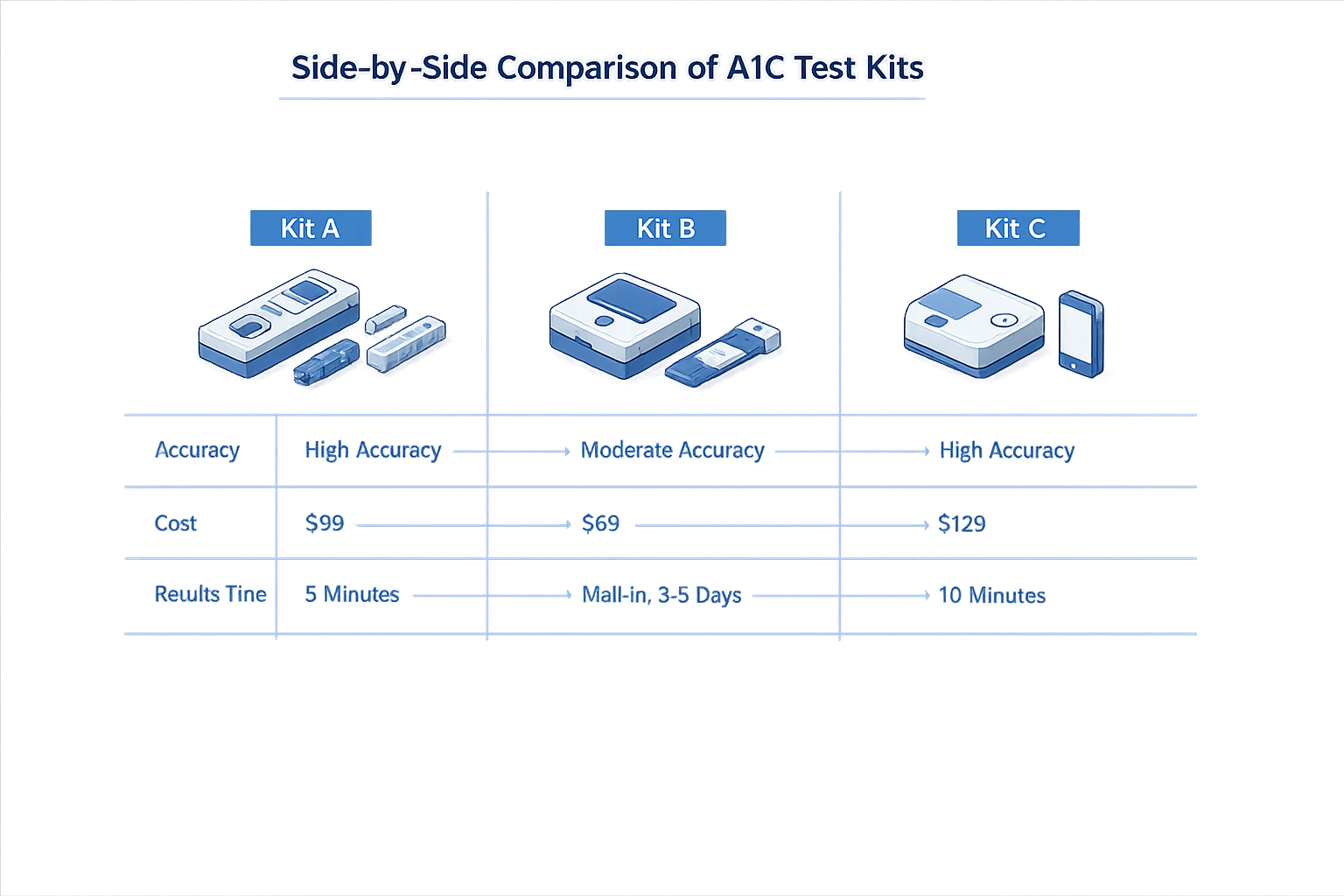
Choosing the right at-home A1C test kit requires weighing several factors at once: accuracy standards, turnaround time, cost per test, and how the kit fits into your broader diabetes management routine. This section breaks down the key differences between the top options, making it easier to see which kit aligns with your priorities.
Accuracy and Regulatory Standards
All CLIA-waived at-home A1C test kits must meet FDA accuracy thresholds, but real-world performance can vary. Look for kits that specify their correlation to laboratory methods — typically reported as a correlation coefficient (r-value) above 0.90. Some manufacturers publish head-to-head comparisons with venous blood draws; others rely on third-party validation studies.
When reviewing accuracy claims, check whether the kit's performance has been validated across the full A1C range you're likely to encounter. Some kits perform better in the 5–7% range but show wider variance above 9%.
Turnaround Time and Sample Collection
At-home A1C kits fall into two categories: instant-read devices that give results in minutes, and mail-in kits that require sending a blood sample to a lab. Instant-read kits use a fingerstick sample and a small analyzer, delivering results in 5–10 minutes. Mail-in kits involve a fingerstick card or collection tube that you send to a certified lab, with results typically available in 3–7 business days.
Instant-read kits offer immediate feedback, which can be helpful if you're adjusting your management plan or preparing for an upcoming appointment. Mail-in kits, while slower, often use the same lab platforms as your doctor's office, which may provide tighter alignment with your clinical record. For a deeper look at how A1C values translate to daily glucose patterns, see our A1C to Blood Glucose Conversion Chart & Calculator.
Cost Per Test and Insurance Considerations
Pricing for at-home A1C kits ranges from approximately $20 to $50 per test, depending on the brand, the number of tests in a pack, and whether the kit includes a reusable analyzer or is single-use. Instant-read kits with a reusable meter may have a higher upfront cost but lower per-test expenses if you test multiple times per year. Mail-in kits are often priced per test, with slight discounts for multi-test bundles.
Most at-home A1C kits are not covered by insurance when purchased directly by the consumer, though some FSA and HSA accounts allow reimbursement for CLIA-waived home diagnostic tests. If you require quarterly A1C monitoring as part of your care plan, confirm with your insurance whether lab-ordered tests (even if collected at home) might be covered under your preventive or diagnostic benefits.
Ease of Use and Instructions
The best at-home A1C test kit is one you'll actually use correctly. Look for kits with clear, step-by-step instructions and visual guides for sample collection. Instant-read kits should include a readable display and straightforward calibration (or factory calibration that requires no user input). Mail-in kits should provide pre-labeled packaging and prepaid return shipping to minimize friction.
Some kits include QR codes linking to video walkthroughs or customer-support lines for troubleshooting. If you're new to fingerstick collection or managing diabetes on behalf of a family member, these support features can make the difference between a successful test and a wasted kit.
Data Integration and Record-Keeping
A growing number of at-home A1C kits offer app connectivity or printable result sheets that you can share with your care team. Digital integration is especially useful if you're already tracking blood glucose, meals, or medication in a diabetes management app. Some kits sync directly with Apple Health, Google Fit, or proprietary platforms; others provide a PDF or email summary you can forward to your doctor.
If you prefer paper records, confirm that the kit provides a printed or downloadable result with the test date, your result, and reference ranges. Bring this documentation to your next appointment so your provider can compare it with any lab-drawn A1C values and adjust your care plan accordingly.
Conclusion and Recommendations
At-home A1C test kits offer a convenient way to monitor long-term glucose trends between lab appointments, but they are tools for tracking—not replacements for the comprehensive testing and clinical context your care team provides. When our team set out to review the best at-home A1C test kits, we knew that accuracy and ease of use would be at the forefront of our evaluation. Our editors meticulously researched the ADA's guidelines to ensure that the information we provide aligns with the most current standards of care.
The kits reviewed in this article vary in price, sample-collection method, and turnaround time, but they share a common limitation: they measure average glucose over the past two to three months and cannot capture the daily variability or hypoglycemic events that continuous glucose monitoring or self-monitoring of blood glucose (SMBG) can reveal. Research shows that continuous glucose monitoring systems can lower glycated haemoglobin levels and improve quality of life for individuals with diabetes, offering real-time data that complements periodic A1C checks.
For most users, the best overall kit balances accuracy (CLIA-waived or laboratory-processed samples), ease of use (clear instructions, minimal blood required), and reasonable cost. Budget-friendly options can be valuable for frequent monitoring, but confirm any result that seems unexpected with your healthcare provider before making medication or lifestyle changes. If you're looking for more context on what your A1C number means and how to interpret it alongside daily glucose data, see our guide on A1C to Blood Glucose Conversion Chart & Calculator.
The cheapest test is the one whose result you trust enough to discuss with your care team without second-guessing the method.
This approach allows us to help readers understand what these kits can offer and what questions to ask their healthcare providers when considering at-home testing. We emphasize the importance of confirming any test result with a healthcare team, as these kits serve as a tool for monitoring rather than a substitute for professional medical advice. Our goal is to translate complex medical guidelines into plain language, making it easier for individuals to navigate their diabetes management effectively.
Related reading

Maren Alcott is the lead presenter at DiabetesCompass. She is an AI-presented digital character. Every article Maren presents is researched and fact-checked by the DiabetesCompass editorial team against the ADA Standards of Care, peer-reviewed journals, and named clinical sources. Maren does not give medical advice — for questions about your specific situation, talk to your care team.