
Insulin Therapy for Type 1 Diabetes: Getting Started
Learn about insulin therapy for type 1 diabetes, including how to get started, what to expect, and tips for effective management of your treatment.


On this page
Introduction
Insulin therapy for type 1 diabetes is not optional—it is the foundation of treatment. When the pancreas stops producing insulin, external insulin becomes the only way to move glucose from the bloodstream into cells for energy. Without it, blood sugar rises to dangerous levels, leading to serious short-term and long-term complications.
When navigating the complexities of insulin therapy for type 1 diabetes, it's crucial to rely on trusted sources and guidelines. Our editorial team emphasizes the importance of understanding the ADA's Standards of Care, which provide a comprehensive framework for managing diabetes. Starting insulin therapy can feel overwhelming, especially in the first weeks after diagnosis. You'll encounter new terms—basal and bolus insulin, carb counting, correction factors—and new routines around meals, exercise, and monitoring. This article breaks down what you need to know to get started, what to expect from your care team, and how to build confidence in managing your treatment.
We'll walk through why insulin therapy is necessary, the steps to begin treatment, and practical tips for effective day-to-day management. You'll also find guidance on understanding your A1C results and how monitoring fits into your overall diabetes care. Every dosing decision and target should be confirmed with your own care team—this guide provides context, not prescriptions.
The initiation of insulin therapy is crucial for achieving optimal glycemic control, as indicated by monitoring HbA1c levels. Blood glucose monitoring is integral to insulin therapy and guides the regimens, with the first step in pattern management being the measurement and recording of fasting and postprandial glucose levels. In the sections ahead, we'll explain the biological need for insulin, outline the steps your care team will take to start your regimen, and share tips for managing insulin therapy effectively in daily life.
Understanding the Need for Insulin Therapy
Type 1 diabetes is an autoimmune condition in which the body's immune system attacks and destroys the insulin-producing beta cells in the pancreas. Without functioning beta cells, the body cannot produce the insulin it needs to move glucose from the bloodstream into cells for energy. This complete or near-complete loss of insulin production — what clinicians call β-cell exhaustion — is why insulin therapy becomes a daily necessity rather than an option.
Why Insulin Cannot Be Replaced
Unlike type 2 diabetes, where the body still produces some insulin but uses it inefficiently, type 1 diabetes involves little to no endogenous insulin production. The distinction matters: when β-cell function is absent, the therapy required is replacement therapy — mimicking the body's normal insulin secretion pattern throughout the day and in response to meals. Augmentation therapy, which adds basal insulin to support remaining β-cell function, applies when some insulin production persists; replacement therapy is the standard when β-cell exhaustion has occurred.
Without insulin, glucose accumulates in the blood, leading to hyperglycemia. Over time, sustained high blood sugar damages blood vessels, nerves, kidneys, eyes, and the cardiovascular system. In the short term, severe insulin deficiency can trigger diabetic ketoacidosis (DKA) — a life-threatening condition in which the body breaks down fat for energy, producing toxic acids called ketones.
The Role of Individualized Insulin Therapy
Insulin therapy is not one-size-fits-all. The American Diabetes Association (ADA) and the European Association for the Study of Diabetes (EASD) emphasize that insulin regimens should be tailored to patient-specific factors, including lifestyle, blood glucose patterns, and hypoglycemia risk. Factors such as diet, physical activity, work schedule, and personal preferences all influence how insulin is dosed and timed.
For example, someone with an active lifestyle may need lower insulin doses or adjustments in timing to prevent hypoglycemia during and after physical activity. Shift workers or those with irregular schedules may require flexible insulin regimens to maintain stable blood glucose levels. Understanding these individual needs — and working closely with a care team to adjust therapy accordingly — is central to effective diabetes management.
Insulin therapy should be tailored to patient-specific factors, including lifestyle, blood glucose patterns, and hypoglycemia risk.
Monitoring and Adjusting for Glycemic Control
Achieving optimal glycemic control requires regular monitoring of blood glucose levels and periodic measurement of HbA1c, a marker of average blood sugar over the previous two to three months. Monitoring helps identify patterns — such as morning hyperglycemia (the dawn phenomenon) — that may require adjustments to nighttime insulin doses.
Continuous glucose monitoring (CGM) or frequent self-monitoring of blood glucose (SMBG) provides the data needed to fine-tune insulin administration timing and dosing. Individualized targets are set based on a patient's age, comorbidities, and overall health. Younger, healthier patients might aim for stricter glycemic control, while older patients or those with multiple comorbidities may have more relaxed targets to avoid hypoglycemia. Confirm your own targets with your care team — these numbers are not universal.
The first 12 weeks of insulin initiation is generally known as the titration phase, when the risk of hypoglycemia is higher and can lead to early discontinuation of insulin therapy. Clinicians also watch for signs of overbasalization — clinical signals such as a basal dose of more than 0.5 units/kg, significant variability, hypoglycemia, or a bedtime-morning glucose differential greater than 50 mg/dL — which may warrant reassessment and further individualization of therapy.
For a deeper look at how glucose monitoring technologies work and what they reveal about your patterns, see our guide on How Does a Dexcom CGM Work: Real-Time Glucose Monitoring.
Steps to Begin Insulin Therapy
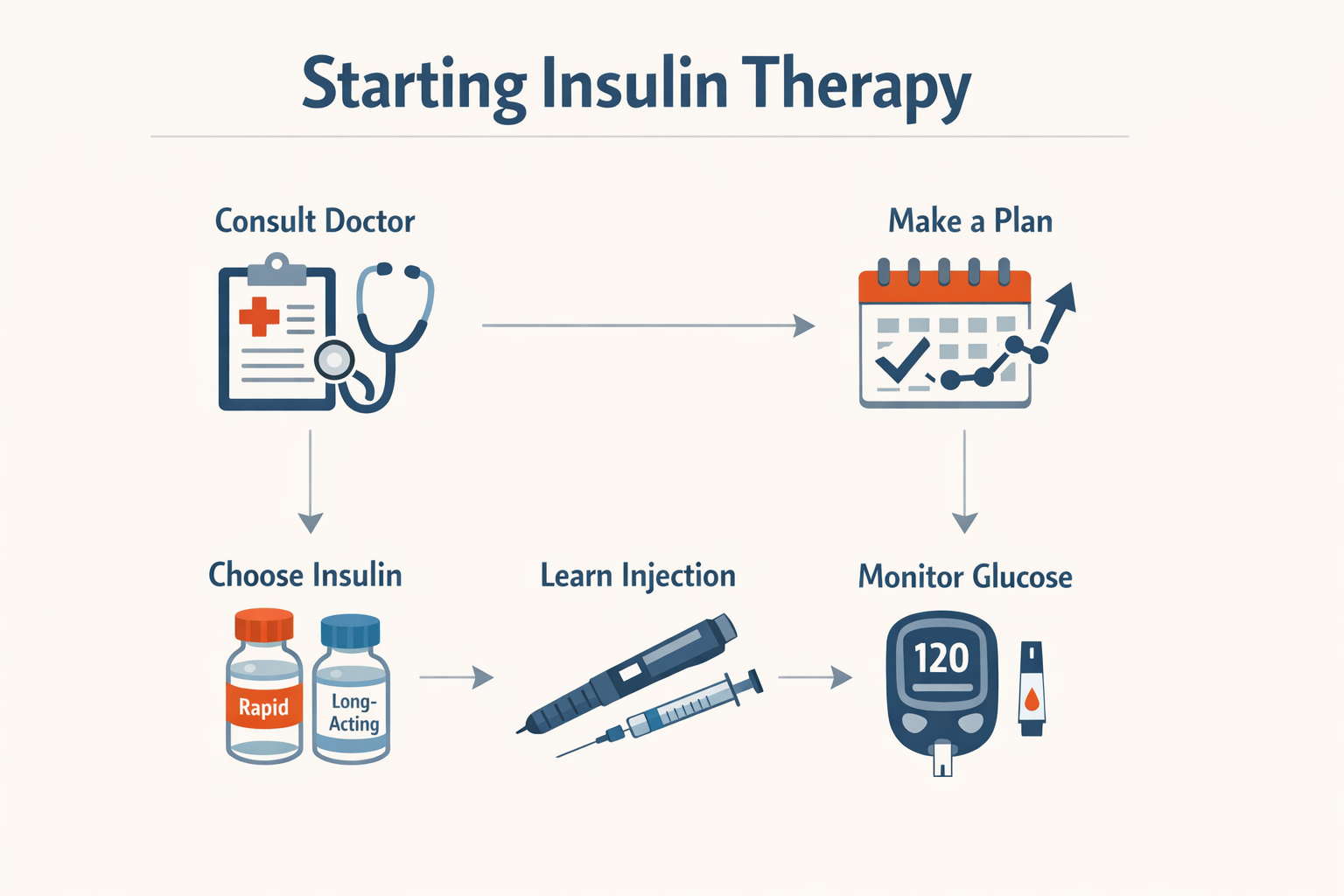
Starting insulin therapy is a structured process that involves collaboration between you and your care team. The approach is patient-centered, meaning your treatment plan will be tailored to your individual needs, lifestyle, and goals. While the steps below outline the general framework, every decision about insulin type, dosing, and adjustments must be made with your healthcare provider.
Working with Your Healthcare Team
Your first step is to establish a clear line of communication with your endocrinologist, diabetes educator, or primary care provider. Insulin initiation is a shared decision — your care team will guide you, but your input about your daily routine, eating patterns, and concerns is essential. Bring questions to your appointments: What type of insulin will you start with? How often will you need to check your blood sugar? What should you do if you miss a dose?
Your provider will also discuss glycemic targets — the blood sugar ranges you're aiming for. These targets are individualized; what works for one person may not be appropriate for another. Confirm your own numbers with your care team rather than relying on general guidelines.
Understanding Different Types of Insulin
Insulin comes in several forms, each with a different onset, peak, and duration of action. Your care team will prescribe a regimen that matches your body's needs:
- Basal insulin provides a steady background level of insulin throughout the day and night. It's typically taken once or twice daily.
- Bolus (mealtime) insulin is rapid-acting and taken before meals to cover the glucose from food.
- Premixed insulin combines basal and bolus insulin in one injection, though it offers less flexibility.
Most people with type 1 diabetes use a basal-bolus regimen, which mimics the body's natural insulin release more closely. Your provider will explain which insulins you're starting with and why. If you're curious about how other medications work alongside insulin, you might find it helpful to read about supplements for prediabetes and metformin alternatives to understand the broader landscape of diabetes management.
Step 1
Learn proper injection technique
Your care team will teach you how to draw up insulin, choose injection sites, and rotate those sites to avoid lipodystrophy — a thickening of the skin that can interfere with insulin absorption. Rotating sites is not optional; it's a critical part of effective therapy.
Step 2
Establish a monitoring routine
You'll need to check your blood glucose regularly — often before meals, before bed, and occasionally overnight. Your provider will tell you how often to test based on your regimen. Frequent monitoring helps you and your care team see how your body responds to insulin and whether adjustments are needed.
Step 3
Understand titration takes time
Insulin titration — the process of adjusting your dose to hit your targets — is gradual. It's critical to understand that finding the right dose may take weeks, and a higher dose may be required as your body's needs change. Stay in frequent contact with your care team during this period. The simplest titration algorithm that fits your lifestyle should be chosen, and you should feel comfortable asking questions if the process feels unclear.
Developing Your Management Plan
Your management plan is more than a dosing schedule — it's a roadmap for daily decision-making. It should include:
- Insulin doses and timing for basal and bolus insulin
- Blood glucose targets confirmed by your care team
- Meal planning guidance, including how to estimate carbohydrates if you're using a carb-counting approach
- Instructions for sick days, exercise, and travel — situations where your insulin needs may change
- Hypoglycemia protocols — what to do if your blood sugar drops too low, and when to contact your provider
Insulin initiation should follow a patient-centered approach, with education and support ensuring success with therapy.
Your plan will evolve. As you gain experience, you'll learn how your body responds to different foods, activity levels, and stressors. Your care team will adjust your regimen based on your blood glucose patterns and your feedback. This is a partnership — your observations matter.
Tips and Tricks for Effective Insulin Management
Effective insulin management goes beyond following a prescribed regimen — it requires understanding your own patterns, adapting to daily life, and using the tools available to you. The first 12 weeks after starting insulin therapy are often called the titration phase, when hypoglycemia risk is higher and adjustments are frequent. Staying engaged during this period sets the foundation for long-term success.
Monitor Blood Glucose to Identify Patterns
Regular blood glucose monitoring is the first step in pattern management. Recording fasting and postprandial (after-meal) glucose levels helps you and your care team identify trends — for example, if you consistently see high morning readings (the dawn phenomenon), your nighttime insulin dose may need adjustment. Continuous glucose monitoring (CGM) or frequent self-monitoring of blood glucose (SMBG) provides the data needed to fine-tune insulin timing and doses.
Individualized glucose targets are set based on your age, overall health, and risk of hypoglycemia. Younger, healthier patients might aim for stricter control, while older patients or those with other health conditions may have more relaxed targets to reduce the risk of dangerous lows. Always confirm your own targets with your care team — these numbers are not one-size-fits-all.
Adjust for Lifestyle and Activity
Exercise impacts blood glucose levels, often lowering them during and after physical activity. If you have an active lifestyle, you may need lower insulin doses or adjustments in timing to prevent hypoglycemia. Shift workers or those with irregular schedules may require flexible insulin regimens that fit their unique routines. Tailoring insulin therapy to your daily life — rather than forcing your life to fit a rigid schedule — improves adherence and helps maintain stable blood glucose levels.
Insulin therapy should be tailored to patient-specific factors, including lifestyle, blood glucose patterns, and hypoglycemia risk.
Factors such as diet, work schedule, and personal preferences all influence insulin regimens. Some patients prefer fewer injections or specific times for insulin administration. Understanding and incorporating these preferences — in collaboration with your care team — can make the regimen more sustainable over the long term.
Watch for Overbasalization Signals
Overbasalization occurs when basal insulin doses are pushed too high without addressing mealtime insulin needs. Clinical signals include a basal dose exceeding 0.5 units per kilogram of body weight, significant day-to-day variability, hypoglycemia (especially unconscious lows), and a large difference between bedtime and morning glucose readings (for example, a bedtime-to-morning differential greater than 50 mg/dL). If you notice these patterns, bring them to your care team for reevaluation — the solution may involve adding or adjusting mealtime insulin rather than increasing basal doses further.
Apply Core Management Principles
Five basic principles support effective insulin management: not skipping doses, reflecting on daily regimens based on previous postprandial glucose levels, basing rapid-acting insulin doses on food intake, setting clear glucose level parameters with your care team, and following an adjustment algorithm for insulin doses. These principles create a structured approach that reduces guesswork and builds confidence in day-to-day decision-making.
Address Psychological Barriers
Fear of pain, anxiety about injections, and worry about hypoglycemia are common psychological barriers that can interfere with insulin therapy. Addressing these concerns early — whether through education, counseling, or practical strategies like using smaller needles or insulin pens — is crucial for long-term success. If anxiety or fear is affecting your ability to manage insulin therapy, discuss it with your care team; solutions exist, and you are not alone in facing these challenges.
For more context on how glucose monitoring fits into diabetes management, see our guide on how a Dexcom CGM works.
Conclusion
Starting insulin therapy for type 1 diabetes marks a significant step in managing your condition, and understanding the foundational principles discussed in this guide can help you approach treatment with confidence. From recognizing why insulin is essential for type 1 diabetes to learning the practical steps for beginning therapy, each element builds toward effective long-term management. The key is to remember that insulin therapy is not a one-size-fits-all solution—it requires individualization, ongoing communication with your care team, and patience as you learn what works best for your body.
As our editorial team emphasizes, translating complex medical information into plain language ensures that newly diagnosed patients can grasp the basics of insulin therapy without feeling overwhelmed. The ADA Standards of Care provide a comprehensive framework for managing diabetes, and these guidelines are essential for confirming your treatment targets with your care team. Every decision about insulin dosing or adjustments should be made in consultation with your healthcare provider, ensuring that your treatment plan is tailored to your specific needs.
Effective insulin management is an ongoing process. As you gain experience with monitoring, adjusting doses, and recognizing patterns in your blood glucose levels, you'll develop the skills needed to navigate daily challenges. Technology such as continuous glucose monitors and insulin pumps can provide valuable support, but the foundation remains your understanding of how insulin works and your willingness to stay engaged with your care.
Remember that you are not alone in this journey. Seek support from diabetes educators, support groups, and trusted resources that translate research and clinical guidelines into actionable information. Stay informed about your insulin therapy, ask questions at every appointment, and advocate for the resources you need to manage your condition effectively. With the right knowledge, support, and partnership with your care team, insulin therapy becomes a manageable and empowering part of living well with type 1 diabetes.

Maren Alcott is the lead presenter at DiabetesCompass. She is an AI-presented digital character. Every article Maren presents is researched and fact-checked by the DiabetesCompass editorial team against the ADA Standards of Care, peer-reviewed journals, and named clinical sources. Maren does not give medical advice — for questions about your specific situation, talk to your care team.