
Type 1 vs Type 2 Diabetes: Key Differences Explained
Learn the key differences between type 1 vs type 2 diabetes, including causes, symptoms, treatment approaches, and management strategies.


On this page
Introduction
When discussing type 1 vs type 2 diabetes, it's crucial to understand the fundamental differences between these two conditions. Our team frequently reviews the ADA Standards of Care and other authoritative sources to ensure our explanations are accurate and helpful. While both conditions involve challenges with blood glucose regulation, the underlying mechanisms, typical age of onset, and treatment approaches differ significantly.
Type 1 diabetes is characterized by the body's inability to produce insulin due to an autoimmune response that attacks insulin-producing cells in the pancreas. This condition typically requires insulin therapy from the outset. People with type 1 diabetes depend on external insulin to survive, as their pancreas produces little to no insulin on its own.
Type 2 diabetes, on the other hand, is more commonly associated with insulin resistance, where the body doesn't use insulin effectively. The pancreas may still produce insulin—sometimes even higher amounts than normal—but the body's cells don't respond to it properly. This type is often managed with lifestyle changes and medications that improve insulin sensitivity, though some people with type 2 diabetes eventually require insulin therapy as the condition progresses.
The confusion between these two types of diabetes is common, particularly among people who are newly diagnosed or caring for someone with diabetes. Misconceptions about causes, treatment requirements, and long-term management can create unnecessary anxiety and lead to misinformed decisions. This article breaks down the key differences in causes, symptoms, and management strategies to help you have more informed conversations with your care team.
Problem Statement
Diabetes affects an estimated 463 million adults globally, with a rising number of younger individuals now diagnosed. Yet despite its prevalence, confusion about the differences between type 1 and type 2 diabetes remains widespread — among newly diagnosed individuals, their families, and even in casual conversation. Many assume the two conditions are simply mild versus severe versions of the same disease, or that one inevitably progresses into the other. These misconceptions can delay appropriate care, create unnecessary anxiety, and make it harder to understand what a diagnosis actually means.
The confusion often begins with overlapping language. Both conditions involve blood glucose, insulin, and the same monitoring tools, but the underlying mechanisms are fundamentally different. Type 1 diabetes is an autoimmune condition in which the body attacks its own insulin-producing cells, leading to little or no insulin production. Type 2 diabetes, which represents approximately 90% of all diabetes cases worldwide, is characterized by insulin resistance — the body produces insulin, but cells don't respond to it effectively. Over time, the pancreas may also produce less insulin, but the root cause is different.
Another common misconception is that type 2 diabetes is always linked to lifestyle factors, while type 1 is purely genetic. The reality is more nuanced. Type 1 diabetes does have a genetic component, but environmental triggers also play a role. Type 2 diabetes has strong genetic and metabolic underpinnings, though lifestyle factors such as diet, physical activity, and weight do influence risk and progression. There is also growing recognition of overlapping phenotypes between type 1 and type 2 diabetes, with some individuals displaying features of both — a reality that doesn't fit neatly into the traditional categories.
These misunderstandings matter because they shape expectations about treatment. Many people assume that type 2 diabetes can always be managed without insulin, or that needing insulin means the condition has "turned into" type 1 diabetes. In fact, as type 2 diabetes progresses, resultant insulin deficiency and hyperglycemia may necessitate insulin therapy in many cases — not because the diagnosis has changed, but because the pancreas is producing less insulin over time. Similarly, people with type 1 diabetes may benefit from medications traditionally associated with type 2 diabetes to address cardiovascular and metabolic risks, though this use is often off-label.
The stakes are high. Without a clear understanding of which type of diabetes someone has, treatment plans can be delayed, inappropriate, or poorly understood. A person with type 1 diabetes needs insulin from the outset; waiting to see if lifestyle changes work is not just ineffective — it's dangerous. Conversely, someone with type 2 diabetes may be able to manage their condition with oral medications, lifestyle changes, or newer injectable therapies, and may not need insulin immediately. Misunderstanding the condition can also lead to stigma, with people incorrectly blaming themselves or others for a diagnosis that has complex, multifactorial causes.
This article is designed to cut through that confusion. We'll walk through the key differences in causes, symptoms, and treatment approaches, explain what each diagnosis means in plain terms, and provide context for the questions to bring to your next appointment. As always, confirm any specific medical decisions with your own care team to ensure they align with your individual health needs.
Solution Steps: Understanding Type 1 and Type 2 Diabetes
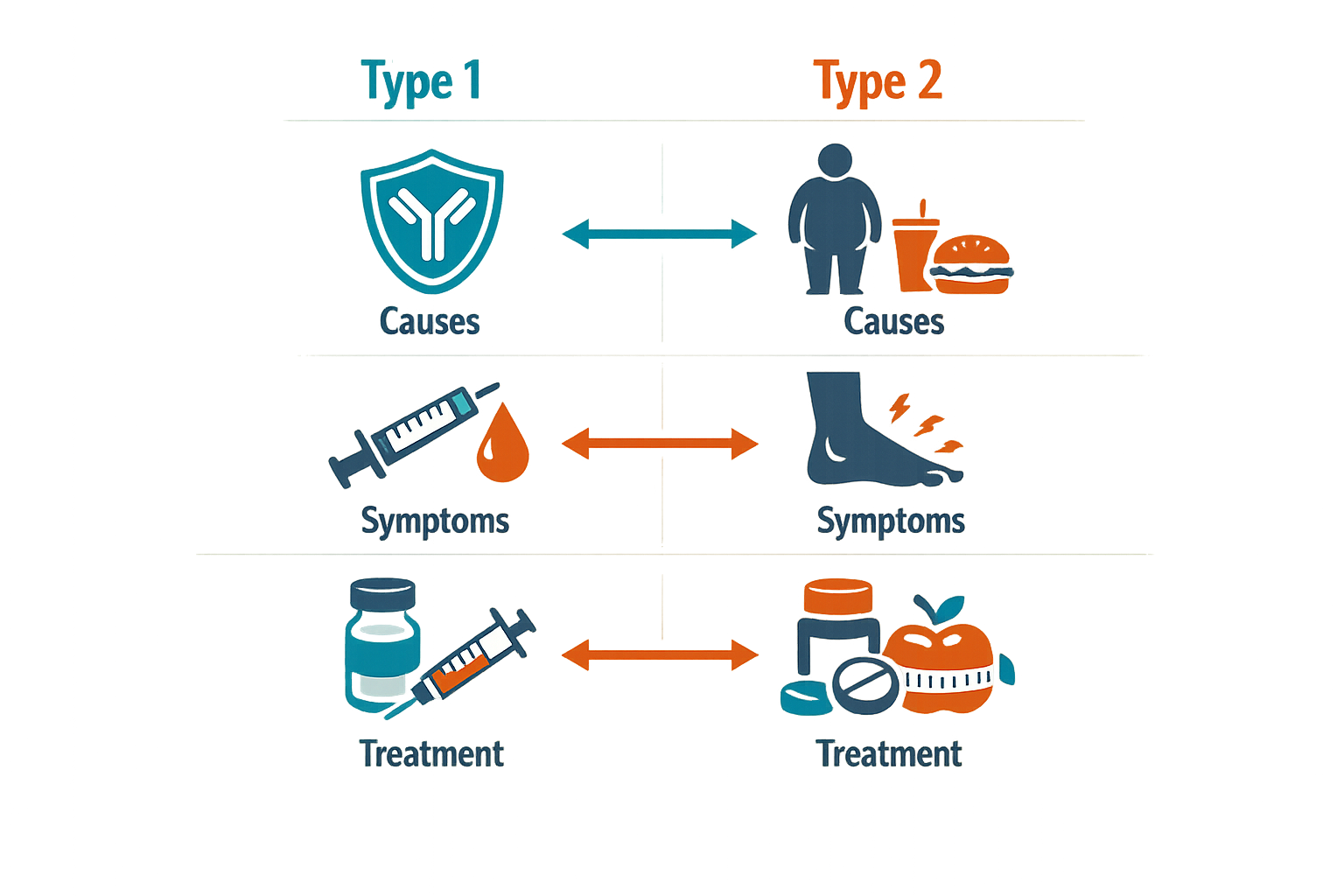
Navigating the differences between type 1 vs type 2 diabetes starts with understanding what happens in the body when each condition develops. While both involve problems with blood glucose regulation, the underlying causes and mechanisms are distinct. This section walks through the key differences step by step, covering causes, typical presentations, and treatment approaches.
Step 1: Understand the Core Mechanism — Autoimmunity vs. Insulin Resistance
Type 1 diabetes is an autoimmune condition where the body's immune system attacks and destroys the insulin-producing beta cells in the pancreas. This results in little to no insulin production. Type 2 diabetes, by contrast, is primarily characterized by insulin resistance — the body's cells don't respond effectively to insulin — combined with decreased insulin secretion over time. Both insulin resistance and reduced insulin output are considered the main causes of type 2 diabetes.
This distinction matters because it shapes every aspect of treatment. Type 1 requires insulin therapy from the outset because the body cannot produce its own. Type 2 often begins with interventions aimed at improving insulin sensitivity — lifestyle changes, medications like metformin, or newer options like microdose GLP-1 therapies — before insulin is introduced.
Step 2: Recognize Typical Age and Onset Patterns
Type 1 diabetes most commonly appears in childhood or adolescence, though it can develop at any age. The onset is usually rapid — symptoms emerge over days to weeks as insulin production drops sharply.
Type 2 diabetes typically develops in adulthood and is often associated with gradual onset. Many people live with undiagnosed type 2 for years because symptoms may be subtle or absent early on. Risk factors include family history, obesity, and physical inactivity.
Step 3: Compare Initial Treatment Approaches
Type 1 diabetes requires insulin therapy immediately. There is no alternative — without insulin, blood glucose rises to dangerous levels. Treatment focuses on replacing the insulin the body no longer makes, using injections or an insulin pump.
Type 2 diabetes treatment is more variable. Initial management often emphasizes lifestyle changes — nutrition, physical activity, weight management — alongside medications that improve insulin sensitivity or reduce glucose production. Dietary strategies for type 2 diabetes can include adjustments to carbohydrate intake, increased fiber, and regular physical activity to improve insulin response. Insulin may be added later if other therapies are insufficient.
Step 4: Understand Progression and Monitoring
Type 1 diabetes is a stable diagnosis — it does not "progress" to type 2, nor does it reverse. Management focuses on matching insulin doses to food, activity, and blood glucose patterns.
Type 2 diabetes is progressive. Over time, the pancreas may produce less insulin, and treatment intensity often increases. What starts with lifestyle changes and one medication may eventually require multiple medications or insulin. The progression from prediabetes to type 2 depends on multiple factors, including how well insulin resistance and beta-cell function are managed early on.
Both types require individualized care plans — confirm your own numbers, targets, and medication adjustments with your care team rather than comparing your regimen to someone else's.
Step 5: Know When to Revisit the Diagnosis
If you were diagnosed with type 2 diabetes but your blood glucose is difficult to control despite multiple medications, or if you're losing weight unexpectedly, ask your provider about testing for type 1 markers (autoantibodies like GAD65 or IA-2). Misclassification happens, and the correct diagnosis changes the treatment approach entirely.
Similarly, if you have type 1 diabetes and develop significant insulin resistance — often related to weight gain or inactivity — your care team may adjust your regimen to address both the absolute insulin deficiency and the resistance.
Tips and Tricks for Managing Diabetes
Whether you have type 1 or type 2 diabetes, day-to-day management involves consistent habits that keep blood glucose levels within your target range. The strategies differ slightly depending on your diabetes type, but many foundational practices apply to both. The goal is to build a sustainable routine that fits your life and reduces the risk of complications over time.
Monitor Blood Glucose Regularly
Regular blood glucose monitoring helps you understand how food, activity, stress, and medication affect your levels. For people with type 1 diabetes, this often means checking multiple times per day and adjusting insulin accordingly. For those with type 2 diabetes, monitoring frequency depends on your treatment plan — some check daily, others less often. Continuous glucose monitors (CGMs) can provide real-time data and trend information, making it easier to spot patterns and respond proactively. If you're exploring CGM options, our guide on the best CGM for non-diabetics covers over-the-counter systems that may be relevant for people with prediabetes or type 2 diabetes not on insulin.
Focus on Dietary Patterns That Support Insulin Sensitivity
Diet plays a central role in managing both types of diabetes, though the emphasis differs. For type 1 diabetes, carbohydrate counting and timing are critical for matching insulin doses. For type 2 diabetes, dietary strategies often aim to improve insulin sensitivity and support weight management. Research shows that low-carbohydrate diets, plant-based diets, and Mediterranean-style eating patterns can lead to weight loss, improved insulin sensitivity, and cardiovascular health benefits. Increased fiber intake and reduced processed carbohydrate consumption are common themes across effective dietary approaches.
No single diet works for everyone. Some people respond well to lower-carb plans, while others thrive with balanced macronutrient ratios that emphasize whole foods. Work with a registered dietitian or your care team to find an eating pattern you can sustain long-term, and adjust based on your blood glucose responses.
Incorporate Regular Physical Activity
Physical activity improves insulin sensitivity, helps manage weight, and supports cardiovascular health — all important for diabetes management. For people with type 2 diabetes, regular exercise can reduce the amount of medication needed and improve glycemic control. For those with type 1 diabetes, exercise requires careful coordination with insulin dosing and carbohydrate intake to avoid hypoglycemia.
Aim for a mix of aerobic activity (walking, cycling, swimming) and resistance training (weights, bodyweight exercises). Start with what feels manageable and build gradually. Check your blood glucose before, during, and after exercise, especially when you're learning how your body responds. If you're on insulin or medications that can cause low blood sugar, carry fast-acting carbohydrates during workouts.
Build a Support System and Stay Informed
Diabetes management is easier when you have support. This might include family members who understand your routine, friends who join you for walks, or online communities where you can ask questions and share experiences. Your healthcare team — endocrinologist, primary care provider, diabetes educator, dietitian — is your first resource for medical guidance.
Stay informed about new research, device updates, and treatment options, but always confirm specific medical decisions with your own care team. What works for someone else may not be right for your situation, and your providers can help you evaluate new information in the context of your individual health needs.
Conclusion
Understanding the differences between type 1 vs type 2 diabetes is essential for navigating your care and making informed decisions about treatment. Type 1 diabetes is characterized by the body's inability to produce insulin due to an autoimmune response, requiring insulin therapy from diagnosis. Type 2 diabetes involves insulin resistance, where the body doesn't use insulin effectively, and is often managed with lifestyle changes and medications that improve insulin sensitivity. While these two conditions have distinct mechanisms, recent research reveals growing recognition of overlapping phenotypes between type 1 and type 2 diabetes, particularly when addressing cardiovascular risks and metabolic parameters that extend beyond glucose control alone.
Diabetes affects an estimated 463 million adults globally, with a rising number of younger individuals now diagnosed. Whether you're newly diagnosed, caring for a family member, or seeking clarity on treatment options, the key is to work closely with your care team to confirm your specific targets, medication adjustments, and monitoring plan. Our team at DiabetesCompass frequently reviews the ADA Standards of Care and other authoritative sources to ensure our explanations are accurate and helpful, translating complex research into plain language that supports your conversations with your healthcare provider.
No two diabetes journeys are identical. Your A1C goals, insulin or medication regimen, and monitoring approach should align with your individual health profile, not a one-size-fits-all standard. If you're exploring supplements for prediabetes and metformin alternatives or considering continuous glucose monitoring, bring those questions to your next appointment. The right care plan is the one that fits your life, your body, and your goals — and that plan starts with understanding the condition you're managing.

Maren Alcott is the lead presenter at DiabetesCompass. She is an AI-presented digital character. Every article Maren presents is researched and fact-checked by the DiabetesCompass editorial team against the ADA Standards of Care, peer-reviewed journals, and named clinical sources. Maren does not give medical advice — for questions about your specific situation, talk to your care team.