
Supplements for Prediabetes: What Actually Works
Explore effective supplements for prediabetes and how they can help manage blood sugar levels. Evidence-based guide to supplement options.


On this page
Introduction
Prediabetes sits in the space between normal blood glucose and a diabetes diagnosis — a metabolic state defined by blood sugar levels that are higher than normal but not yet high enough to meet the threshold for type 2 diabetes. The numbers matter: the American Diabetes Association defines prediabetes as a fasting blood glucose of 100–125 mg/dL or a two-hour post-glucose reading of 140–199 mg/dL. These ranges signal that your body's glucose regulation is shifting, and without intervention, the risk of progression increases.
Research shows that early intervention can reduce the risk of developing type 2 diabetes by 58%. The cornerstone of that intervention remains lifestyle change — structured eating patterns, regular physical activity, and weight management where applicable. But adherence to those changes can be difficult to sustain over time, and some people look for additional tools. That's where the conversation about supplements enters.
Supplements for prediabetes are not replacements for the fundamentals. They do not override the need for movement, food choices, or sleep. They are not medications, and they are not regulated with the same rigor as prescription drugs. But certain supplements have been studied in prediabetic populations, and some show measurable effects on glucose metabolism, insulin sensitivity, or inflammatory markers. Understanding what the research supports — and what it does not — helps you make informed decisions in partnership with your care team.
This guide translates the current evidence on supplements that have been studied in prediabetes. It covers what each supplement is thought to do, what the research shows, and where the gaps remain. For context on how lifestyle changes work alongside any supplement strategy, see How to Lower A1C Naturally: Diet, Exercise & Lifestyle Tips. The goal is not to prescribe a regimen, but to give you the context you need to ask the right questions at your next appointment.
Understanding Prediabetes
Prediabetes is a metabolic state that sits between normal blood glucose and type 2 diabetes. It's defined by glucose levels that are higher than normal but not yet high enough to meet the diagnostic threshold for diabetes. The condition typically includes impaired fasting glucose (elevated blood sugar after an overnight fast), impaired glucose tolerance (elevated blood sugar after eating), or both.
Prediabetes is not a minor warning sign — it represents a significant cardiometabolic risk. The condition often appears as part of metabolic syndrome, a cluster of conditions that includes high blood pressure, abnormal cholesterol levels, and excess body fat around the waist. Without intervention, approximately 5% to 10% of people with prediabetes will develop type 2 diabetes every year.
Why Managing Prediabetes Matters
The progression from prediabetes to type 2 diabetes is not inevitable. Research has shown that early intervention can reduce the risk of developing type 2 diabetes by 58%. This makes the prediabetes stage a critical window for action — a time when lifestyle changes, and in some cases medications or supplements, can alter the trajectory of metabolic health.
The challenge in clinical practice is that adherence to lifestyle changes in prediabetic populations tends to be low, and compliance with prescribed medications is often inconsistent. This gap has led researchers to investigate nonpharmacological agents, including dietary supplements, that might support blood sugar management alongside — not instead of — foundational lifestyle changes.
Different Prediabetes Profiles
Not everyone with prediabetes has the same metabolic profile. Research has identified distinct prediabetes subgroups based on different glycemic patterns: isolated impaired fasting glucose, isolated impaired glucose tolerance, and combined impairment. These subgroups may respond differently to interventions, which is one reason why a one-size-fits-all approach to supplements or lifestyle changes doesn't always work.
Understanding your own numbers — and what they mean — is the first step in building a management plan that fits your situation. That plan should always be developed with your care team, who can interpret your lab results in the context of your overall health and guide you toward evidence-based interventions. For more context on what your lab results mean and how to work with them, see A1C Conversion: What Your Number Means and How to Lower It.
Top Supplements for Prediabetes
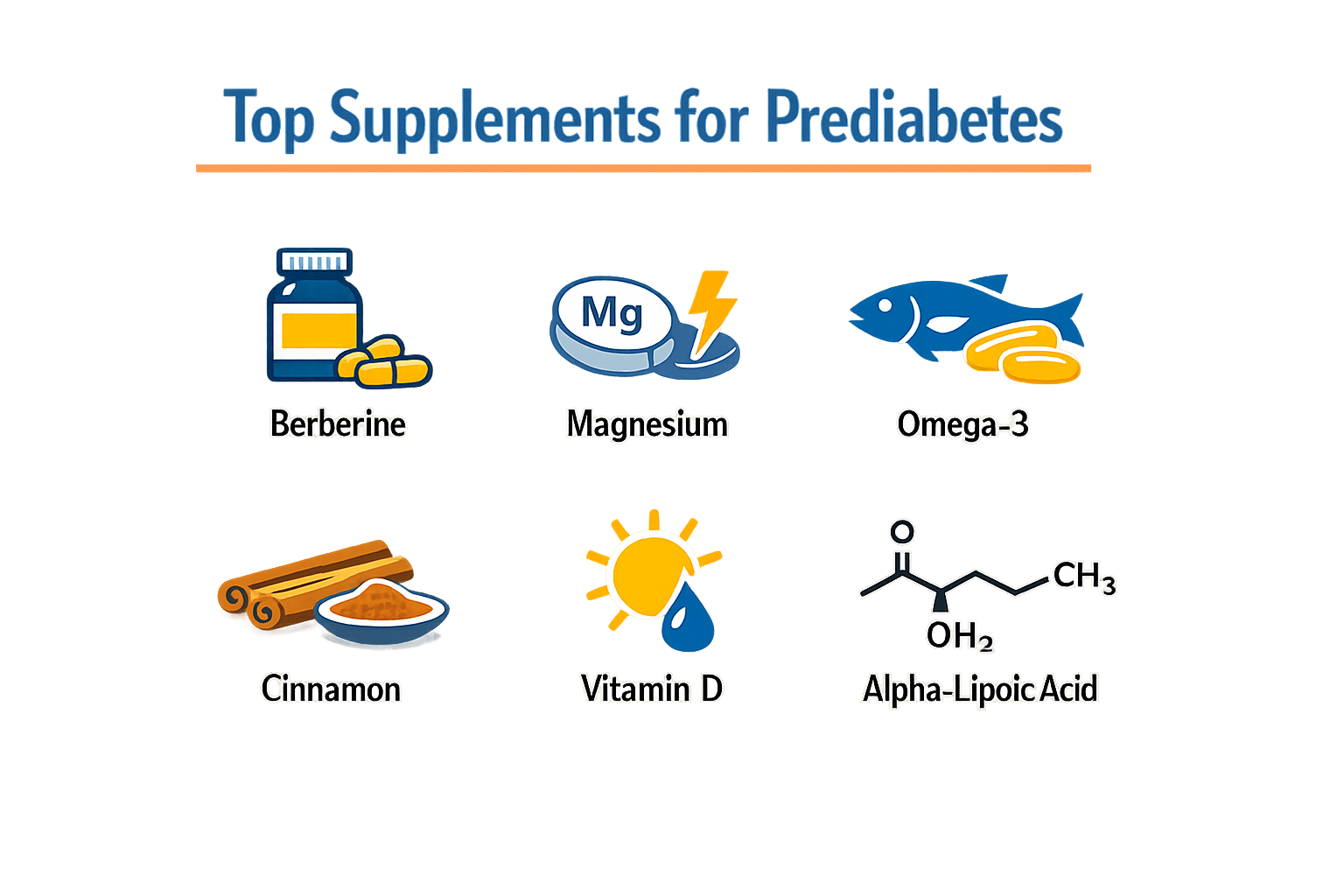
When lifestyle changes alone aren't enough to manage prediabetes, some people look to supplements as an additional tool. Research has identified several natural compounds that may help improve blood sugar control, though it's important to understand that supplements work differently depending on your specific glycemic pattern — whether you have elevated fasting glucose, post-meal spikes, or both.
Plant Extracts That Target Fasting Glucose
Certain plant-based supplements appear particularly effective for people whose primary issue is elevated fasting blood sugar. Research has examined several phenolic-rich plant extracts and their effects on different prediabetes patterns.
Artemisia princeps Pampanini, soy leaf, and Citrus junos Tanaka peel have shown promise in improving fasting glycemia. These may be more beneficial for individuals with isolated impaired fasting glucose (IFG), where the main problem is blood sugar that's too high in the morning before eating.
For those whose challenge is primarily post-meal blood sugar spikes — a pattern called isolated impaired glucose tolerance (IGT) — different plant extracts may be more appropriate. White mulberry leaf, persimmon leaf, and Acacia Mearnsii bark have been shown to improve postprandial (after-meal) glycemia specifically.
Active Compounds in Natural Supplements
The beneficial effects of these plant extracts come from specific active ingredients. Natural compounds that have been studied for blood sugar management include alkaloids, polysaccharides, saponins, terpenoids, flavonoids, and polyphenols. Each class of compound works through different mechanisms in the body.
Not all prediabetes looks the same — the supplements that help with fasting glucose may differ from those that address post-meal spikes.
Understanding which type of blood sugar pattern you have matters when considering supplements. If you're unsure whether your glucose issues are primarily fasting-related, post-meal-related, or both, your care team can help interpret your lab results and monitoring data. You can learn more about interpreting these numbers in our guide on A1C conversion and what your number means.
Probiotics, Prebiotics, and Synbiotics
Emerging research has explored the role of gut health in prediabetes management. Human studies have demonstrated beneficial effects of probiotics (beneficial bacteria), prebiotics (compounds that feed beneficial bacteria), and synbiotics (combinations of both) in people with prediabetes.
The gut microbiome appears to play a role in glucose metabolism, though the exact mechanisms are still being studied. These supplements represent a different approach than plant extracts — rather than directly affecting blood sugar, they may work by supporting the ecosystem of bacteria in your digestive system.
What the Research Shows — and Doesn't
While studies have identified supplements with potential benefits for prediabetes, several important caveats apply. Most research has been conducted over relatively short periods, and long-term safety and effectiveness data are limited. The quality and concentration of active compounds can vary significantly between brands and formulations, making it difficult to replicate research findings with over-the-counter products.
Additionally, supplements are not regulated as strictly as medications. There's no guarantee that what's on the label matches what's in the bottle, or that the product is free from contaminants. Look for third-party testing certifications when possible, and discuss specific brands with your care team or a registered dietitian.
Lifestyle Changes to Complement Supplements
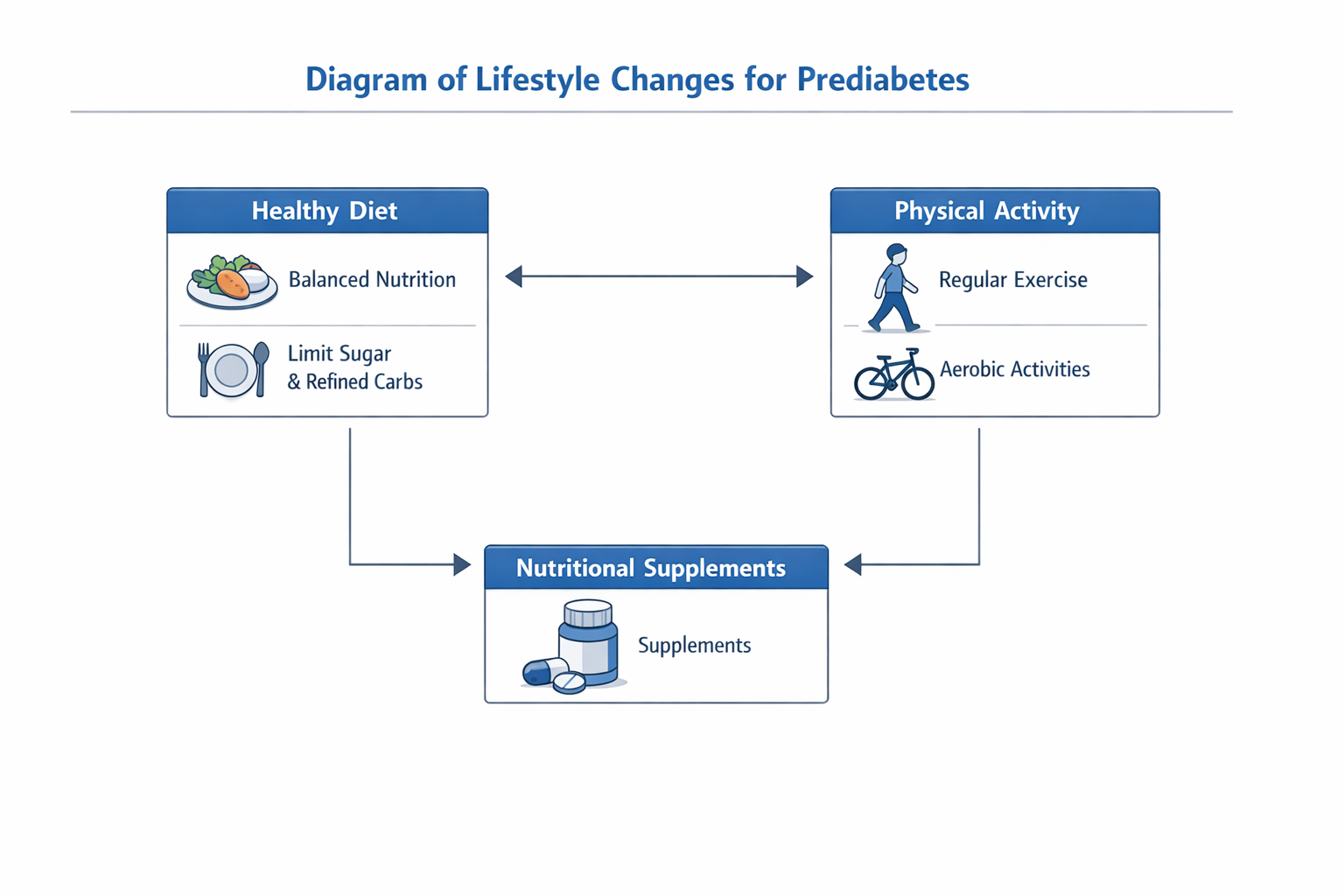
Supplements alone cannot reverse prediabetes or prevent progression to type 2 diabetes. The evidence consistently points to lifestyle intervention as the first-line approach — diet, physical activity, and weight management form the foundation that makes any supplement strategy more effective.
Diet: The Foundation of Blood Sugar Control
A balanced diet supports the mechanisms supplements target — improved insulin sensitivity, reduced glucose absorption, and better metabolic function. Focus on whole foods rather than eliminating entire food groups.
Practical dietary shifts:
- Replace refined grains with whole grains, legumes, and vegetables to slow glucose absorption
- Include lean protein and healthy fats at each meal to stabilize post-meal blood sugar
- Limit added sugars and processed foods that spike glucose quickly
- Distribute carbohydrate intake evenly across meals rather than concentrating it at one sitting
These changes work synergistically with supplements like alpha-lipoic acid and berberine, which improve how cells respond to insulin and how the liver manages glucose production.
Exercise: Aerobic and Resistance Training
Physical activity directly improves insulin sensitivity and glucose uptake by muscles, independent of weight loss. Research on individuals with type 2 diabetes shows that aerobic endurance training at least three days per week is a common recommendation — the same principle applies to prediabetes.
Effective exercise patterns:
- Aerobic activity (walking, cycling, swimming) for 150 minutes per week, spread across multiple days
- Resistance training (bodyweight exercises, weights, resistance bands) two to three times per week
- Movement after meals, even brief 10–15 minute walks, to blunt post-meal glucose spikes
Combining aerobic and resistance work addresses different aspects of glucose metabolism. Aerobic exercise burns glucose during activity; resistance training builds muscle mass that continues to use glucose at rest.
For detailed strategies on lowering A1C through lifestyle adjustments, see How to Lower A1C Naturally: Diet, Exercise & Lifestyle Tips.
Weight Management and Insulin Resistance
Maintaining a healthy weight — or achieving modest weight loss if overweight — reduces insulin resistance, the core driver of prediabetes. Even a 5–7% reduction in body weight can significantly lower diabetes risk.
Weight loss enhances the effectiveness of supplements that target insulin sensitivity. When combined with dietary and exercise changes, supplements may provide additional metabolic support, but they do not replace the foundational impact of weight management.
Blood Sugar Monitoring: Know Your Patterns
Tracking blood glucose helps you see how specific foods, activities, and supplements affect your numbers. Monitoring does not require a formal diagnosis — many people with prediabetes use occasional fingerstick testing or, less commonly, continuous glucose monitoring to identify patterns.
What to track:
- Fasting glucose (first thing in the morning, before eating)
- Post-meal glucose (1–2 hours after eating) to see which foods spike your levels
- Trends over weeks, not individual readings — prediabetes management is about patterns, not perfection
If you notice consistently elevated readings or confusing patterns, bring the data to your next appointment. Your care team can interpret the numbers in context and adjust your plan accordingly.
Combining Lifestyle and Supplements
Lifestyle interventions and supplements work through complementary mechanisms. Dietary changes and exercise improve insulin sensitivity and reduce glucose production; supplements like berberine, alpha-lipoic acid, and cinnamon enhance these same pathways at the cellular level.
Think of supplements as a secondary layer of support, not a replacement. The most effective prediabetes management strategy integrates:
- Consistent dietary patterns that stabilize blood sugar
- Regular physical activity that improves glucose uptake
- Healthy weight maintenance or gradual weight loss
- Targeted supplementation chosen in consultation with your care team
- Periodic monitoring to confirm progress
No single intervention — supplement or otherwise — addresses all the factors driving prediabetes. The combination approach reduces risk more effectively than any isolated change.
Conclusion and Next Steps
Supplements for prediabetes can offer meaningful support when combined with lifestyle changes, but they are not a replacement for the core interventions that research consistently shows to be most effective. The Diabetes Prevention Program demonstrated that intensive lifestyle changes reduced the incidence of type 2 diabetes by 58% over three years, while metformin — a medication, not a supplement — reduced it by 31%. Supplements like berberine, alpha-lipoic acid, and chromium show promise in smaller studies, but their effects are modest and variable compared to structured diet and exercise programs.
The strongest evidence points to a clear priority: focus first on the lifestyle changes that have been proven to work, then consider supplements as an adjunct if your care team agrees they fit your situation. Even brief periods of returning to normal glucose regulation significantly reduce future diabetes risk, regardless of how you get there. That means every step you take — whether it's adding more fiber to your meals, walking after dinner, or working with a dietitian — moves the needle in a meaningful direction.
Moving Forward
If you're considering supplements, start by establishing a baseline with your healthcare provider. That means confirming your current fasting glucose, A1C, and any other relevant lab work, then setting a follow-up appointment to measure whether the intervention — supplement, lifestyle change, or both — is making a difference. Supplements work best when they're part of a coordinated plan, not an isolated experiment.
For practical guidance on the lifestyle side, How to Lower A1C Naturally: Diet, Exercise & Lifestyle Tips walks through the dietary and activity changes that form the foundation of prediabetes management. Pair that with regular monitoring, whether through periodic lab work or, in some cases, a continuous glucose monitor to see how specific foods and activities affect your glucose in real time.
Prediabetes is not a diagnosis to ignore, but it's also not a locked-in outcome. The research is clear: meaningful reductions in diabetes risk are achievable with sustained effort, and the earlier you start, the more room you have to change the trajectory. Work with your care team, prioritize the interventions with the strongest evidence, and treat supplements as a potential tool in a larger toolkit — not the toolkit itself.
Explore effective supplements for prediabetes and how they can help manage blood sugar levels.
Related reading
Dexcom Stelo vs Abbott Lingo: Which OTC CGM Is Right for You

Maren Alcott is the lead presenter at DiabetesCompass. She is an AI-presented digital character. Every article Maren presents is researched and fact-checked by the DiabetesCompass editorial team against the ADA Standards of Care, peer-reviewed journals, and named clinical sources. Maren does not give medical advice — for questions about your specific situation, talk to your care team.