
Vitamins Diabetics Should Avoid: Safety Guide
Learn which vitamins diabetics should avoid and why certain supplements may interfere with blood sugar control or diabetes medications.


On this page
Introduction to Vitamins and Diabetes
Vitamins diabetics should avoid are those that may complicate glucose management or interact unpredictably with medications like metformin, insulin, or GLP-1 agonists. Vitamins play essential roles in metabolism, immune function, and overall health. For people managing diabetes, however, the relationship between supplementation and blood sugar control is more nuanced than it appears. While some nutrients support metabolic health, others may complicate glucose management or interact unpredictably with medications like metformin, insulin, or GLP-1 agonists.
Diabetes develops through complex interactions between insulin resistance and beta-cell dysfunction, and dietary inputs directly influence glucose-insulin homeostasis. Research shows that low-calorie and low-carbohydrate diets can reduce the risk of type 2 diabetes in both general and high-risk populations, but the role of individual vitamin supplements in that equation is less straightforward. The American Diabetes Association now emphasizes overall eating patterns built around key nutrients rather than isolated supplementation, recognizing that food matrix, processing, and preparation create effects that pills cannot duplicate.
Understanding what vitamins diabetics should avoid requires looking beyond marketing claims to the evidence on blood sugar impact, medication interactions, and individual variability. Some vitamins are benign in food but risky in high-dose supplement form. Others may be safe for most people but problematic when combined with specific diabetes drugs. The sections that follow decode which vitamins warrant caution, why they pose risks, and what safer alternatives exist.
For context on how blood sugar targets are set and monitored, see our guide to A1C conversion and what your number means.
Vitamins to Avoid for Diabetics
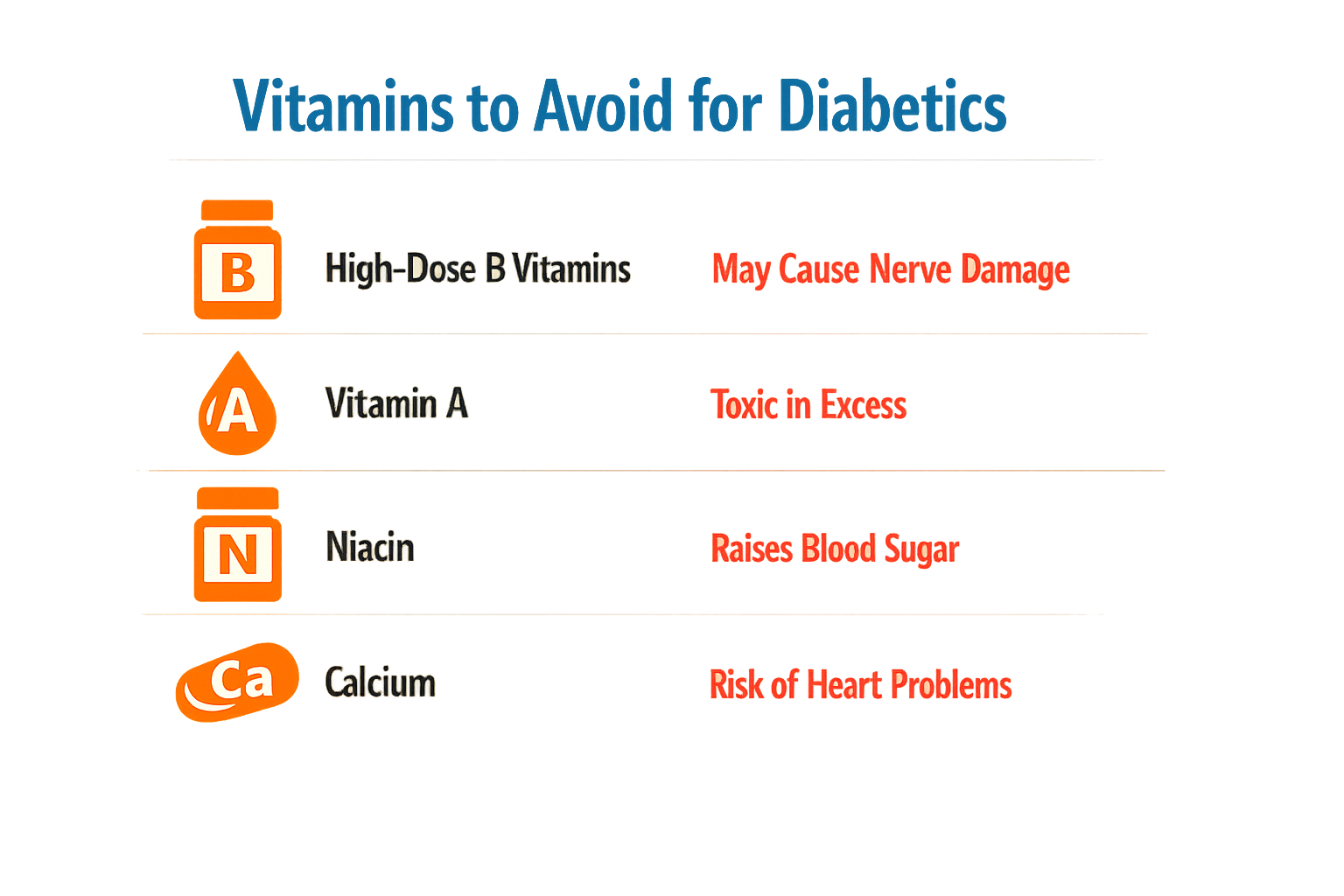
The phrase "vitamins diabetics should avoid" can be misleading — most vitamins are not inherently dangerous for people with diabetes, but routine supplementation of vitamins and minerals is generally unnecessary when a healthful eating plan provides sufficient micronutrients. The evidence shows that certain vitamins do not improve blood sugar control and may create a false sense of security that diverts attention from proven interventions like medication adherence and lifestyle modification.
Vitamins With No Proven Glycemic Benefit
Research indicates there is no evidence that the intake of magnesium, vitamins A, C, and E improves glycemia in people with diabetes. While these nutrients are essential for overall health, taking them as supplements does not translate into better blood sugar management. The absence of benefit matters because supplement use can lead to:
- Polypharmacy risks — adding pills to an already complex medication regimen increases the chance of missed doses or interactions
- Cost without return — supplements are an out-of-pocket expense with no demonstrated glucose-lowering effect
- Distraction from evidence-based care — focusing on unproven supplements may delay or replace interventions that do work, such as adjusting A1C targets with your care team
The Exception: Vitamin B12 and Metformin
One evidence-supported exception exists: vitamin B12 deficiency in patients treated with metformin. Long-term metformin use can interfere with B12 absorption, and high-dose oral B12 supplementation may be effective in restoring normal levels. However, this is a targeted intervention for a documented deficiency, not a blanket recommendation for all people with diabetes.
If you take metformin and experience symptoms like fatigue, numbness, or tingling, ask your care team about B12 testing. Supplementation should follow a confirmed low result, not a precautionary guess.
What "Avoid" Really Means
"Vitamins diabetics should avoid" does not mean these nutrients are toxic or forbidden. It means:
- Avoid routine supplementation without a documented deficiency — blood work should guide any decision to add a vitamin or mineral
- Avoid substituting supplements for medication or lifestyle changes — no vitamin replaces the glucose-lowering effect of metformin, GLP-1 agonists, or insulin
- Avoid high-dose or megadose formulations — excessive intake of fat-soluble vitamins (A, D, E, K) can accumulate and cause harm, and water-soluble vitamins in extreme doses may interfere with lab tests or medication absorption
When to Discuss Supplements With Your Care Team
Bring up vitamin or supplement use at your next appointment if:
- You are already taking a multivitamin or individual supplements and want to know if they are necessary
- You have symptoms that might suggest a deficiency (fatigue, neuropathy, vision changes)
- You take metformin and have not had B12 levels checked in the past year
- You are considering a supplement marketed for "blood sugar support" — many of these products make unverified claims and may interact with your medications
Your care team can order labs to identify true deficiencies and recommend targeted supplementation only when needed. This approach avoids unnecessary pills and focuses resources on interventions that improve outcomes.
Safe Vitamin Alternatives

Not all vitamins pose risks for people with diabetes. Some supplements, when used appropriately, may support metabolic health and complement standard diabetes management. The key is understanding which vitamins have evidence backing their safety and potential benefits, and confirming any supplementation plan with your care team.
Vitamin D: Insulin Sensitivity and Metabolic Support
Vitamin D stands out among supplements studied in diabetes contexts. Research shows it plays a role in regulating insulin secretion and affects how tissues respond to insulin. Vitamin D binds directly to receptors in pancreatic β-cells — the cells responsible for producing insulin — and may help support their function.
Studies have demonstrated that vitamin D supplementation can influence several metabolic markers relevant to diabetes management. These include glycated hemoglobin (HbA1c), LDL cholesterol, triglycerides, and measures of insulin resistance such as HOMA-IR. Higher daily doses (4000 IU or more per day) have been associated with reductions in C-reactive protein (CRP), a marker of inflammation, and increases in HDL cholesterol, the protective form.
Vitamin D also carries anti-inflammatory and cardio-protective properties, which may be particularly relevant given the cardiovascular risks that often accompany diabetes. For those managing type 1 diabetes, vitamin D's immunomodulatory effects — promoting immune tolerance and reducing inflammatory responses — have been studied as a potential supportive therapy, though it does not replace insulin or other prescribed treatments.
What Vitamins Should Diabetics Avoid Versus Embrace?
While some vitamins require caution (as covered in the previous section), vitamin D represents a safer alternative when used within recommended guidelines. The contrast is important: high-dose niacin, for example, can worsen blood sugar control, whereas vitamin D at appropriate doses may support it.
That said, even safe vitamins require individualized dosing. Blood tests can reveal whether you have a deficiency, and your endocrinologist or primary care provider can recommend a daily dose that aligns with your current levels and diabetes medications. Generic "wellness" mega-doses are not the goal — targeted, evidence-based supplementation is.
Practical Guidance for Safe Supplementation
If you're considering vitamin D or any other supplement, bring it to your next appointment. Your care team will want to know:
- What dose you're taking (or planning to take)
- Whether you've had recent bloodwork showing a deficiency
- What other medications or supplements you're currently using
- Whether you have any kidney or liver concerns that might affect vitamin metabolism
This conversation ensures that any supplement fits safely into your broader treatment plan. For example, people with chronic kidney disease may need adjusted vitamin D forms or doses, and those on certain diabetes medications may need closer glucose monitoring when starting a new supplement.
For more context on how different interventions affect blood sugar, see Does Cinnamon Lower Blood Sugar? What Trials Show for a comparison of another commonly discussed supplement.
Dosage and Monitoring
There is no universal "diabetic dose" for vitamin D. Recommendations depend on baseline levels, age, weight, and individual health factors. A common preventive dose for adults ranges from 1000 to 2000 IU daily, but therapeutic doses for deficiency may be higher and should be prescribed and monitored by your provider.
Regular follow-up bloodwork — checking 25-hydroxyvitamin D levels — helps ensure you're in a safe and effective range. Too little provides no benefit; too much can lead to toxicity, though this is rare with vitamin D compared to fat-soluble vitamins like A or E.
Confirm your own numbers and targets with your care team. The goal is to support your metabolic health without introducing new risks or interactions with your diabetes medications.
Conclusion and Recommendations
Navigating vitamin supplementation with diabetes requires a careful, individualized approach. While no vitamin is universally dangerous for everyone with diabetes, certain supplements — particularly high-dose niacin, excessive vitamin E, and unmonitored chromium — can interfere with blood sugar control or interact with diabetes medications. The key is not to avoid vitamins entirely, but to coordinate any supplementation with your care team and to understand which nutrients require closer monitoring.
Work with Your Care Team on Supplementation
Before starting any new vitamin or supplement, discuss it with your doctor or diabetes care team. They can review your current medications, assess your individual risk factors, and determine whether supplementation is necessary based on blood work rather than guesswork. If you're taking metformin, the American Diabetes Association suggests having your vitamin B12 levels checked annually, as this medication can deplete B12 over time and increase neuropathy risk.
Your care team can also help you interpret supplement labels and avoid products with hidden sugars, fillers, or doses that exceed safe limits. Many over-the-counter supplements are not regulated as strictly as prescription medications, so professional guidance is essential.
Focus on Food-First Nutrition
Whenever possible, prioritize getting vitamins and minerals from whole foods rather than pills. A balanced diet rich in vegetables, lean proteins, whole grains, and healthy fats provides nutrients in forms your body can use efficiently, without the risk of megadoses or unintended interactions. Supplements should fill specific gaps identified by your healthcare provider, not replace a varied diet.
For additional guidance on managing blood sugar through diet and lifestyle, see our article on A1C Conversion: What Your Number Means and How to Lower It.
Stay Informed and Monitor Regularly
Diabetes management evolves as new research emerges and as your own health changes. What works safely at one stage may need adjustment later. Keep an updated list of all supplements you take — including doses and brands — and bring it to every medical appointment. If you experience unexplained blood sugar swings, new symptoms, or changes in how your medications work, mention any recent supplement changes to your care team.
The evidence on vitamin supplementation and diabetes continues to develop. Some studies show benefits from specific nutrients like vitamin D or B vitamins, while others find no significant effect or highlight risks from excessive doses. This variability underscores the importance of personalized care: what's safe and helpful for one person may not be appropriate for another.
By staying in close communication with your healthcare team, choosing supplements based on documented need rather than marketing claims, and monitoring your blood sugar and overall health regularly, you can make informed decisions that support your diabetes management without unnecessary risk.
Related reading

Maren Alcott is the lead presenter at DiabetesCompass. She is an AI-presented digital character. Every article Maren presents is researched and fact-checked by the DiabetesCompass editorial team against the ADA Standards of Care, peer-reviewed journals, and named clinical sources. Maren does not give medical advice — for questions about your specific situation, talk to your care team.